
Last updated November 25, 2026
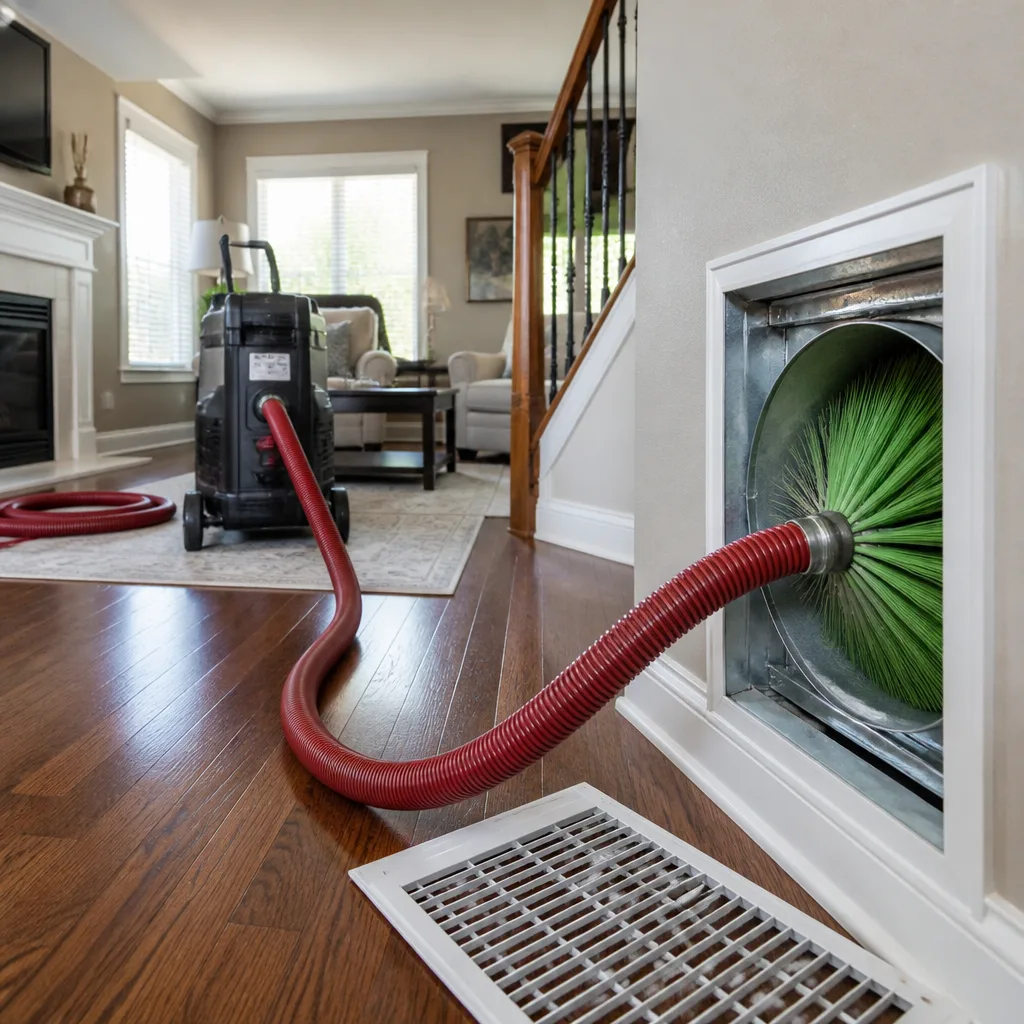 Whole-home duct cleaning
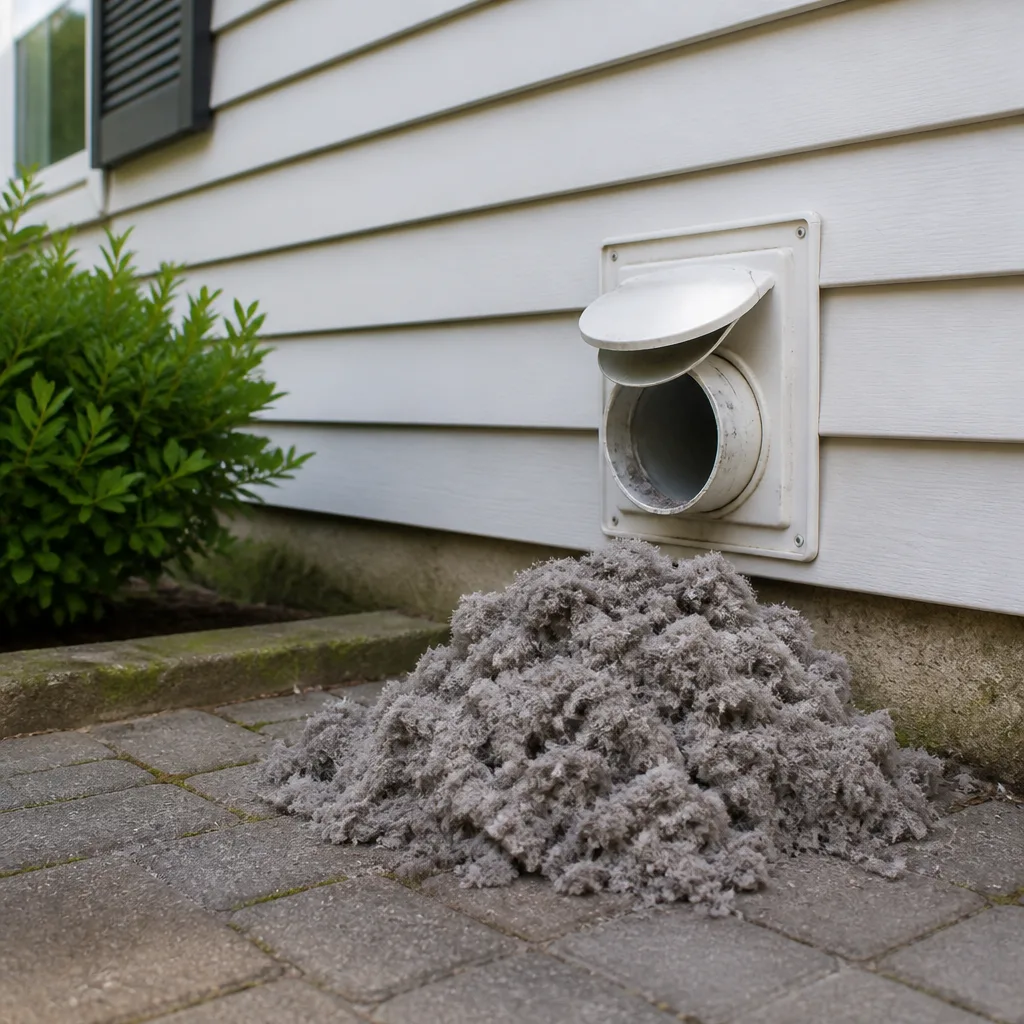 Dryer vent cleaning
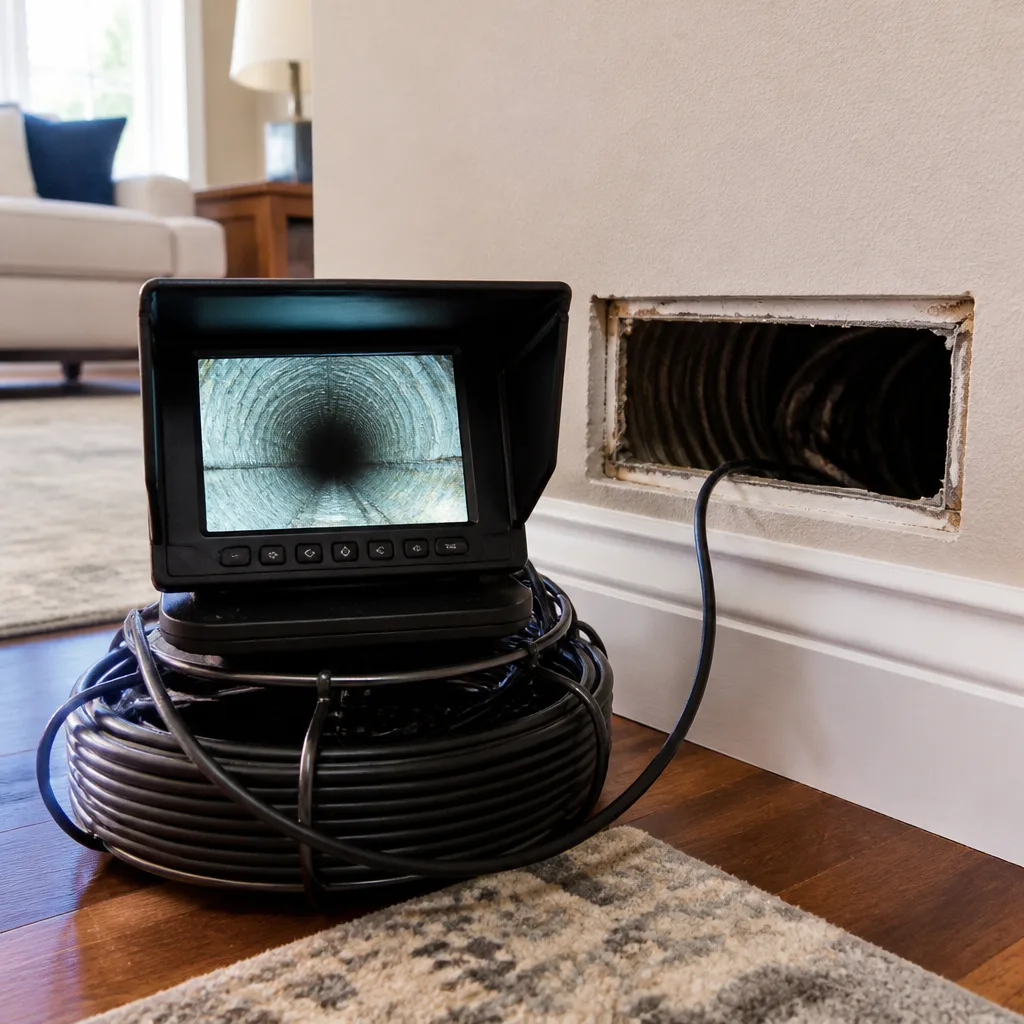 Camera inspection
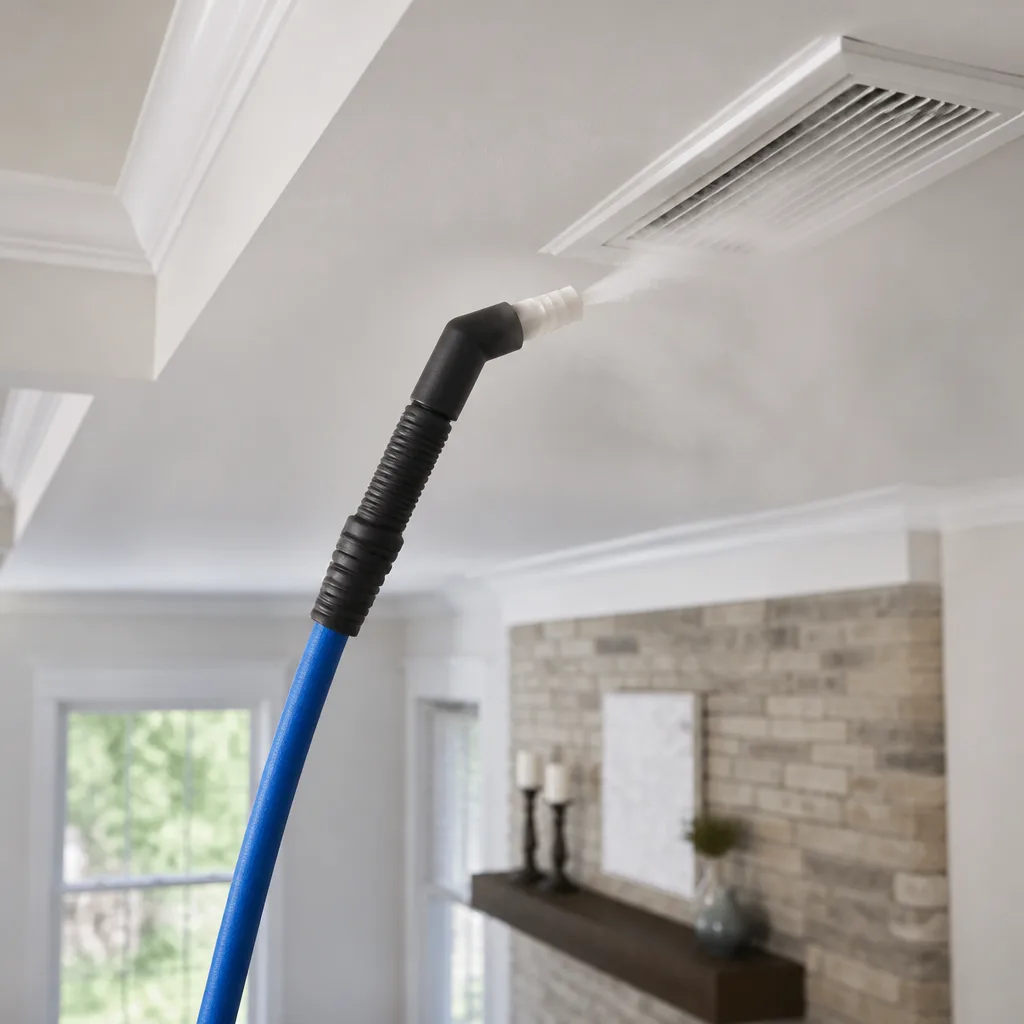 Sanitizing & deodorizing
Whole-system duct and dryer vent check with before-and-after photos - you see exactly what came out of your vents
That "$99 whole-house special" is a bait ad - the real number appears once they are in your hallway, or the "clean" is a shop-vac at the register. We photograph the inside of your ducts before and after instead.
Air Duct Cleaning Emergency Preparedness Guide for Southlands Homes
Most people think a filter rating is the whole defense against bad air. It isn’t. During a smoke event along the Front Range, running your HVAC on recirculate with a fresh MERV-13 filter genuinely helps, and we recommend it. But if your duct system leaks at the air handler cabinet, you’re pulling outside smoke-laden air straight into the supply stream no matter what filter sits in the slot. A sealed system and a good filter work as a pair. This guide walks Southlands homeowners through the three emergencies that turn ductwork into a problem, the prep that makes professional help faster, and how to describe what’s happening so the first dispatch is the right one.
Quick Answer
Air duct emergency preparedness for Southlands homes means knowing three protocols before you need them: how to run and shut down your HVAC during a wildfire smoke event (recirculate with a MERV-13 filter, then inspect after), how to handle duct and coil contamination after nearby construction or a renovation, and how to dry and assess wet ductwork within the 48-to-72-hour window before mold colonizes. The prep that saves the most time later is a documented system: photos of the air handler, filter location, and every visible duct run.
Styles & brands we work with
- Whole-home duct cleaning
- Dryer vent cleaning
- Camera inspection
- Sanitizing & deodorizing
Table of Contents
- Wildfire Smoke Protocol: When to Run the HVAC and When to Shut It Down
- Construction Contamination: What Drywall Dust Does to Coils and Ducts
- Flood and Moisture Events: The 48 to 72 Hour Mold Window
- Pre-Emergency Preparation: Documenting Your System
- How to Describe Your System to an Emergency Contractor
- Filter Ratings and What MERV Actually Intercepts
- Post-Event Inspection Checklist
Wildfire Smoke Protocol: When to Run the HVAC and When to Shut It Down
During a smoke event in Southlands and across the southern Front Range, the HVAC system can be either your best tool or your worst leak. The difference is whether the cabinet and ductwork are tight. A freshly sealed system with a MERV-13 filter does real work against PM2.5 before that particulate ever reaches your living room. A leaky one does the opposite: negative pressure in the return pulls smoke in from a crawlspace, attic, or garage, and the filter never gets a chance to catch it.
Here’s the protocol we recommend:
- Confirm your filter first. If it’s a basic fiberglass panel filter, replace it with a MERV-13 rated filter before the smoke rolls in. A dirty filter is worse than a clean low-MERV filter, so change a loaded filter at the first hint of smoke.
- Set the fan to ON, not AUTO. Constant circulation keeps air moving through the filter rather than letting it settle. AUTO cycles leave gaps where smoke drifts in and sits.
- Close the fresh-air intake if you have one. An economizer or fresh-air damper that stays open during a smoke event is a direct line for outside air into your return.
- Seal what you can see. Painter’s tape over a known gap at the air handler cabinet is a legitimate short-term fix, not a long-term one.
- Know when to shut down. If smoke is coming out of registers, if your CO detector is alarming, or if the system is short-cycling, turn it off, close windows, and run a standalone HEPA purifier in your main living space instead.
Two days after the smoke clears, walk the house and look at supply registers and coil faces. Fine ash settles into the return and coats the evaporator coil the first time you run the system after the event. That’s a cleaning job, not a filter change, and it’s the exact scenario where a proper air duct cleaning visit removes the load instead of redistributing it.
Construction Contamination: What Drywall Dust Does to Coils and Ducts
Southlands sits in an active growth corridor. New builds, additions, kitchen remodels, and basement finishes are common, and drywall dust is the single most underrated contaminant a duct system will see. Unlike loose household dust, drywall and concrete particulates are abrasive and mildly alkaline. They coat the evaporator coil fin pack, which is where condensation happens, and an alkaline film on a wet coil is a surface that holds onto moisture and dulls heat exchange. The blower then pushes that dust through every supply run, where it settles at joints and elbows and forms a crust you can feel with a glove.
What a post-renovation scope typically involves:
- Full return and supply duct agitation with rotary-brush tooling, because drywall dust bonds to the metal in a way a simple vacuum can’t break loose
- Coil cleaning on both the evaporator and, if accessible, the condenser side
- Blower wheel and cabinet cleaning, since the wheel collects dust evenly and throws it out at every speed
- Register and grille removal and cleaning, plus a check on any return plenum that fills with dust first
- A sealing pass on any duct joint the contractor cracks open during construction access
Rotobrush rotary-brush heads are what we use for this because the brush rotation scuffs the duct wall and frees the bonded layer that a straight vacuum leaves behind. Nikro HEPA-filtration extraction equipment captures what gets dislodged rather than blowing the fine fraction back into rooms. That pairing matters in Southlands specifically: the dust you can see is only half the problem, and the fraction that stays airborne is the part that hangs around longest in a house.
Flood and Moisture Events: The 48 to 72 Hour Mold Window
Wet ductwork is not the same as dirty ductwork, and it’s the emergency where timing matters most. Once duct insulation, flex duct, or an interior duct lining stays wet, mold colonization can begin within 48 to 72 hours. This is the reason a flood or burst-pipe event that touches the HVAC system demands a different response than a normal cleaning call. The system doesn’t just need to be cleaned. It needs to be documented as dry, or in severe cases, it needs remediation rather than cleaning.
The response sequence, in order:
- Turn the HVAC off. Running a wet system spreads spores through the whole house. Stop the air handler and the blower first.
- Stop the water source and start structural drying. Extract standing water, run dehumidifiers, and get air movement on any wet building materials before addressing the ducts.
- Photograph everything wet. Take pictures of the air handler, any flex duct runs, and any visible water lines on the cabinet or plenum. Documentation matters for both the repair scope and any insurance conversation.
- Get a professional assessment inside 48 hours. A wet duct system is a time-sensitive job. The best outcome depends on how soon someone with the right test equipment puts a moisture meter on the ductwork.
- Do not run the system again until it’s verified dry. This is the step most people skip. A system that runs wet grows the problem it’s supposed to avoid.
When the moisture is confirmed at the surface level, a Guardsman-grade sanitizing treatment applied after the drying and cleaning pass addresses mold, bacteria, and allergens at the duct wall rather than just removing loose debris. Abatement Technologies air-scrubbing equipment runs during that work to keep the surrounding space clean. In genuinely severe cases where flex duct or interior insulation has absorbed water, replacement of the affected section is the honest answer, not cleaning. We’ll tell you which scenario you’re looking at.
Pre-Emergency Preparation: Documenting Your System
The single most useful thing a Southlands homeowner can do before an emergency is build a small file about their own HVAC system. It takes one afternoon and it shortens every future service call, from routine HVAC cleaning to a genuine emergency response. A technician who knows the equipment type, the duct layout, and the filter size before arriving wastes less time and scopes the job more accurately.
Here’s what the file should contain:
- Photos of the air handler and furnace. A clear shot of the data plate with the model and serial numbers, plus one showing the whole cabinet in context.
- Filter access location and size. Note whether the filter sits in the return grille, in the air handler cabinet, or at a dedicated filter access door. Write down the exact dimensions.
- A simple duct map. Sketch the trunk and branch runs as best you can. Note which registers feel strongest and which feel weakest. That weakness is a clue about a leak or a kink.
- Any known problem areas. If a duct run under a particular room has always been cold, or a register blows weak, write it down. It’s information a contractor can use.
- The thermostat model and any zoning setup. A photo of the thermostat and any zone control panel saves confusion during a smoke event when you’re trying to set the right mode.
Keep the file on your phone and email a copy to yourself. When you’re standing in a smoky house trying to describe your system to someone on the phone, having the photos ready is the difference between a first-visit fix and a second-visit discovery.
How to Describe Your System to an Emergency Contractor
When you call after a smoke event, a water intrusion, or a renovation, one detail changes the entire scope of the job: whether the contaminant is airborne or bonded. Airborne smoke residue that’s filtered through a sealed system is a different job from drywall dust bonded to the duct wall or a wet duct lining. The clearer you are up front, the faster a contractor can match equipment to the situation.
Give the dispatcher these five things on the first call:
- The triggering event and when it happened. “Smoke event, four days ago” or “burst pipe above the ceiling, yesterday” tells a contractor everything about urgency and mold risk.
- Whether the system has been running since. This is the single most important thing to state. A system that ran through smoke is different from one that was shut off immediately.
- What you’ve observed. Visible smoke at registers, a musty smell, water staining on the return, a filter that went from clean to gray in a week. Specific observations beat general descriptions.
- Your documentation photos. Offer to text or email the air handler and duct photos from your file. Contractors who see the equipment before arriving bring the right tooling.
- Any known contamination history. A prior remodel, a roof leak, an aging system. All of it helps build the right scope.
Air Duct Cleaning Southlands handles the full lifecycle in one visit: cleaning, sealing, sanitizing, and filter or air quality upgrades if needed. Our technicians have up to 14 years of experience and can walk you through what a proper scope looks like over the phone before anyone gets in a truck. That conversation is free, and it’s the fastest way to know what you’re actually facing.
Filter Ratings and What MERV Actually Intercepts
Filters are not all built for the same job, and the rating on the box is the number that matters. MERV, or minimum efficiency reporting value, describes how well a filter captures particles at different size ranges. For wildfire smoke, the target is the fine particulate fraction, and that’s where the MERV rating does the most work. A MERV-13 rated filter captures the majority of smoke-range particulate; below that, the finer fraction passes through to the coil and the room.
Three practical notes for Southlands homes:
- Don’t go higher than your system can handle. A very high MERV filter can starve airflow on a residential blower sized for a lower-restriction filter. MERV-13 is a well-accepted ceiling for most residential systems and is the rating we recommend for smoke events. A licensed contractor or a quick check against your system’s manual confirms your specific equipment.
- Fit matters as much as rating. A MERV-13 filter with a half-inch gap around the edges is a MERV-7 filter in practice. Sealing the filter slot is a small fix with an outsized effect.
- Upgrade beyond filters when the system calls for it. Honeywell and Aprilaire filtration and air quality products are a genuine step up when filter swaps alone aren’t solving the problem. We can assess what your system supports during a cleaning visit.
Filter changes are homeowner work, and that’s fine. Holding a filter to a duct system with leaks is like putting a good lock on a door with a broken frame. The two work together, which is why we treat sealing as a core service rather than a follow-up.
Post-Event Inspection Checklist
Once the smoke event, construction project, or water intrusion has passed, a short inspection today saves a bigger one later. Here’s what we recommend checking in the first 48 to 72 hours after any of the three emergencies in this guide.
- Pull the filter and look at it. A filter that’s gone gray or dark in a short window means a lot of particulate reached the system. Note the color and change it.
- Look at the evaporator coil face. If you can see it, the coil fins should look clean and metallic. A gray or dusty film means the coil is holding contamination and needs cleaning.
- Check supply registers. Run the fan briefly and hold a white paper towel near a supply grille for a minute. If the towel picks up visible dust or soot, the supply stream is dirty.
- Smell the return. A musty or smoky odor at the return grille after a moisture event is the clearest early signal of colonization. Don’t wait on this one.
- Look at the ductwork you can see. In a basement or garage with exposed duct runs, check joints and elbows for crust, dark spots, and any sign of condensation.
- Note any change in airflow or sound. A system that gets louder or weaker after an event is telling you something. Write it down and describe it when you call.
If any of those six checks turns up a red flag, don’t run the system for long while you wait for help. Call (855) 624-1395. We answer 24/7. Fast dispatch from 7am to 7pm, Sunday through Friday.
Common Mistakes to Avoid
- Assuming a high-MERV filter fixes a leaky system. The filter catches what reaches it, and a leak at the cabinet bypasses the filter entirely. Seal first, then upgrade the filter.
- Running the HVAC through a smoke event with no filter change. A loaded filter from before an event does almost nothing. Change it before the smoke arrives, and change it again after.
- Waiting past the 48-hour mark on a wet duct system. Mold colonization in wet ductwork can start within 48 to 72 hours, and every hour beyond that creates a bigger remediation scope.
- Cleaning ducts after a renovation without cleaning the coil. Drywall dust that bonds to the evaporator coil is a heat-exchange problem, not just an air quality one. Duct cleaning that leaves the coil untouched misses half the job.
- Skipping the documentation. A Southlands homeowner who has photos and a filter size ready gets a faster, more accurate scope than one trying to describe the equipment over the phone. Build the file before you need it.
- Letting a pure-cleaning contractor walk away from a cracked duct. A duct that’s disconnected or split at a joint defeats the whole cleaning, in any event. Sealing needs to be part of the scope from the start.
- Restarting the system before a moisture assessment is complete. This is the step that turns a dry system into a mold problem. Keep it off until a technician has put a meter on it.
See the difference
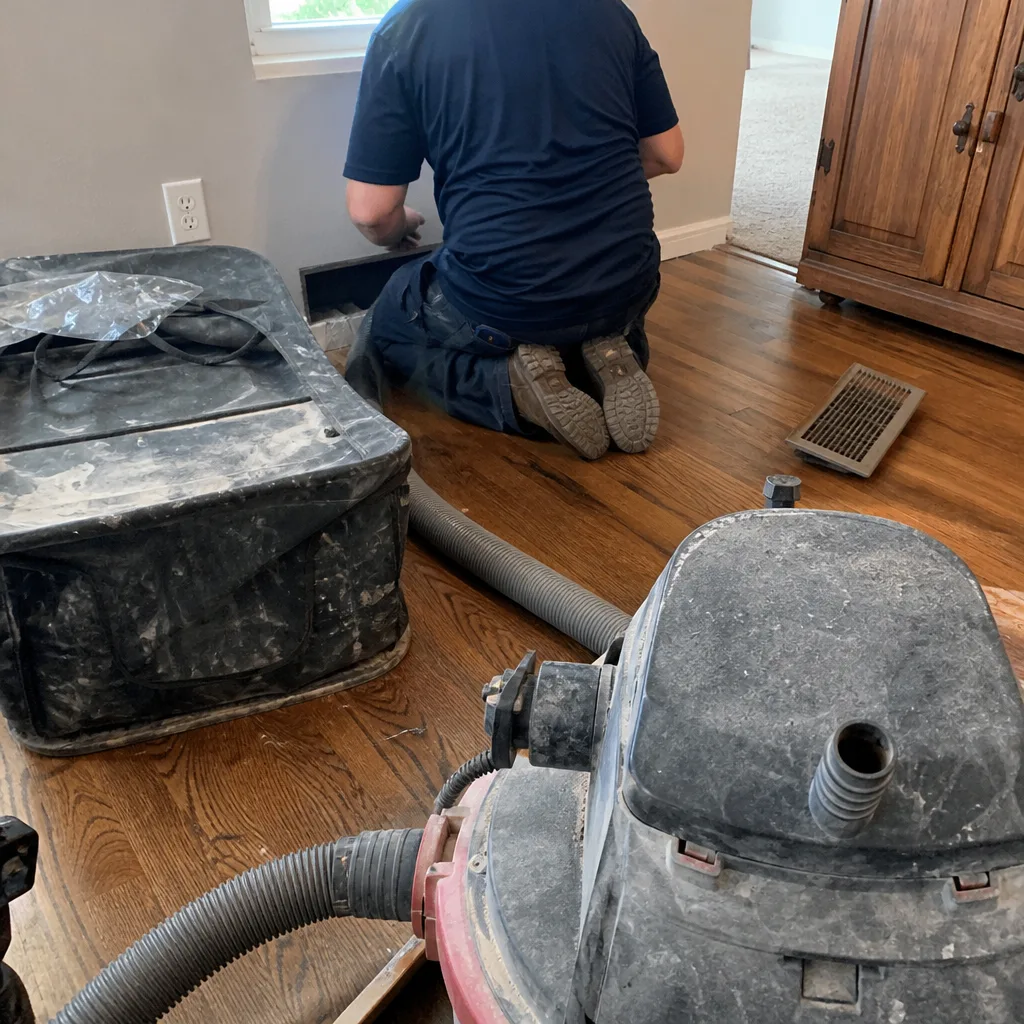 Before
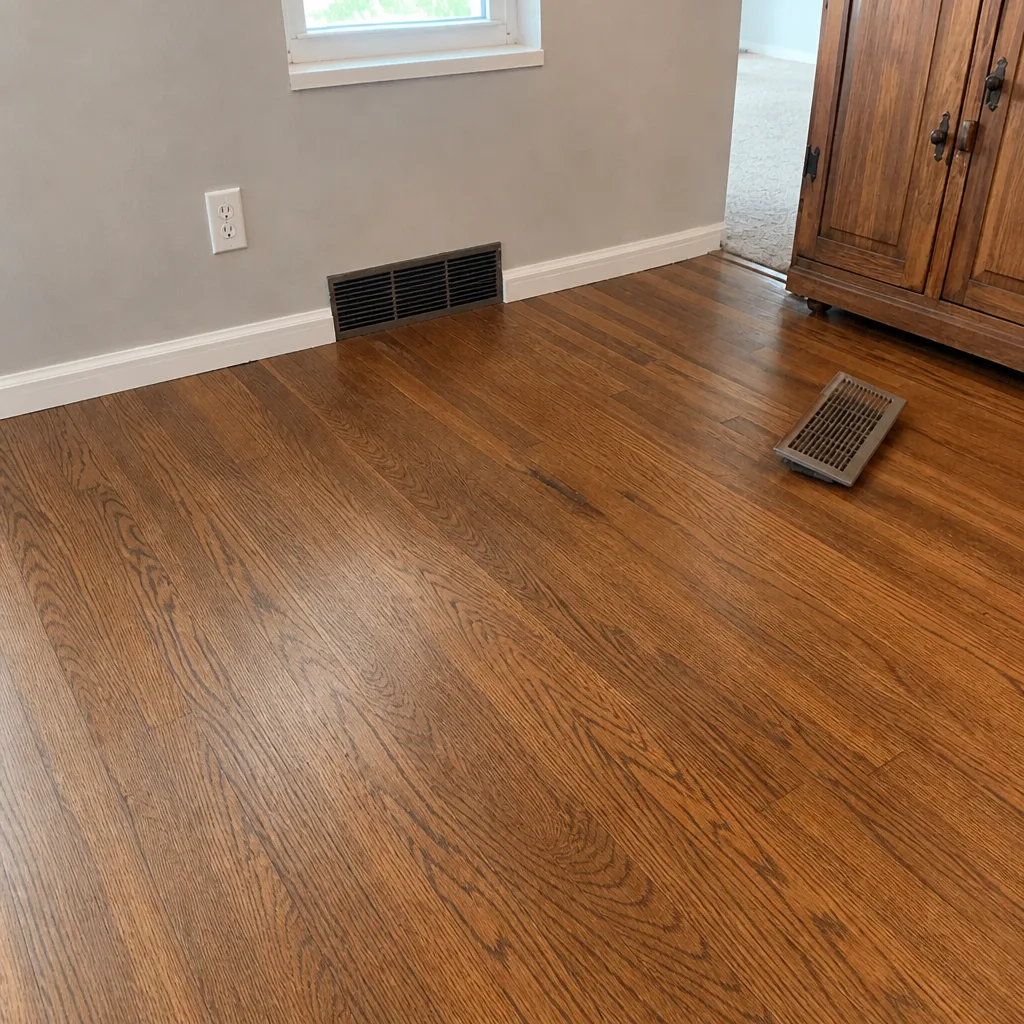 After
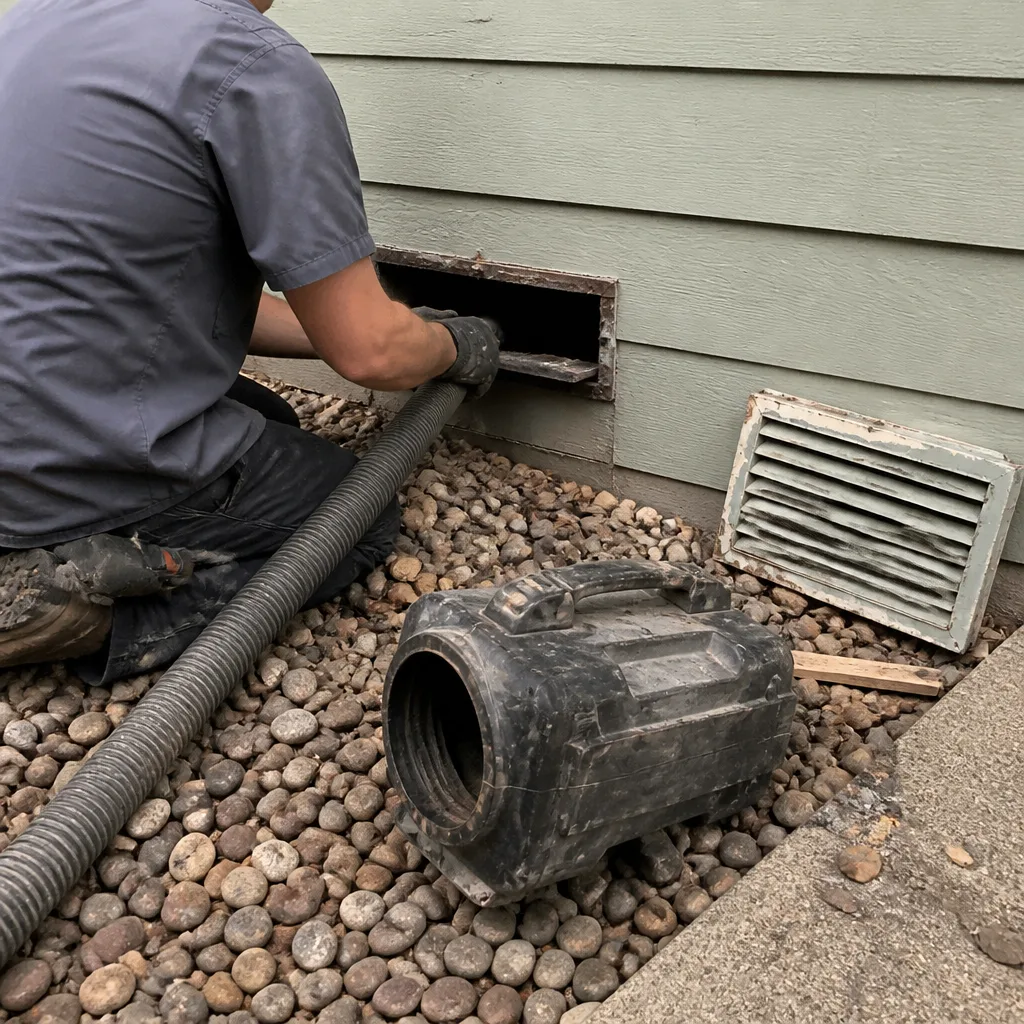 Before
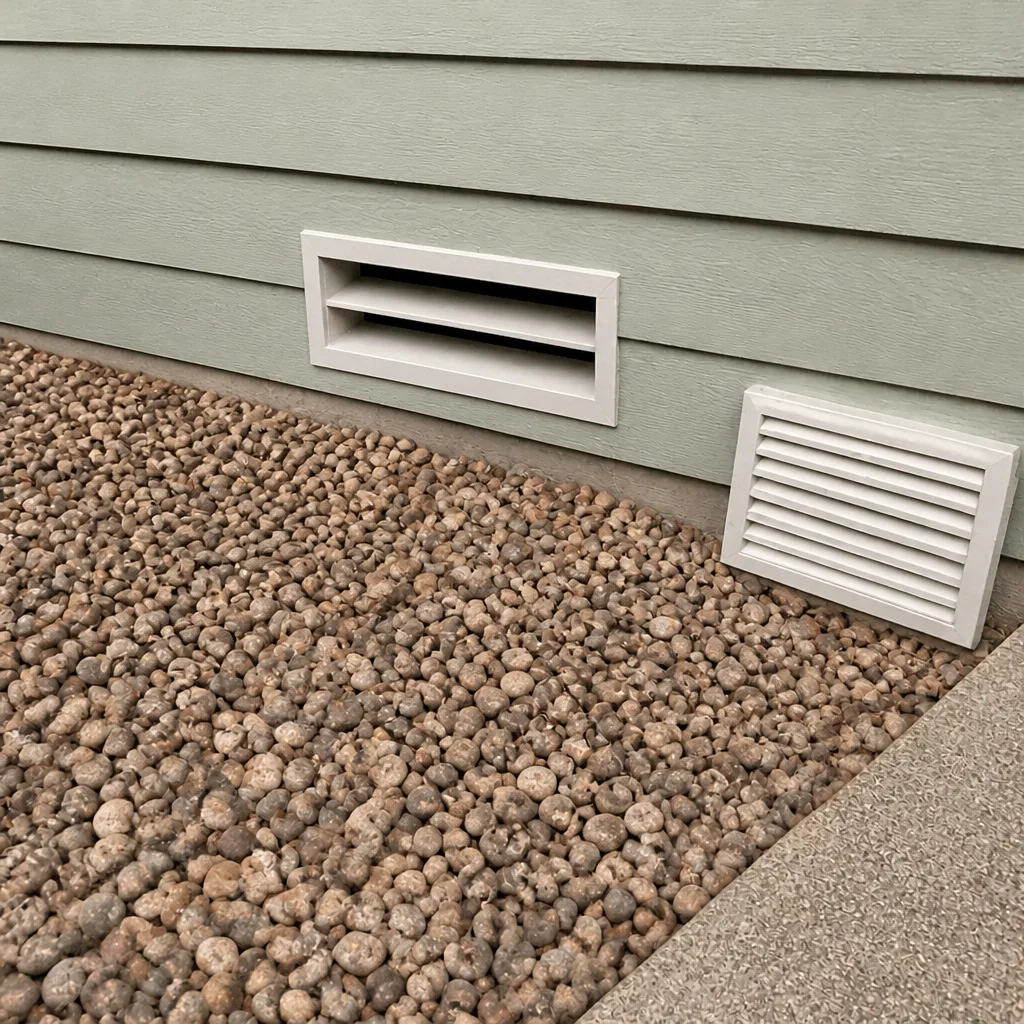 After
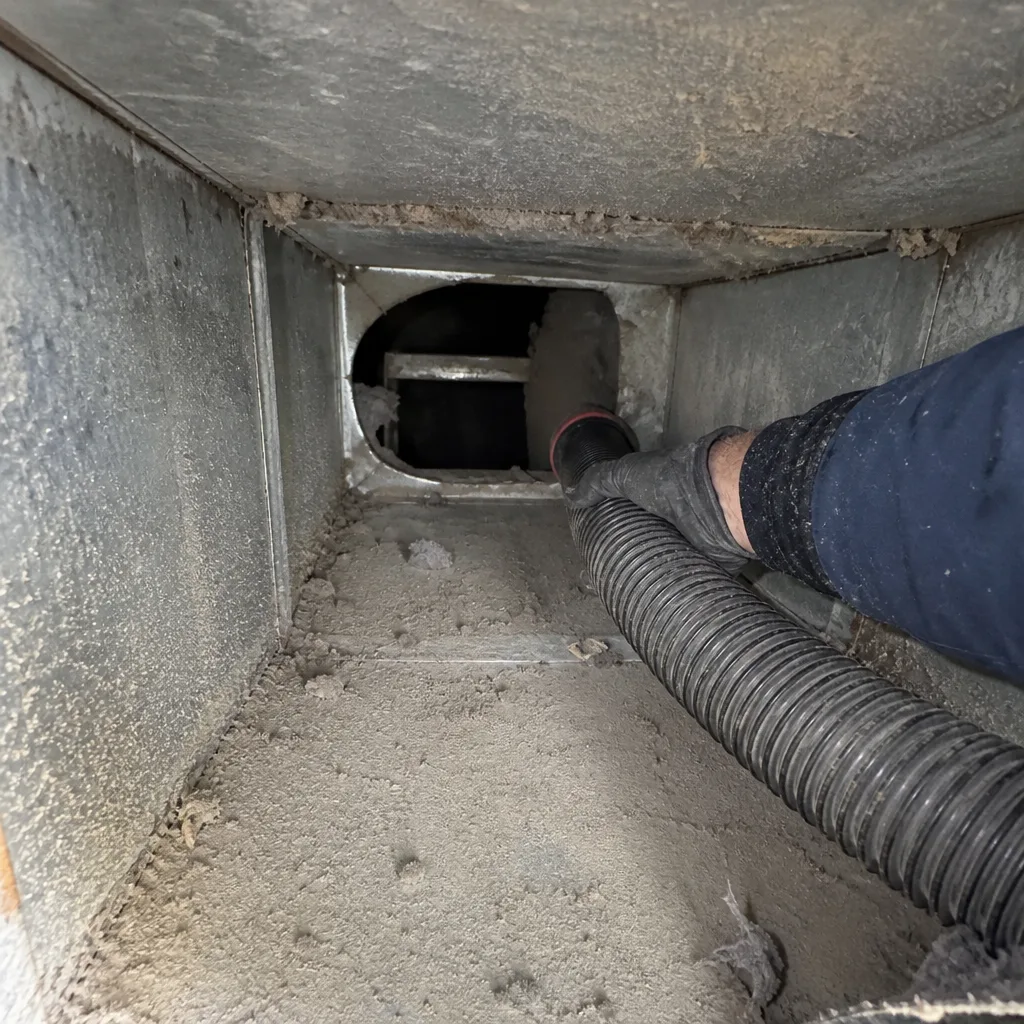 Before
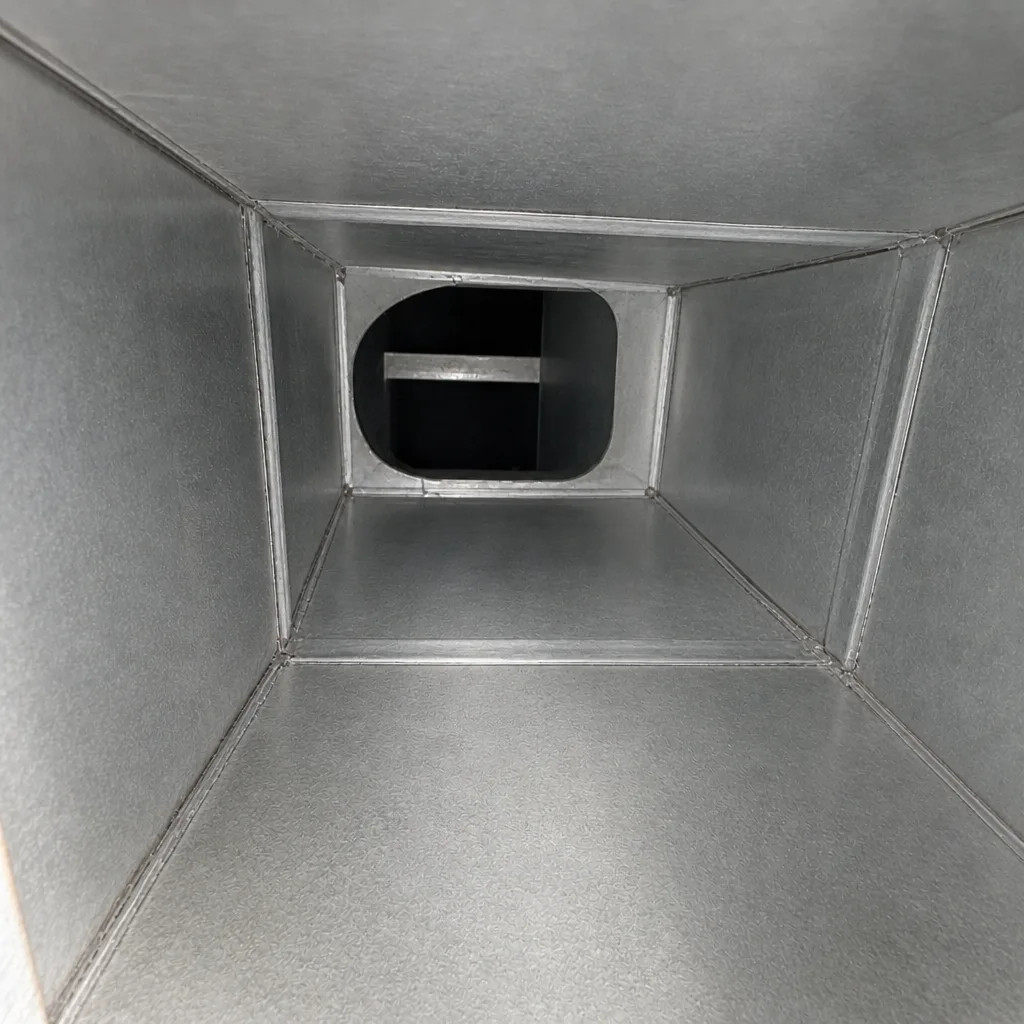 After
When to Call a Professional
Call a professional when smoke is visible at supply registers, when the air handler or any duct run has been wet for more than a few hours, when ductwork has taken on a musty smell after a moisture event, or when a renovation has flooded the system with drywall or concrete dust. Call earlier rather than later on a wet system, since the colonization window is short. Call if a full-system cleaning you’ve had done before didn’t fix a persistent symptom, because that’s the moment to look at sealing and sanitizing instead of cleaning alone. Air Duct Cleaning Southlands offers free estimates in Southlands. Call (855) 624-1395. We answer 24/7. Fast dispatch from 7am to 7pm, Sunday through Friday.
Frequently Asked Questions
Yes, if your duct system is reasonably sealed and you have a MERV-13 filter in place: set the fan to ON and keep windows closed. If smoke is coming out of your registers or your system has known leaks at the air handler cabinet, shut it down and run a standalone HEPA purifier instead.
Air duct cleaning in Southlands is priced per job by a written estimate, not per vent, and the estimate is free. Whole-system pricing depends on how many runs you have, how much contamination is present, and whether sealing or sanitizing is part of the scope. Call (855) 624-1395 for an exact quote; estimates are free.
Cheap quotes often mean a shop-vac rig, no rotary-brush agitation, no coil cleaning, and no sealing. The work is fast and the result is surface-level. We use the same class of equipment commercial contractors rely on, including Rotobrush rotary-brush systems and Nikro HEPA-filtration extraction, because a professional-grade scope is what actually removes bonded debris. Call (855) 624-1395 to see the difference a proper scope makes; estimates are free.
Ask for before-and-after photos of your own ducts, registers, and coil. A professional scope produces visible, documented results. Any contractor who can’t show you what they started with and what they finished with hasn’t given you proof of work. Call (855) 624-1395 to schedule and see the photos yourself; estimates are free.
Mold colonization in wet ductwork can begin within 48 to 72 hours, which is why a moisture event on the HVAC system is a time-sensitive call. Turn the system off, start structural drying, and get a professional assessment inside the first two days. Call (855) 624-1395 for a same-day assessment window; estimates are free.
Most homes benefit from a full-system cleaning every few years, but that schedule changes after an emergency: a smoke event, a renovation, or a water intrusion all warrant a cleaning sooner. If you notice persistent musty odors, uneven airflow, or visible dust at the registers, that’s a signal to get a scope on the system now. Call (855) 624-1395 for a free estimate.
The Bottom Line
Southlands homes sit in a climate that brings smoke events, nearby construction, and the occasional burst-pipe flood, and each of those emergencies turns the duct system into the primary path for outdoor contamination to reach indoors. The defense is preparation: a documented system, a MERV-13 filter you trust, a sealed air handler, and a clear protocol for each event. From there, add dryer vent cleaning to your regular routine so the rest of your air system stays safe, and see the full range of what we handle on our Air Duct Cleaning Southlands page. When something does go wrong, call (855) 624-1395. We answer 24/7. Fast dispatch from 7am to 7pm, Sunday through Friday. Free estimates, and the written estimate sets the final price.
Written by the team at Air Duct Cleaning Southlands.