
Last updated November 25, 2026
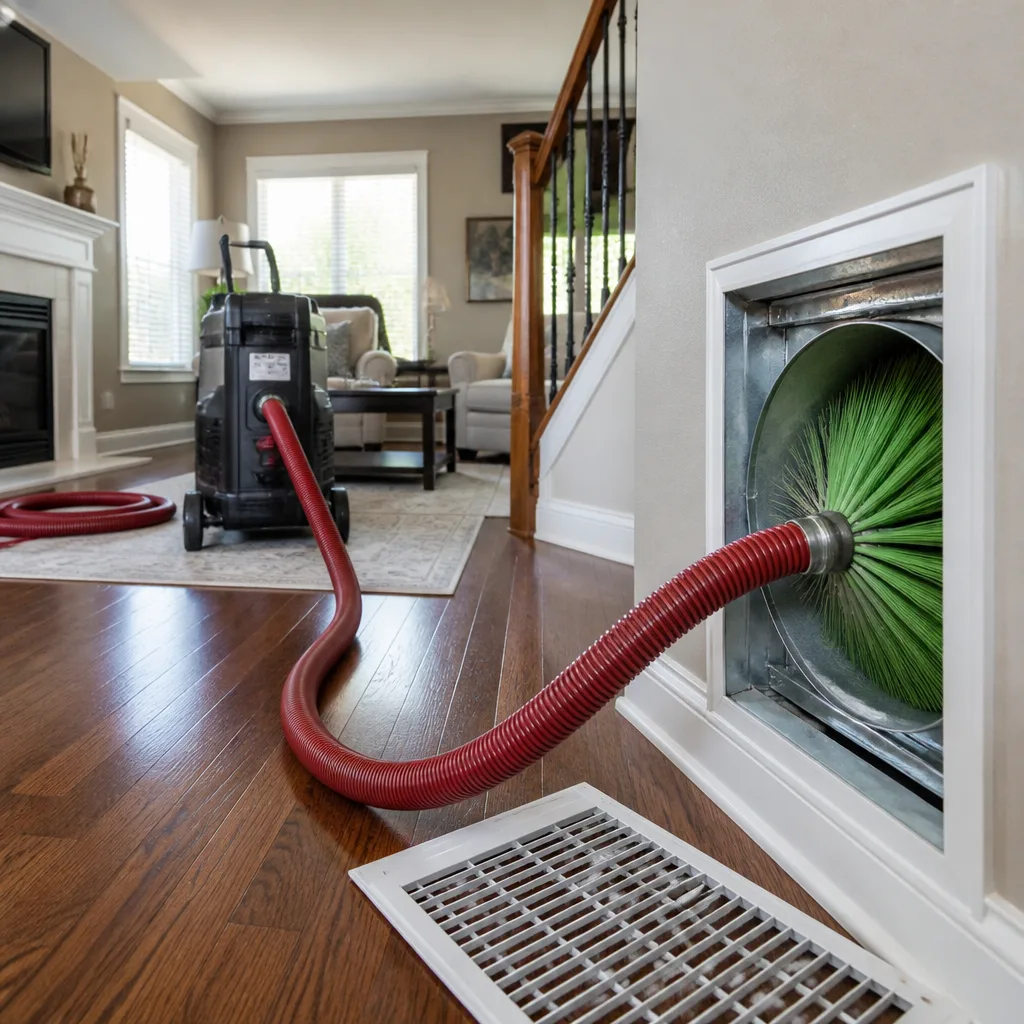 Whole-home duct cleaning
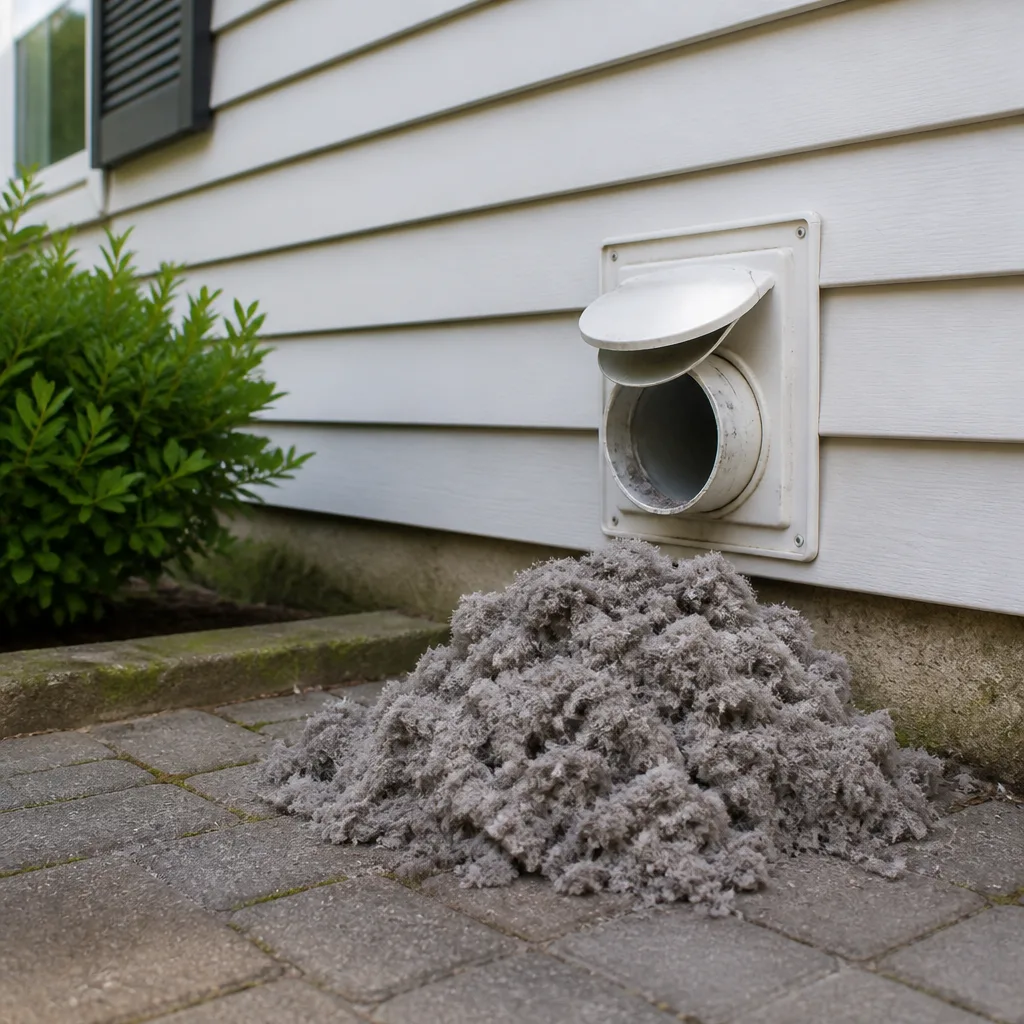 Dryer vent cleaning
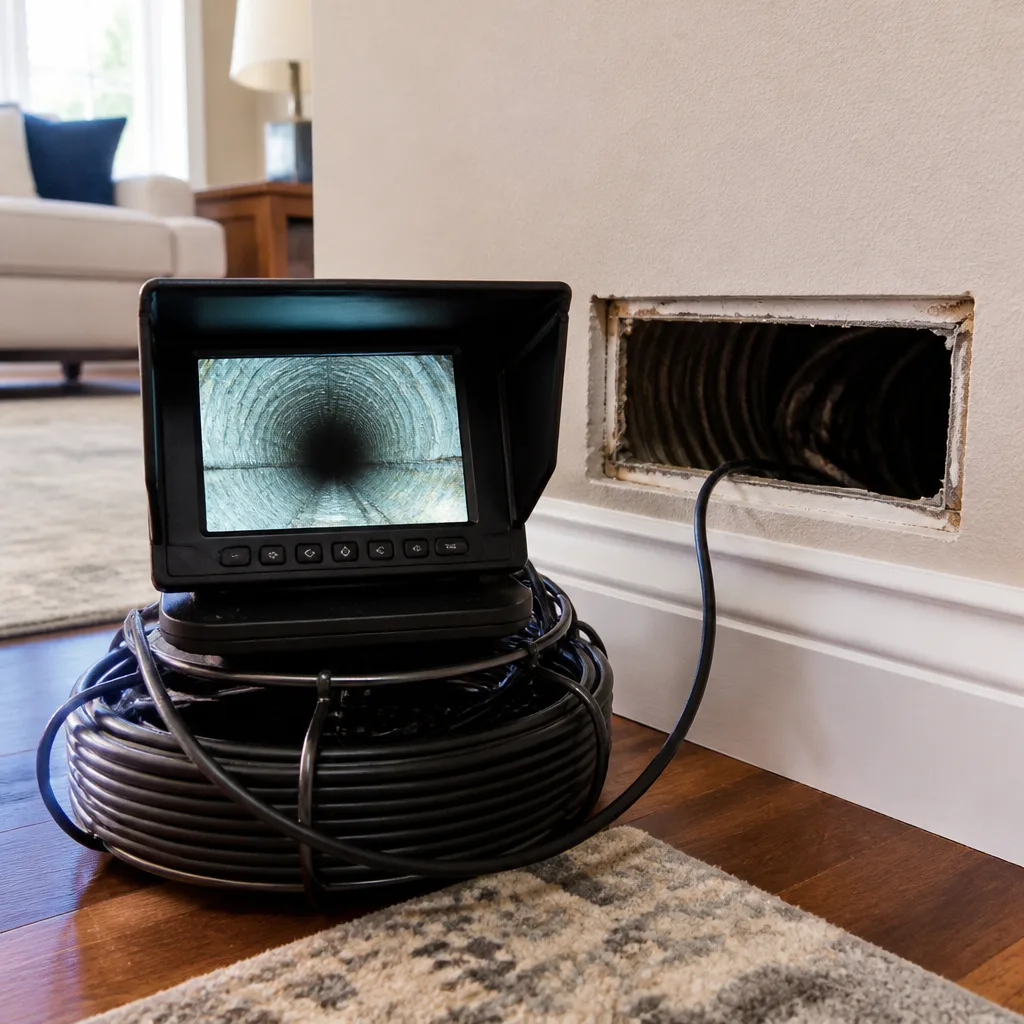 Camera inspection
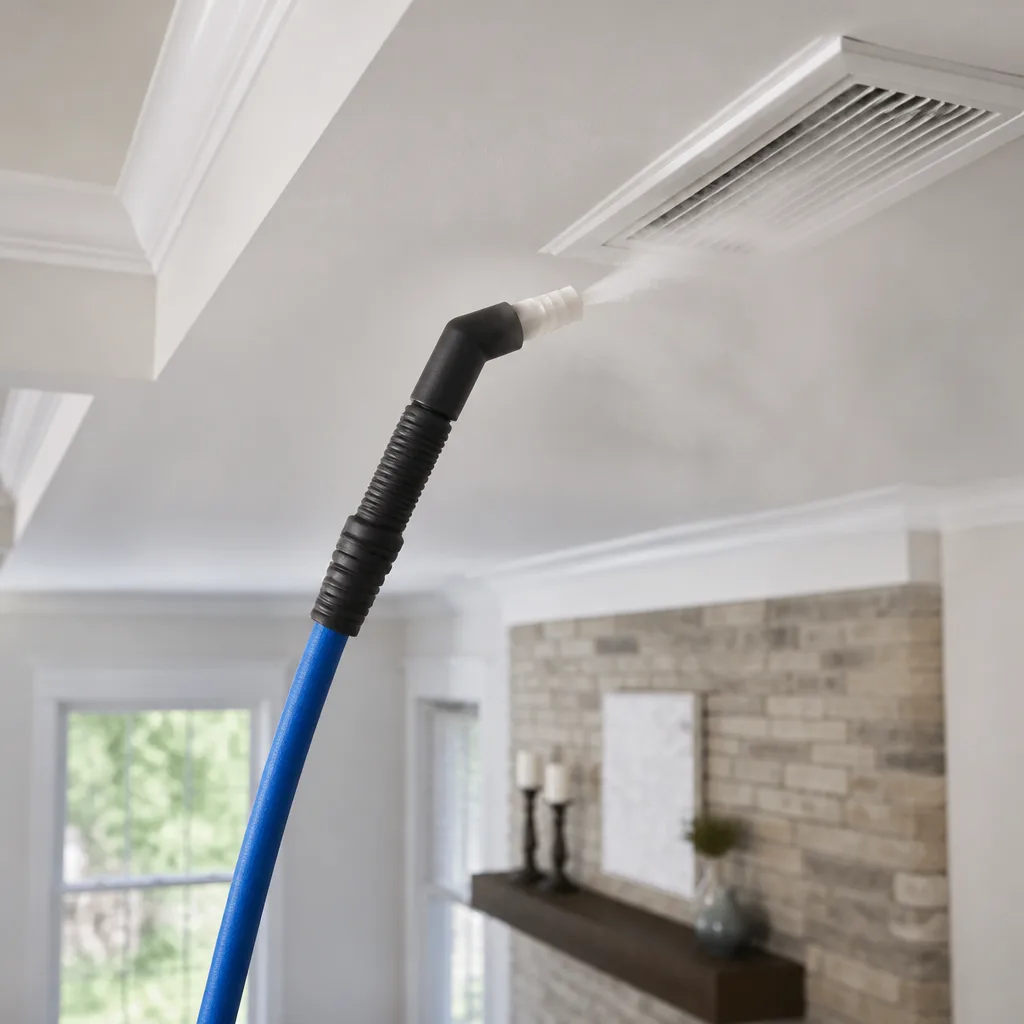 Sanitizing & deodorizing
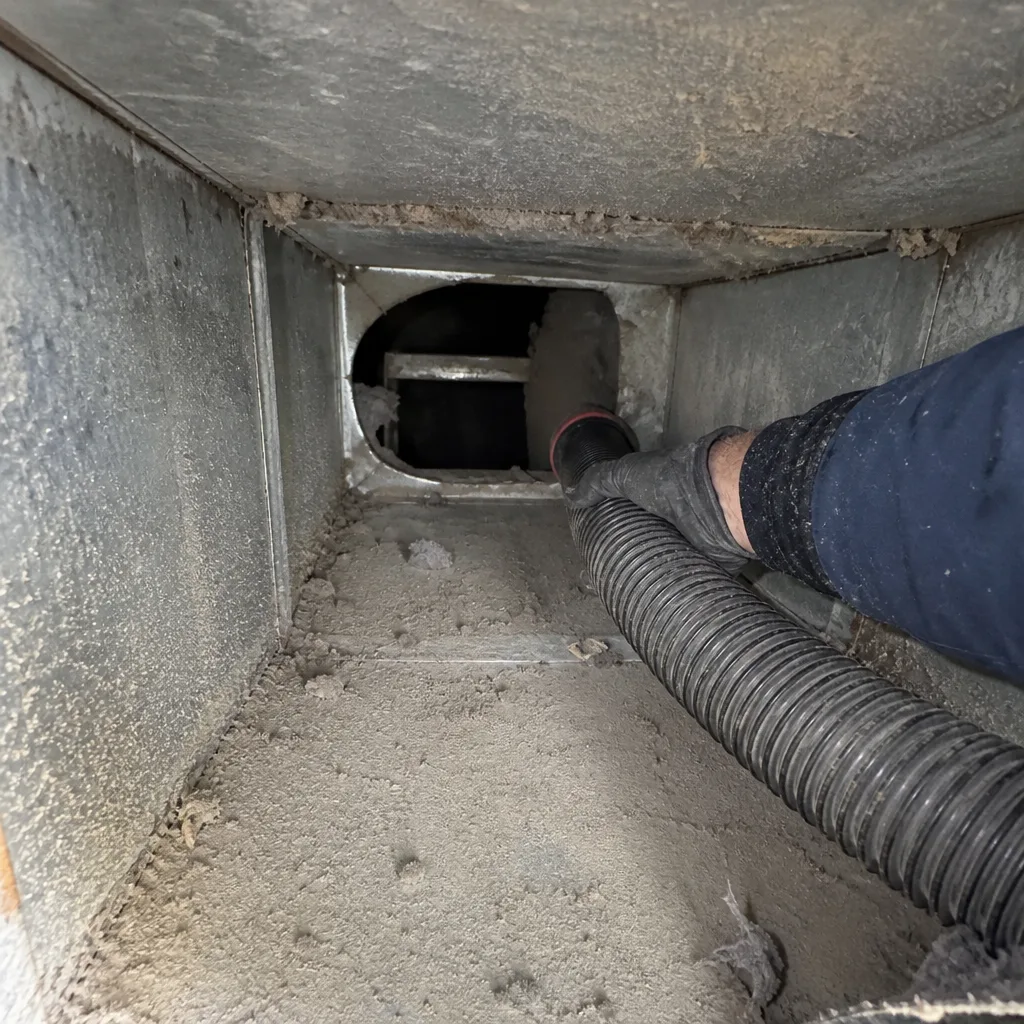
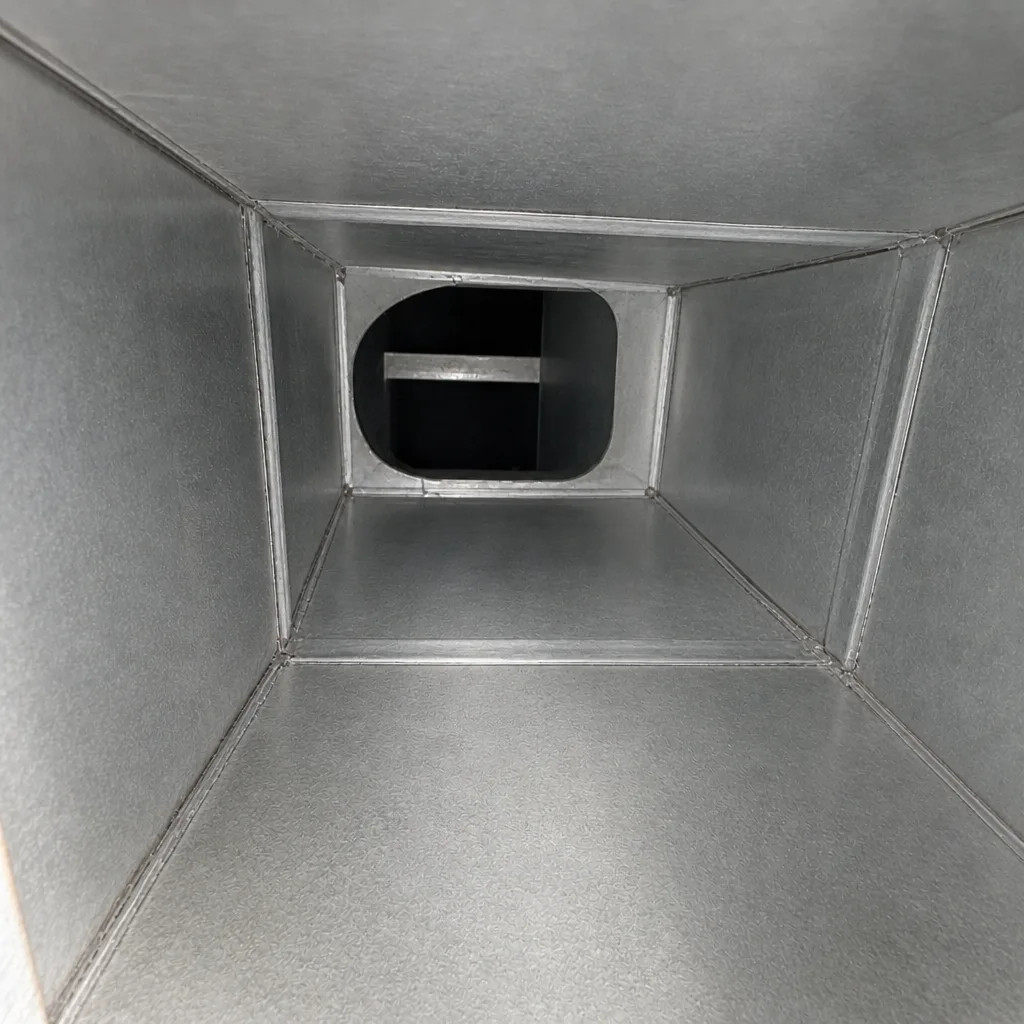
Whole-system duct and dryer vent check with before-and-after photos - you see exactly what came out of your vents
That "$99 whole-house special" is a bait ad - the real number appears once they are in your hallway, or the "clean" is a shop-vac at the register. We photograph the inside of your ducts before and after instead.
DIY vs Professional Air Duct Cleaning: The Southlands Homeowner’s Decision Guide
Most homeowners assume a rented shop-vac and a brush kit can handle whatever is inside their ducts. Here’s the part that surprises people: that setup can genuinely clean about 18 inches into a supply register. The contamination that actually affects the air you breathe starts three to eight feet in and runs through the main trunk and air handler, and reaching it takes negative-pressure equipment. That’s the real dividing line, not effort or willingness. This guide walks Southlands homeowners through what DIY can reasonably handle, what it can’t, and how to decide which path fits your home right now.
Quick Answer
DIY air duct cleaning is a reasonable choice for register-level upkeep, filter changes, and visual inspection of accessible connections. It is not adequate for source-removal cleaning of main trunk lines or the air handler, because consumer vacuums can’t generate the negative pressure or airflow needed to lift embedded debris from duct walls and contain it. For a system that’s never been professionally cleaned, or one showing symptoms like musty odors or uneven airflow, professional service is the practical route.
Styles & brands we work with
- Whole-home duct cleaning
- Dryer vent cleaning
- Camera inspection
- Sanitizing & deodorizing
Table of Contents
- The Equipment Gap: What 2,000-4,000 CFM Actually Does
- What Homeowners Can Legitimately Do Themselves
- Risk Categories Unique to DIY Duct Cleaning
- The Break-Even Question: Renting a Truck-Mounted Vacuum
- Using DIY Maintenance Between Professional Cleanings
- Why Southlands Homes Present Specific Duct Conditions
- How to Evaluate a Professional Duct Cleaning Service
- A Step-by-Step Homeowner Assessment You Can Do First
The Equipment Gap: What 2,000-4,000 CFM Actually Does
Professional source-removal cleaning runs on negative pressure generated at 2,000 to 4,000 cubic feet per minute. A consumer shop-vac in the 5 to 15 gallon range moves a fraction of that, and only at the register opening where the hose fits. The difference isn’t horsepower marketing. It’s what happens to debris that’s bonded to duct walls after years of settling, grease film, and dust agglomeration.
Rotary-brush systems like the Rotobrush line agitate that bonded layer while a vacuum pulls it out. Without agitation, a vacuum only collects what’s already loose. Without strong negative pressure, the agitation itself just throws dust into the room. The two have to work together, which is why professional setups pair a rotary brush with HEPA-filtered extraction like Nikro equipment rather than relying on suction alone.
Here’s what the airflow difference means in practical terms:
- At the register: a shop-vac can reach roughly the first foot and a half of a supply branch.
- In the branch run: debris three to eight feet in stays put without a brush and sustained vacuum.
- In the main trunk: the large-diameter line feeding every branch needs volume of air, not just suction at one opening.
- At the air handler: the coil, blower, and plenum collect debris that no register-level tool can reach.
That’s also why air duct cleaning done properly includes the air handler as part of the assessment, not as an optional add-on. Clean branches feeding a dirty coil don’t solve the problem.
What Homeowners Can Legitimately Do Themselves
Plenty of duct maintenance is genuinely homeowner territory, and we’d rather tell you that than pretend otherwise. The key is knowing where the line sits. Register covers, return grilles, and the visible interior of the supply boot are all accessible with basic tools and a vacuum with a brush attachment.
- Remove and wash register covers. Most pop off with a screwdriver or clip. Warm soapy water, dry fully, reinstall.
- Vacuum the visible boot interior. A crevice tool reaches the first several inches of each supply. This removes loose dust before it gets pulled back into the airstream.
- Replace filters on the correct schedule. Check the rating your system calls for, then follow the interval on the filter or your HVAC documentation. A clogged filter strains the blower and worsens everything downstream.
- Inspect accessible flex duct connections. In a basement, crawlspace, or attic, look at where flex duct meets the trunk. Sagging, disconnected collars, or torn outer jacket are visible without opening anything.
- Check return grilles for buildup. Returns collect more than supplies because they pull room air in continuously.
None of this requires special equipment, and all of it reduces the load on the system between professional visits. What it doesn’t do is clean the trunk or the air handler, and it shouldn’t be sold to yourself as equivalent. For a broader look at how the full service works, our main Air Duct Cleaning Southlands page covers the complete scope.
Risk Categories Unique to DIY Duct Cleaning
The risks of DIY duct cleaning aren’t about getting dirty. They’re about damaging a system that’s harder to access than it looks. Three categories come up repeatedly.
Dislodging debris into the air handler
Pushing a brush or hose down a branch without negative pressure at the trunk can send loosened debris toward the coil and blower instead of out of the system. Once that material reaches the coil, it’s a bigger job than the cleaning would have been. The system has to be under vacuum before agitation starts, in that order.
Puncturing older flex duct insulation
Flex duct has a thin outer jacket over insulation and an inner liner. A brush snagged on a seam or a hose forced around a bend can tear the jacket, which degrades insulation and lets unconditioned air into the run. In Southlands homes where flex duct runs through unconditioned attic space, that matters for both efficiency and condensation.
Disturbing mold colonies without containment
If there’s microbial growth inside a duct, agitating it without containment spreads spores through the living space. Professional work handles this with air-scrubbing equipment like Abatement Technologies units running during the job, plus post-clean sanitizing. Doing this yourself without containment is the one risk we’d genuinely steer anyone away from.
The Break-Even Question: Renting a Truck-Mounted Vacuum
Tool rental centers do rent duct cleaning equipment, and it’s a fair question whether that math works. The honest answer: it rarely does for a single job, and it never matches a full professional deployment for a whole house.
Here’s what a rental typically gets you and what it doesn’t:
- You get: a portable or truck-mounted vacuum with meaningfully more airflow than a shop-vac, plus a basic brush kit.
- You don’t get: the rotary brush heads sized for different duct diameters, HEPA filtration rated for fine particulate, containment setup, or the experience to know when a brush shouldn’t go somewhere.
- You also don’t get: the part most people underestimate – the ability to tell whether the job is actually finished, or whether the trunk still has buildup.
Add the rental cost, the time, and the risk of damaging flex duct, and the case narrows fast. Where rental makes sense: a single short branch run in an accessible space, on a system you know is otherwise clean. For a whole-house job with a never-cleaned trunk, a rental is more effort than value.
Our technicians have up to 14 years of experience, and the patterns we see in Southlands homes rarely fit the “one short branch” scenario. Most systems that prompt a cleaning call need the trunk and air handler addressed together.
Using DIY Maintenance Between Professional Cleanings
The most useful role for DIY is as a complement, not a substitute. Done consistently, register-level maintenance genuinely extends the interval between professional cleanings and keeps the system running better in the meantime.
- Build a filter schedule and stick to it. Write the change date on the filter edge with a marker. This single habit does more for air quality than anything else on the list.
- Wipe and vacuum register covers monthly during heavy-use seasons. Heating and cooling season pushes the most air, and that’s when the visible dust accumulates fastest.
- Vacuum the visible boot interior every few months. A crevice tool and two minutes per register is enough.
- Do a visual walk-through of accessible duct connections twice a year. Look for sagging flex, disconnected collars, or torn jackets. If you find one, that’s a repair conversation, not a cleaning one.
- Note odors or airflow changes as they happen. A short log on your phone helps a technician diagnose far faster than memory.
That schedule is reasonable for any Southlands home. What it can’t do is reset a system that’s accumulated years of buildup in the trunk, and it can’t address leaks in the ductwork itself. Duct repair and sealing is a separate service for exactly that reason, and it’s not something a homeowner can do from a register opening.
Why Southlands Homes Present Specific Duct Conditions
Southlands sits in the Colorado Front Range, and the local climate shapes duct conditions in ways that don’t show up in generic cleaning advice. The heating season runs long and dry. Homes run the furnace for months at a stretch, which means continuous airflow through the same duct surfaces, picking up and redepositing fine dust. Dry air also means more airborne particulate staying suspended longer.
Construction in and around Southlands has added another factor. Newer builds often use flex duct extensively, and flex duct has more surface texture and more bends than rigid metal. Those bends trap debris and create more spots where a connection can work loose. Established neighborhoods nearby have the opposite profile: older rigid ductwork with decades of settled accumulation and, often, original seals that have aged out.
Both profiles point the same direction. A cleaning that addresses only the visible registers leaves the actual problem in place. When we look at a Southlands system, the trunk and the air handler connection are the first things we check, because those are where the climate and the housing stock combine to create the conditions homeowners notice as musty smell or uneven airflow room to room.
The companion concerns matter here too. dryer vent cleaning is a separate fire-safety issue that comes up in the same visit, and HVAC cleaning covers the coil and blower that share the same airstream as your ducts.
How to Evaluate a Professional Duct Cleaning Service
This industry has a bait-and-switch reputation, and it’s earned. The pattern: a low advertised price, then a technician on site who finds “problems” that multiply the invoice. The way to avoid it is to evaluate the service before anyone arrives.
- Look for named equipment. A company that uses Rotobrush and Nikro equipment says so, because the hardware is the argument. Vague references to “professional equipment” tell you nothing.
- Ask what’s included in the quoted scope. Trunk lines, branch runs, air handler, and registers should all be named. If the quote only covers registers, it’s not source-removal cleaning.
- Ask whether repair and sealing are part of the assessment. A pure-cleaning provider will clean around a disconnected duct and leave it disconnected. Duct integrity should be checked, not assumed.
- Ask about containment and sanitizing. Post-clean sanitizing with Guardsman-grade treatments addresses mold, bacteria, and allergens at the surface level. Air-scrubbing equipment running during the job is a good sign the provider takes containment seriously.
- Ask for before-and-after photos of your own ducts. Not stock images. Yours.
- Confirm the price is set per system before work starts. One flat price per system, agreed in writing, removes the entire bait-and-switch risk.
Air quality upgrades fit into the same visit when they’re warranted. Honeywell and Aprilaire filtration integration is available at the time of service, which is far more efficient than scheduling it separately after a cleaning.
A Step-by-Step Homeowner Assessment You Can Do First
Before deciding between DIY and professional, do a quick assessment of your own system. This takes about twenty minutes and gives you real information to work with.
- Check the filter. If it’s visibly loaded, replace it first. Everything downstream reads cleaner after that.
- Shine a light into a few supply registers. Loose dust near the opening is normal. A visible coating farther in, or a musty smell when air moves, points toward a deeper cleaning need.
- Look at the return grille. Returns collect more dust than supplies. Heavy buildup on returns is a reasonable indicator the trunk needs attention.
- Walk the accessible duct run. Look for disconnected collars, sagging flex, or torn outer jackets. Note anything you find.
- Test airflow room to room. Hold a tissue near supply registers. Noticeably weaker airflow in some rooms points to a leak or a blockage, and neither is fixed by cleaning alone.
- Note any odors. Musty smells suggest moisture or microbial growth. That’s a containment job, not a DIY one.
If steps one through three come back clean and step four is intact, you’re a good candidate for register-level maintenance and a longer professional interval. If you find problems at any step, a professional assessment is the efficient next move.
Common Mistakes to Avoid
- Running a brush down a branch without trunk vacuum. Without negative pressure pulling debris out, loosened material migrates to the air handler coil instead. That turns a cleaning into a repair.
- Forcing a shop-vac hose around a tight flex bend. Older flex duct in Southlands attic runs has a thin jacket. A forced hose tears it, and you’ve traded a cleaning for a repair.
- Agitating visible mold without containment. Spores travel. Without air-scrubbing equipment and post-clean sanitizing, the living space absorbs what the duct releases.
- Skipping the return side. Returns carry more air volume than supplies, and they collect buildup faster. Cleaning only the supply side misses most of the debris.
- Assuming cheaper means equivalent. A quote that’s far below others usually excludes the trunk or the air handler, or substitutes register-only cleaning. Ask what’s in the scope, not just the number.
- Cleaning around a disconnected duct. Cleaning a system with a loose collar is wasted effort. Duct integrity has to be checked before, not after.
- Treating a professional cleaning as permanent. Buildup recurs with use. Register-level maintenance and a sensible filter schedule are what actually extend the interval.
See the difference
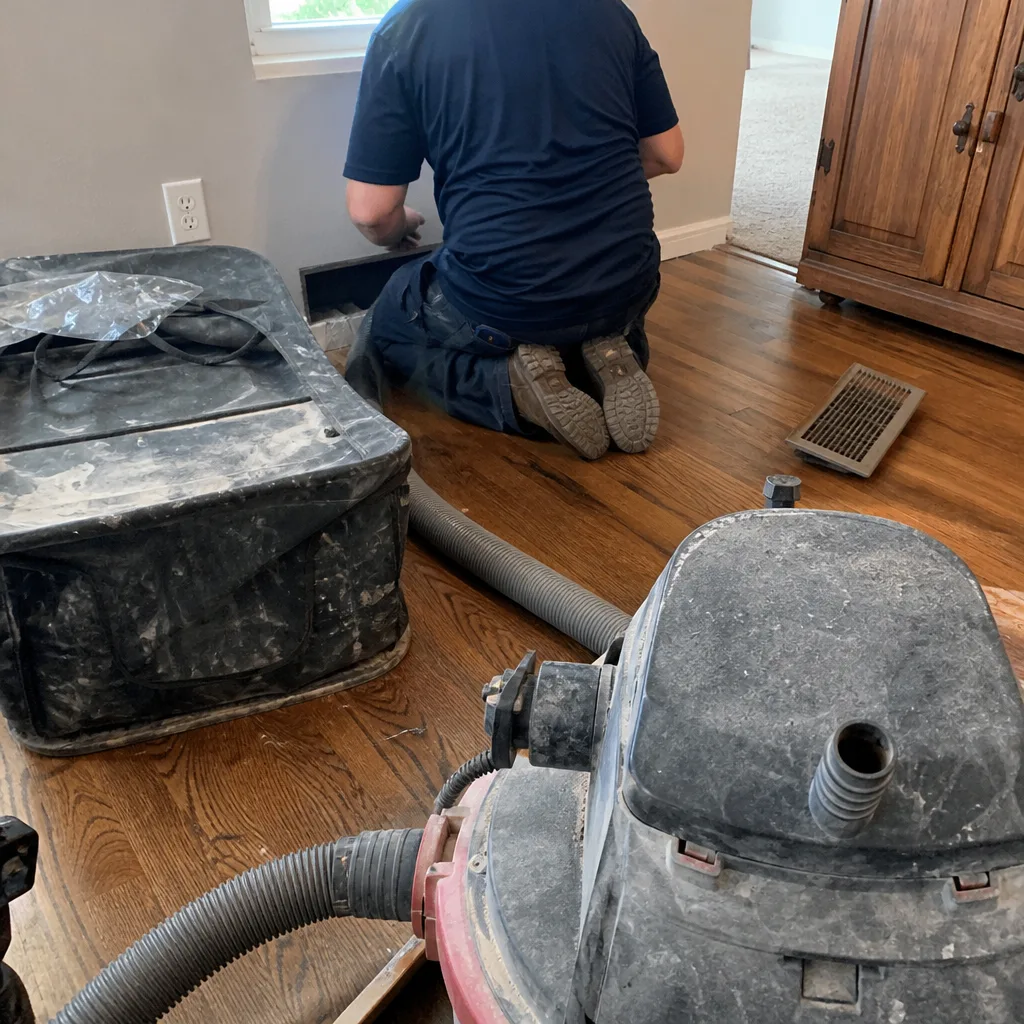 Before
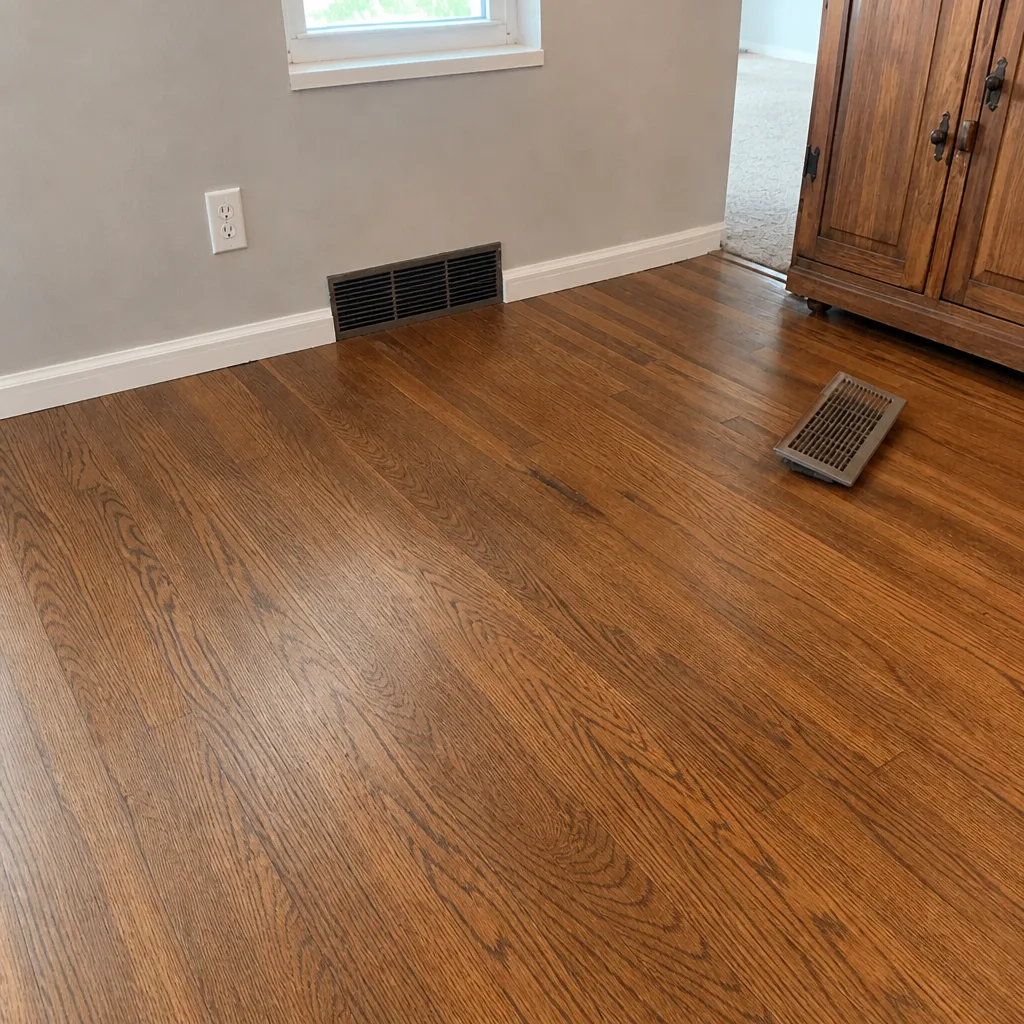 After
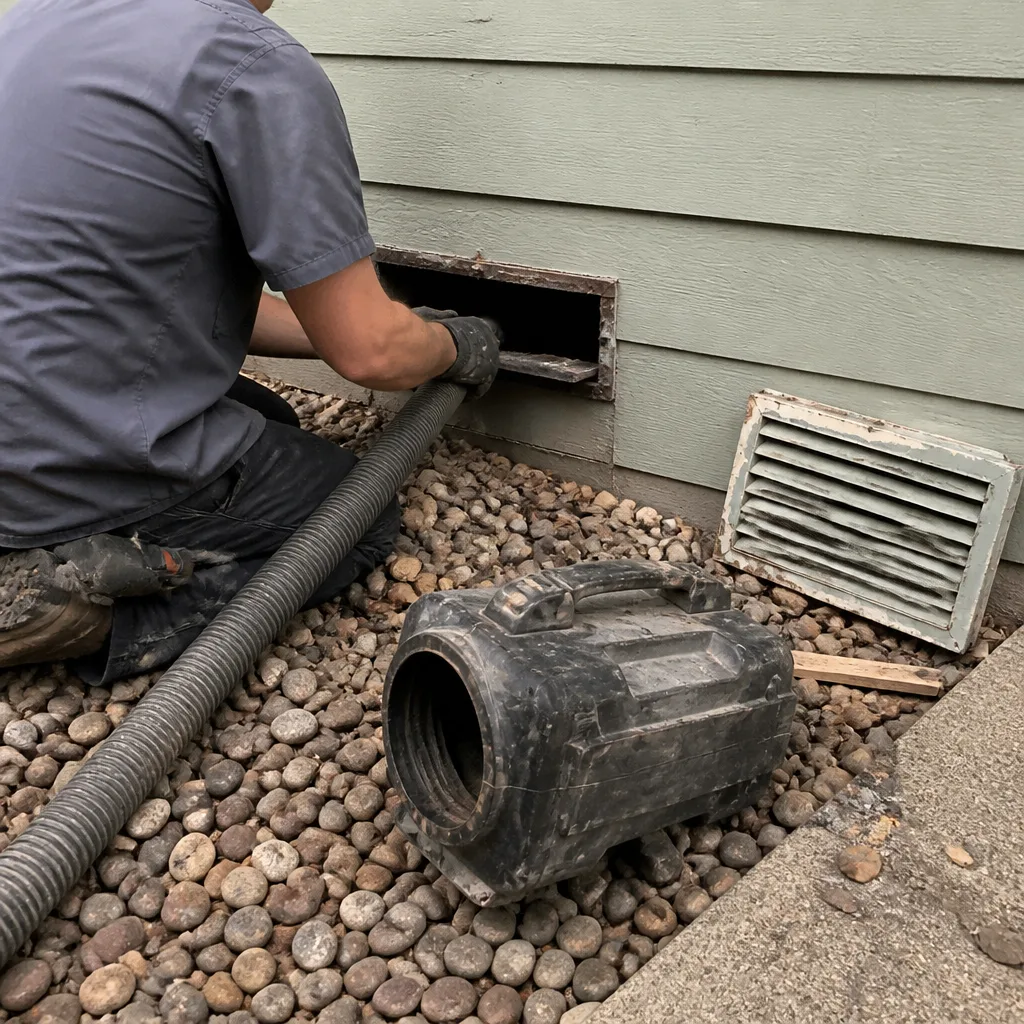 Before
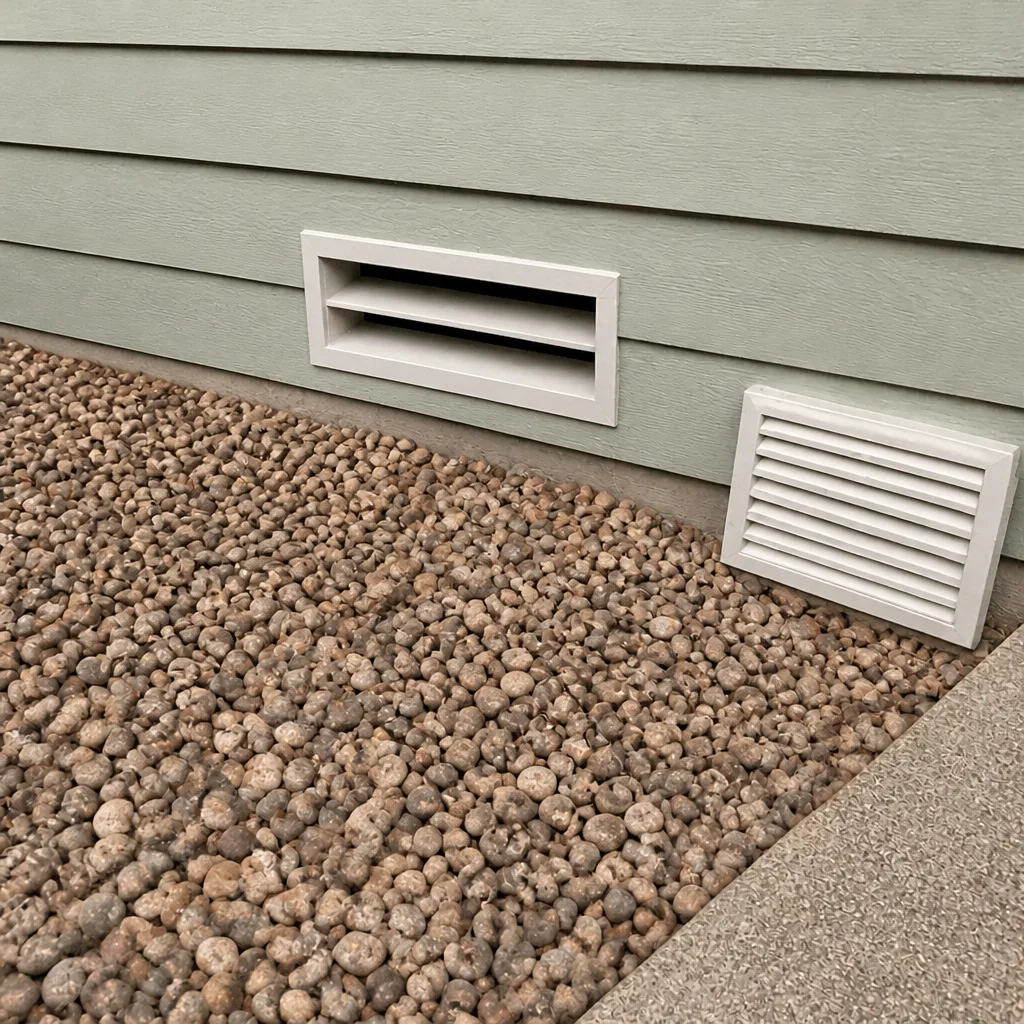 After
 Before
 After
When to Call a Professional
Call a professional when the problem is in the trunk, the air handler, or the ductwork itself. Those are the three places DIY can’t reach, and they’re where the air quality symptoms Southlands homeowners notice usually originate. Specific triggers: musty or stale odors when the system runs, uneven heating and cooling between rooms, visible microbial growth inside any duct, a system that’s never been professionally cleaned, or a visible disconnected or torn duct connection.
Air Duct Cleaning Southlands offers free estimates in Southlands. Call (855) 624-1395. We answer 24/7. Fast dispatch from 7am to 7pm, Sunday through Friday. The local pro we connect you with is licensed and insured as their state requires, works from a written estimate so the price is set per system before anything starts, and provides before-and-after photos of your own ducts so you can see the difference the equipment made.
Frequently Asked Questions
You can clean about 18 inches into each supply register with a shop-vac, and that’s worth doing as routine maintenance. You cannot clean the main trunk or the air handler with consumer equipment, because a 5 to 15 gallon shop-vac can’t generate the negative pressure or airflow needed to lift bonded debris from duct walls or contain it during agitation. Register-level cleaning is legitimate upkeep; source-removal cleaning is a different job.
Pricing is per system, not per vent, and the written estimate sets the final number. We don’t quote teaser coupon prices because that’s the setup for the bait-and-switch pattern this industry is known for: a low advertised figure that grows once a technician is on site. Call (855) 624-1395 for an exact quote. Estimates are free, and the price is agreed before work starts.
Cheap quotes usually exclude the trunk lines, the air handler, or both, or they price per vent so the scope shrinks as the number looks better. Some clean only the registers and call it a full service. The way to compare fairly is to ask what’s included in the scope and whether the price is one flat figure per system. A quote that can’t answer those two questions isn’t a quote worth comparing.
Ask for before-and-after photos of your own ducts, not stock images. A provider using Rotobrush rotary-brush equipment and Nikro HEPA extraction can show the difference clearly, because the equipment does visible work. If a company can’t or won’t document the job, that tells you something. Call (855) 624-1395 to schedule an assessment and see the photos from your own system.
There’s no universal interval, because it depends on the system, the housing stock, and how consistently filters get changed. In Southlands, the long heating season and heavy flex duct use in newer construction tend to shorten the practical interval. A reasonable approach: professional cleaning when symptoms appear or the system has never been done, then register-level maintenance and disciplined filter changes to stretch the next visit.
No, and it’s worth separating from cleaning entirely. Sealing requires access to connections inside walls, attics, and crawlspaces, plus the right materials for the duct type. A disconnected collar or torn flex jacket left alone undoes the value of a cleaning, because the system pulls unconditioned air from wherever the leak is. Duct repair and sealing is a core part of our assessment for that reason. Call (855) 624-1395 if you’ve spotted a problem during your walk-through.
The Bottom Line
DIY duct cleaning isn’t wrong. It’s specifically limited. Register covers, filter changes, and visual inspections are genuine homeowner maintenance, and doing them consistently extends the interval between professional cleanings. What DIY can’t do is remove embedded contamination from the main trunk and air handler, and that’s where the air quality problems actually live. The decision comes down to location: register-level, do it yourself; trunk-and-air-handler-level, bring in equipment that generates real negative pressure. For a Southlands system that’s never been cleaned, or one showing musty odors and uneven airflow, the professional route is the practical one.
Ready to see what’s actually in your ducts? Air Duct Cleaning Southlands offers free estimates. Call (855) 624-1395. We answer 24/7. Fast dispatch from 7am to 7pm, Sunday through Friday.
Written by the team at Air Duct Cleaning Southlands.