
Last updated November 25, 2026
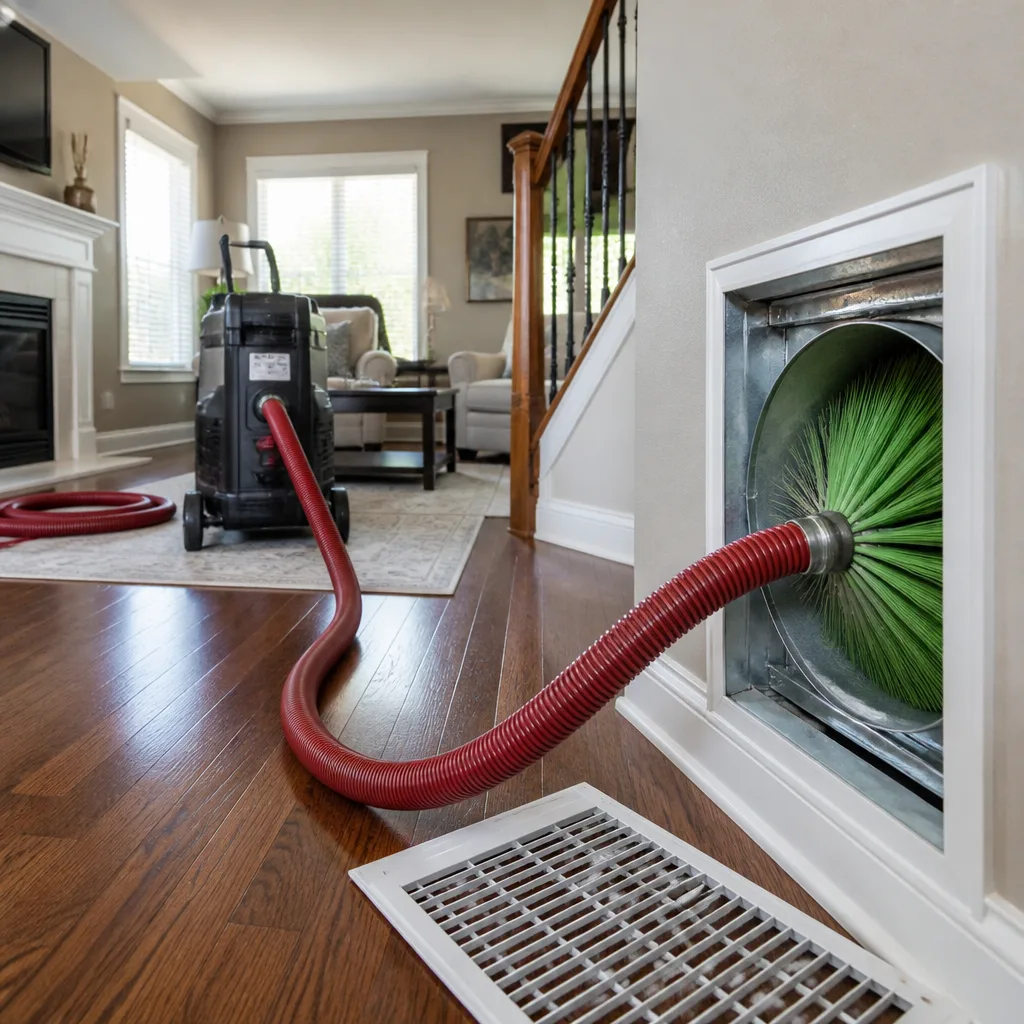 Whole-home duct cleaning
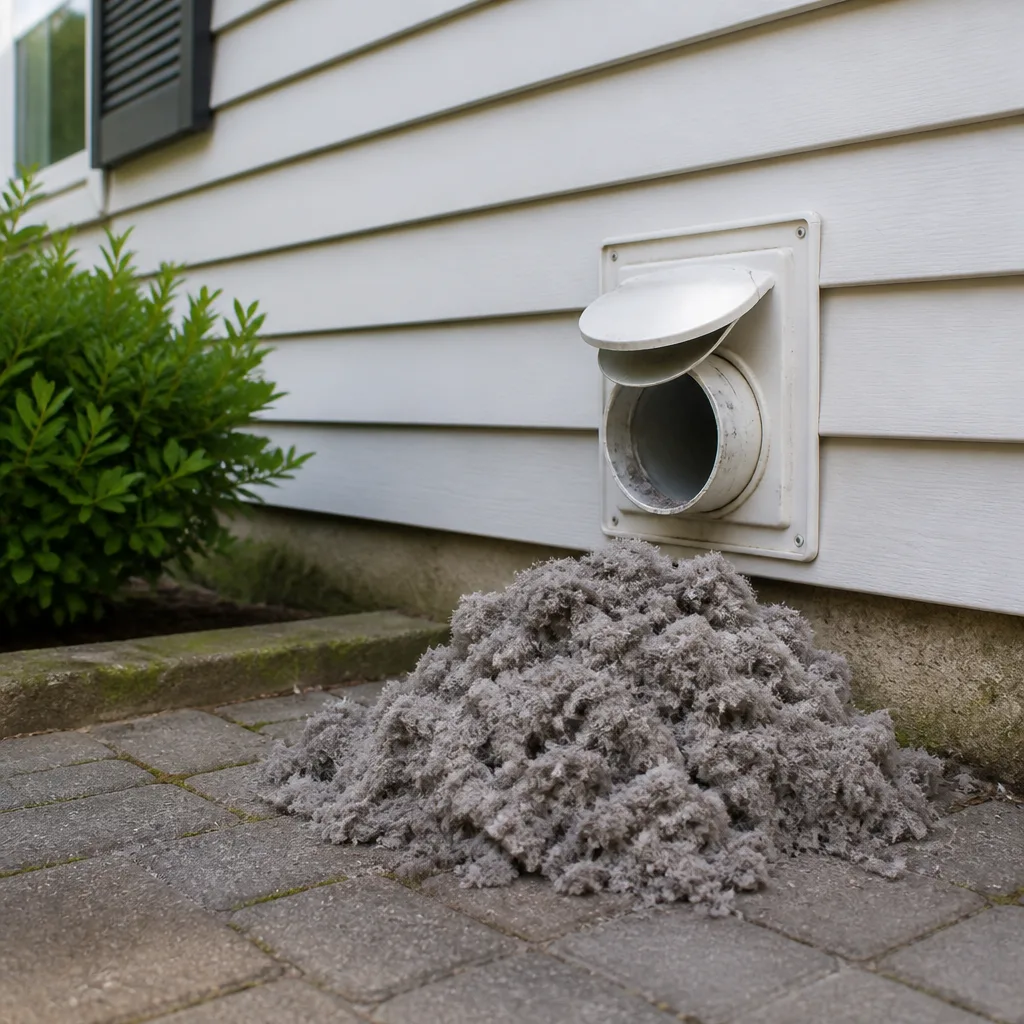 Dryer vent cleaning
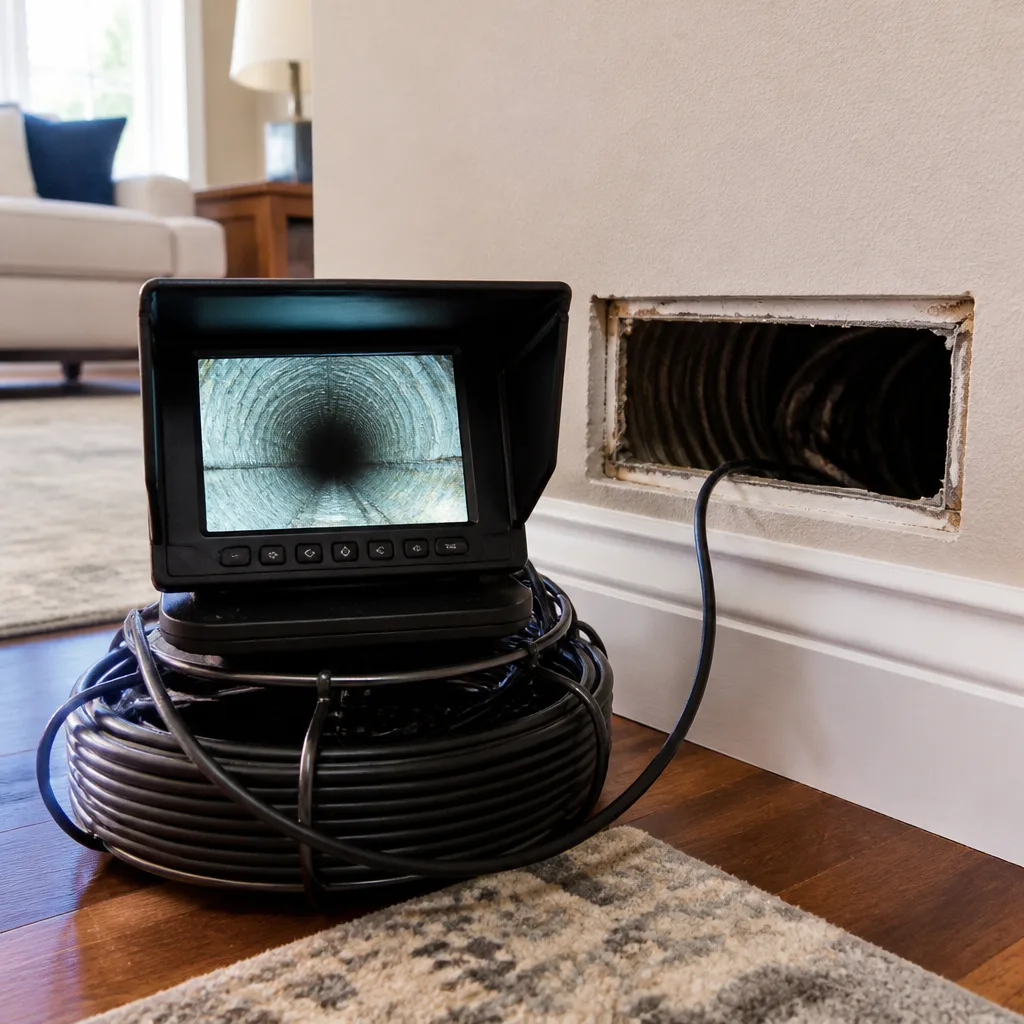 Camera inspection
 Sanitizing & deodorizing
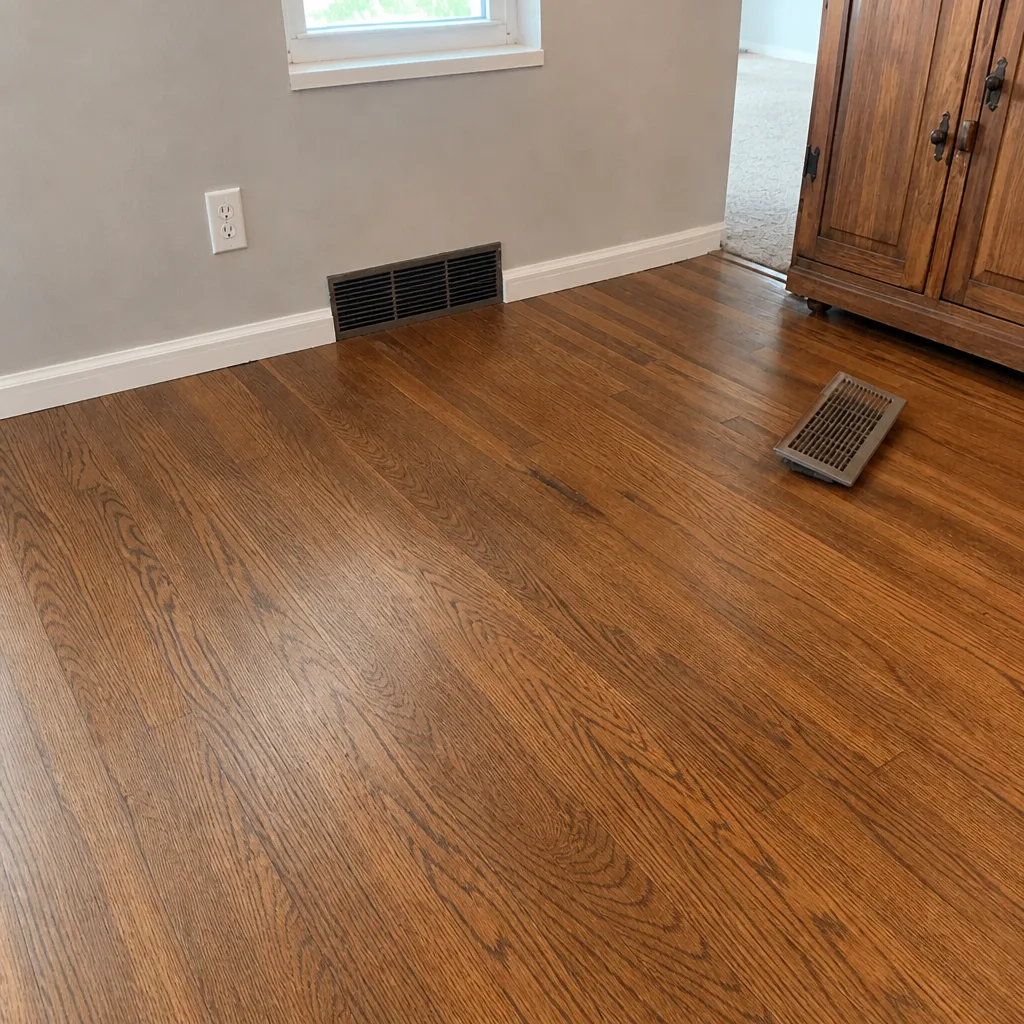
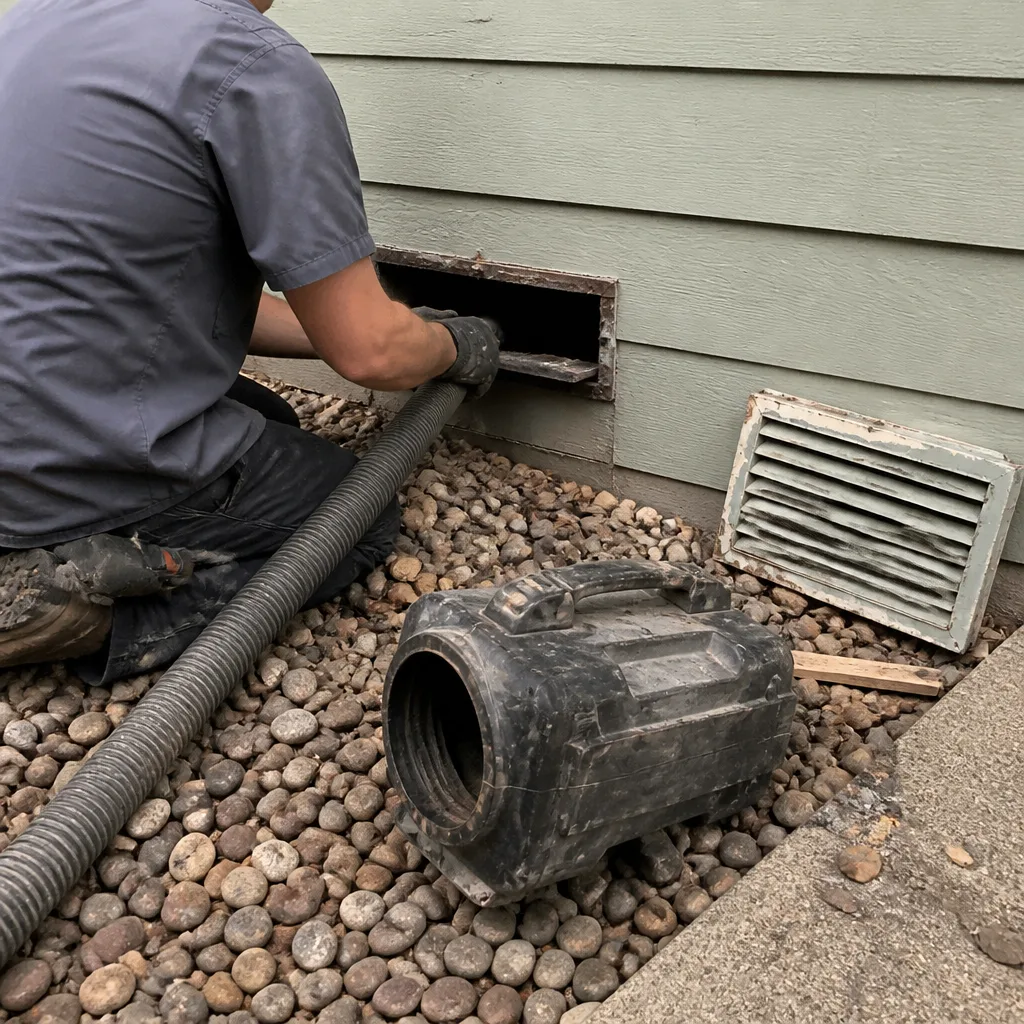
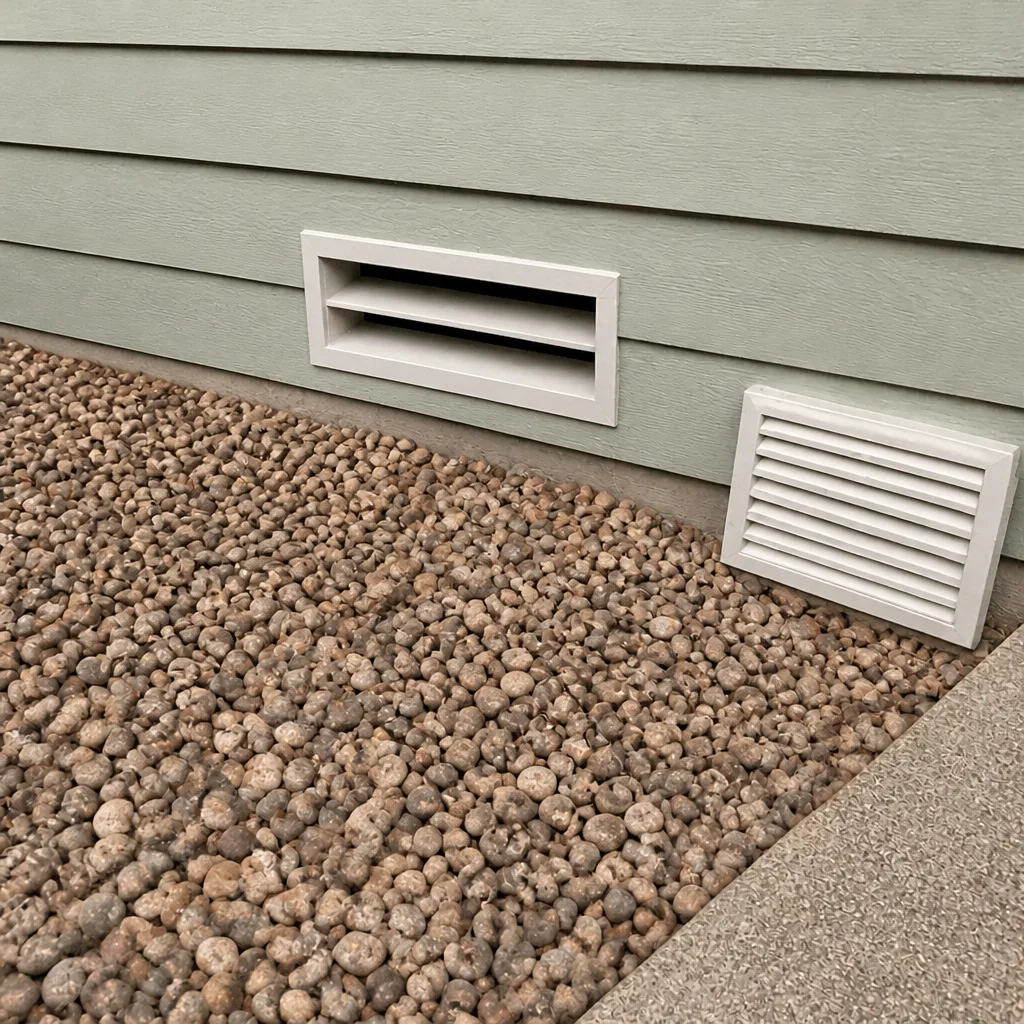
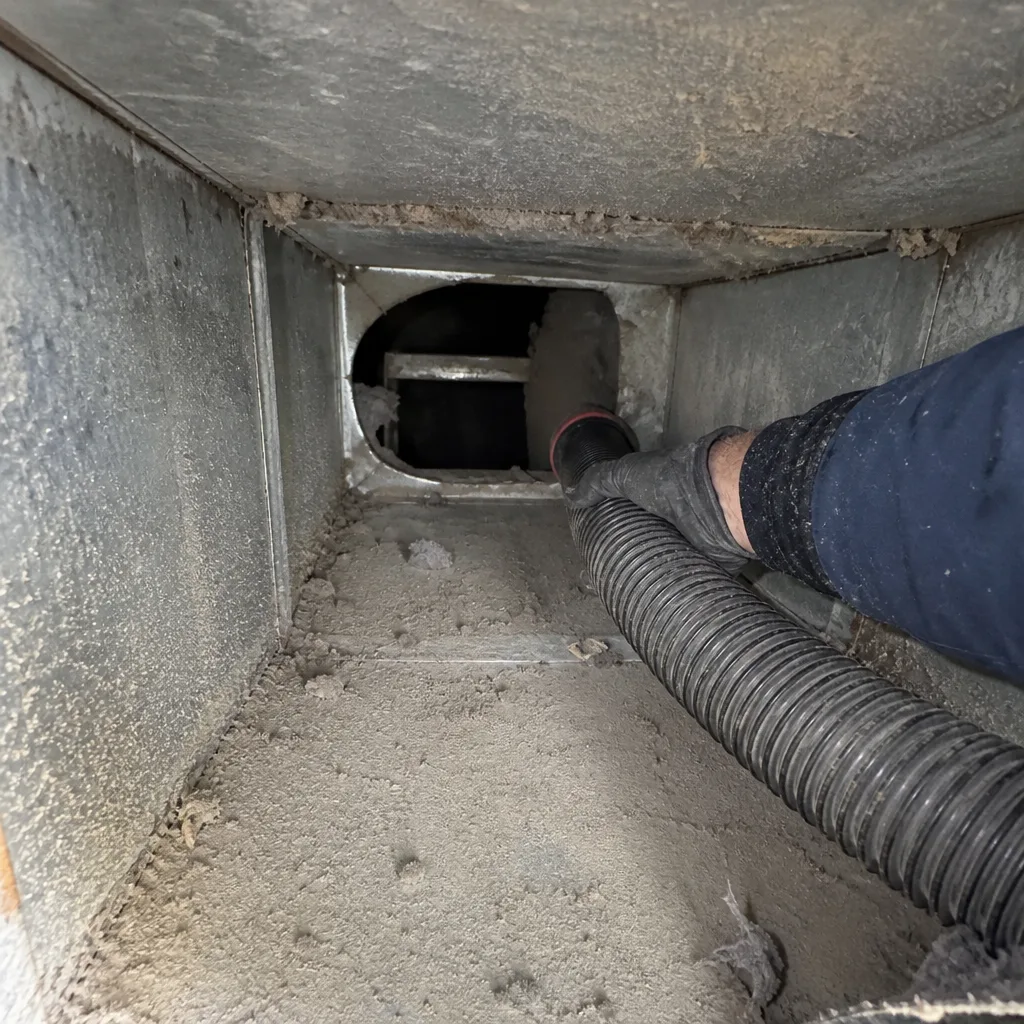
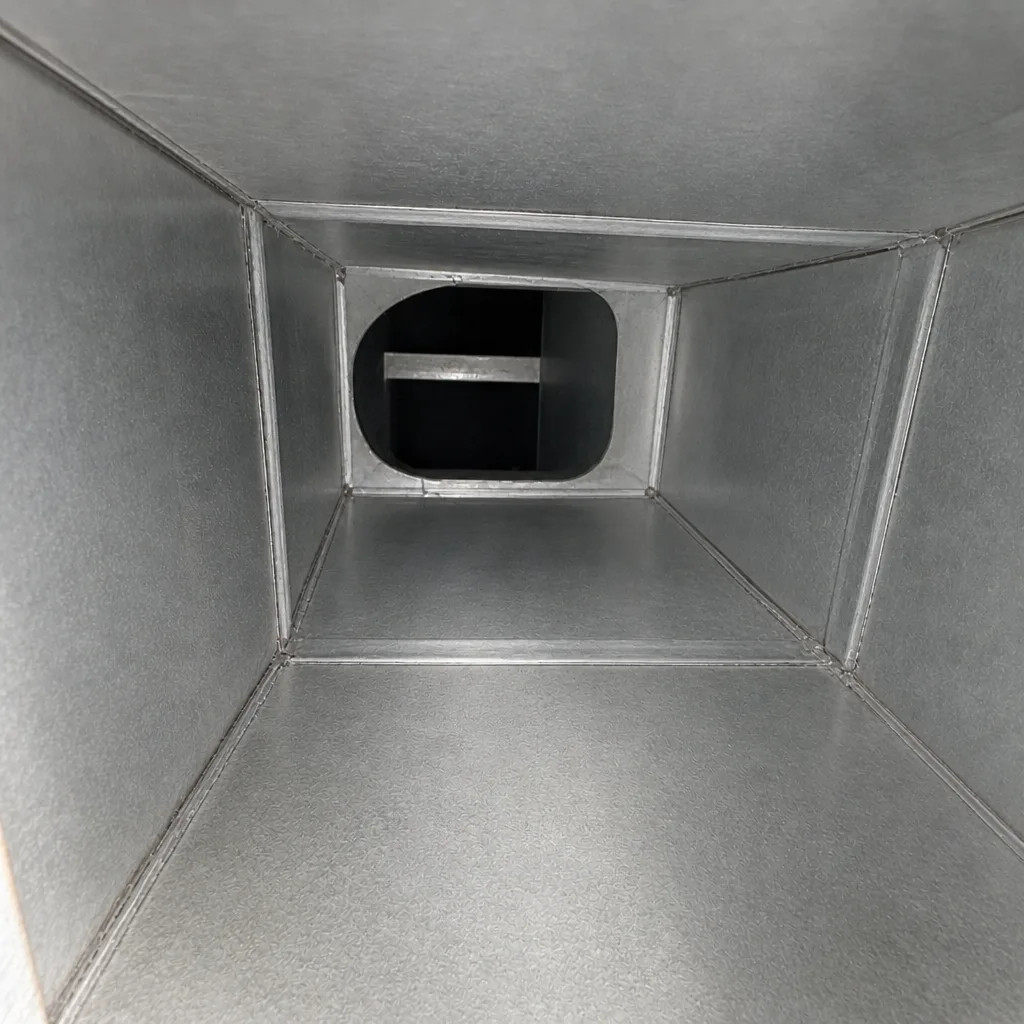
Whole-system duct and dryer vent check with before-and-after photos - you see exactly what came out of your vents
That "$99 whole-house special" is a bait ad - the real number appears once they are in your hallway, or the "clean" is a shop-vac at the register. We photograph the inside of your ducts before and after instead.
Air Duct Cleaning Maintenance Checklist for Southlands Homeowners
Replacing your filter on schedule while ignoring a disconnected flex duct behind a wall panel means your “maintained” system has been pulling unfiltered air for months. That’s the gap most checklists miss. Frequency alone doesn’t protect a home in Southlands – a rhythm of inspection does. A filter swap is easy to remember and easy to feel good about, but it says nothing about the seals, joints, and moisture paths that quietly turn a routine cleaning into a remediation job. What follows is the inspection rhythm we recommend: monthly checks you can do in minutes, semi-annual tasks, and the deeper items worth scheduling every three to five years. You’ll learn which inspection points matter at each interval, how to spot trouble at your registers without tools, and how to log it all so the history works for you later.
Quick Answer
A workable air duct maintenance checklist for a Southlands home has three tiers: monthly filter and register checks you do yourself, semi-annual inspections of accessible duct connections and moisture points, and a professional system cleaning plus duct inspection every three to five years. The tier that catches most problems early isn’t the cleaning – it’s the semi-annual look at seals, joints, and filter fit before small failures become expensive ones.
Styles & brands we work with
- Whole-home duct cleaning
- Dryer vent cleaning
- Camera inspection
- Sanitizing & deodorizing
Table of Contents
- Why Inspection Rhythm Matters More Than Cleaning Frequency
- Monthly Tasks: The Five-Minute Walkthrough
- Semi-Annual Tasks: Seals, Moisture, and Filter Fit
- The 3-5 Year Tier: Deep Inspection and Professional Cleaning
- How to Inspect Accessible Duct Connections Without Tools
- Filter Specifications and MERV Ratings: Matching Filter to System
- Southlands Triggers: Smoke Season, Wind Events, and Nearby Construction
- Building a Documentation Log That Pays Off Later
Why Inspection Rhythm Matters More Than Cleaning Frequency
The most common assumption we run into is that duct maintenance means scheduling a cleaning every few years and otherwise not thinking about it. In practice, the cleaning is one event in a cycle. The cycle is what keeps a system healthy, and the inspection points inside that cycle are where problems surface early enough to fix cheaply.
Here’s the reasoning. Duct systems degrade in predictable ways. A joint loosens. A flex run gets knocked off its collar during other work in the attic. A filter gets replaced with the wrong size and bypasses air around its edges. Sealant dries and cracks at a register boot. None of these announce themselves. The system keeps running. The house keeps heating and cooling. What changes is what the air picks up along the way, and how hard the blower has to work to move it.
By the time a homeowner notices, the signal is usually one of four things: allergy symptoms that get worse indoors, a musty smell when the system first kicks on, rooms that never quite reach temperature, or an energy bill that climbs without an obvious reason. Those are late signals. An inspection rhythm catches the same problems at the sealant-crack stage instead.
We think of it as three tiers, each with its own job:
- Monthly: filter condition, register airflow, obvious debris. Minutes, no tools.
- Semi-annual: accessible connections, moisture points, filter fit and bypass, return grille condition.
- Every three to five years: professional cleaning, full duct integrity assessment, sanitizing where conditions call for it.
The tiers work together. A monthly check tells you something changed. The semi-annual inspection tells you what changed. The professional tier fixes what the first two found – and that’s where air duct cleaning earns its place in the cycle rather than standing in for it. Skipping the first two tiers and relying on cleaning alone is how a system gets “maintained” for years while a broken seal quietly pulls attic air into the supply.
Monthly Tasks: The Five-Minute Walkthrough
The monthly tier is deliberately small. It exists to catch change, not to be thorough. If it takes more than a few minutes, it won’t get done.
- Look at the filter, don’t just date it. Hold it up to light. A filter that’s visibly grey across its face after a month in a Southlands home may mean more than normal dust loading – check whether nearby construction or a wind event has been pushing debris into the return.
- Test airflow at three registers in different rooms. Hold your hand near the grille. You’re not measuring, you’re comparing. A supply that feels noticeably weaker than the others is the earliest signal of a disconnected or crushed run.
- Listen at the air handler for a few seconds. A whistle or a rushing sound at the cabinet often means filter bypass – air moving around the filter instead of through it.
- Smell the first air when the system starts. A musty note on startup that fades after a minute points to moisture somewhere in the system, not the room.
- Check the return grille for dust trails. Dark streaks around the edges of a return grille suggest air is being pulled through gaps rather than the filter.
Write down anything you notice. A one-line note dated to the month is enough, and it feeds the log we’ll get to later. The value of the monthly tier is the comparison it gives you – you can’t spot a change if you don’t have a baseline.
One local note: in Southlands, dust events from high winds can load a filter faster than the calendar suggests. If a filter looks done at three weeks, it’s done. The schedule serves the filter, not the other way around.
Semi-Annual Tasks: Seals, Moisture, and Filter Fit
Twice a year, the checklist gets more deliberate. This is the tier that catches the failures the monthly walkthrough can only hint at.
Inspect accessible duct connections
At the air handler, at the plenum, and at any duct run you can reach in a basement, crawlspace, or attic hatch, look at where sections meet. You’re checking for separated joints, tape that’s peeling or dried out, and collars that have slipped. A disconnected flex duct doesn’t always announce itself with a temperature problem – it can hide behind a wall panel or above ceiling insulation for months.
Check moisture points
Look for water staining, rust at seams, or condensation on duct surfaces near the air handler and any run passing through unconditioned space. Moisture inside a duct system is the condition that turns ordinary dust into a biological problem. If you see it, that’s a call-a-professional item, not a wait-and-see item.
Verify filter fit and bypass
Pull the filter and look at the frame. Gaps around the edges – even a quarter inch – let air bypass the filter entirely. Check that the filter is the correct nominal size for the slot and that it seats flush. A filter that’s slightly too small is worse than a dirty one, because it gives the illusion of filtration while letting the dirtiest air straight through.
Check return grilles and supply registers
Remove a return grille if it lifts out easily and look at the boot behind it. Dust accumulation on the boot walls is normal between cleanings. What isn’t normal is debris, pest activity, or a visible gap where the boot meets the floor or wall.
Look at the outdoor unit and condensate line
Clear debris from around the outdoor unit and check that the condensate drain is flowing. A clogged drain line backs moisture into the system, and moisture is the front door to the problems this checklist exists to prevent.
In our experience, the semi-annual tier is where most homes in Southlands get the best return. It’s cheap, it’s mostly visual, and it catches the category of problem – failed seals, filter bypass, moisture intrusion – that a cleaning alone will not solve. That’s also why duct integrity belongs in the same visit as cleaning: a system that’s cleaned but still leaking at three joints hasn’t been fixed. If you want the full picture of what that visit covers, our page on HVAC cleaning walks through the equipment and the sequence.
The 3-5 Year Tier: Deep Inspection and Professional Cleaning
Every three to five years, the system needs a professional assessment that goes beyond what a homeowner can see. The interval isn’t arbitrary – it’s roughly the window in which enough accumulation builds on duct walls to matter, and enough time passes for sealant and connections to degrade.
What a professional visit should include:
- A full duct integrity assessment – not just cleaning, but checking connections, joints, and seals throughout the accessible system. This is the step that separates a full-system service from a surface vacuuming.
- Mechanical agitation of duct walls using rotary-brush equipment, because embedded debris doesn’t come off with suction alone.
- HEPA-filtered extraction so dislodged particulates are captured rather than pushed back into living space.
- Sanitizing where conditions warrant – after moisture intrusion, after a contamination finding, or as part of a remediation-style treatment.
- Sealing and repair of any failed joints or disconnected runs found during the assessment.
- A written record of what was found, what was done, and what to watch.
That third and fifth item are where the scope matters most. A cleaning that agitates and extracts but leaves a cracked boot or a disconnected flex run has addressed the symptom, not the cause. Our own approach runs all five services – cleaning, HVAC cleaning, dryer vent, duct repair and sealing, and air quality and sanitizing – because the failures tend to cluster. A dryer vent that’s loading up and a supply duct that’s leaking are both airflow problems, and handling them in one visit means one assessment, one record, and one less contractor to coordinate.
If it’s been longer than five years, or if the system has never been professionally assessed, treat the first visit as a baseline and schedule the next one from there. The interval after that can be tightened or loosened based on what the assessment finds.
How to Inspect Accessible Duct Connections Without Tools
You don’t need a toolkit to catch most connection failures. You need a flashlight, a few minutes, and a sense of what “wrong” looks like. Here’s the sequence we’d walk a homeowner through.
- Start at the air handler. With the system off, look at where the main trunk connects to the cabinet. You’re checking for gaps, tape that’s lifting at the edges, and any place where two surfaces should meet but don’t quite.
- Follow the trunk as far as you can see. At each joint, look for a continuous seal. Peeling tape, dried mastic, or a visible seam gap are all findings. A joint that’s simply taped with no mastic is a candidate for eventual failure, even if it looks fine today.
- Check flex runs for kinks and disconnections. A flex duct that’s crushed, sagging, or pulled off its collar is restricting or bypassing airflow. Look at the collar where the flex meets the rigid duct – that’s the most common separation point.
- Look up at the supply boots from inside the room. At each ceiling or floor register, check the visible gap between the boot and the drywall or flooring. You’re looking for a gap where room air can be pulled into the system, or supply air can escape into a wall cavity.
- Check return grilles the same way. A return boot that’s not sealed to the framing pulls air from inside the wall assembly, which is exactly the unfiltered air path the opening of this guide warned about.
The findings you’re looking for are simple to describe: a gap, a lift, a kink, a separation. You don’t need to diagnose the fix. You need to know it’s there, so it gets addressed at the next professional visit rather than sitting for another cycle.
One caution. If a connection you find is on a run passing through a tight crawlspace or a hot attic, note it and leave it. The inspection is visual; the repair is a job for someone with the right access and the right sealant for the duct material.
Filter Specifications and MERV Ratings: Matching Filter to System
Higher MERV is not automatically better. A filter that’s too restrictive for your blower motor’s static pressure tolerance can reduce airflow enough to cause coil freezing, short cycling, and uneven temperatures – the same symptoms people mistake for dirty ducts. Matching the filter to the system is part of the checklist, not an afterthought.
What to know before you buy:
- MERV is a filtration rating, not a performance guarantee. A higher number captures smaller particles. It also creates more resistance to airflow.
- Your system has a static pressure tolerance. Push a filter beyond it and the blower has to work harder to move the same air. The result shows up as weak airflow at distant registers and a system that runs longer than it should.
- Filter thickness matters as much as MERV. A deeper filter slot can often accept a higher-MERV filter with less pressure penalty than a thin one, because there’s more surface area for air to pass through.
- Bypass defeats the spec entirely. A high-MERV filter that doesn’t seat flush filters almost nothing, because the dirtiest air goes around it. Fit first, rating second.
The practical approach: check your system’s manual or ask a technician what static pressure range the blower is designed for, then choose the highest MERV that stays within it with a properly seated filter. In many homes that lands in the middle of the range rather than at the top. A filter that’s slightly less restrictive and correctly fitted outperforms a restrictive one that bypasses.
For homes with allergy concerns or a family member with respiratory sensitivity, the better upgrade usually isn’t a higher-MERV filter in the same slot – it’s a filtration or air quality component matched to the system. Honeywell and Aprilaire equipment fits that category, and it’s a conversation worth having at the time of a professional visit rather than a shelf decision at the hardware store.
Southlands Triggers: Smoke Season, Wind Events, and Nearby Construction
A checklist on a fixed calendar misses the events that matter most in Southlands. The local conditions that load a duct system fastest aren’t seasonal in the tidy sense – they’re event-driven.
Wildfire smoke seasons
When smoke settles over the area for days at a time, fine particulate loads the filter and the return side of the system much faster than normal. During and after a smoke event, shorten the monthly filter check to every two weeks until the air clears, and look at the return grille for visible accumulation. If the system has been running through a long smoke period, that’s a reasonable trigger to move a professional assessment forward rather than wait for the calendar interval.
High-wind dust events
Southlands sits in a part of Colorado where wind can move a lot of dust in a short window. After a significant wind event, check the filter and the return grille. Dust that gets past a poorly fitted filter settles in the return plenum and on duct walls, where it becomes the material that a future cleaning has to remove.
New construction nearby
Construction dust is finer and more abrasive than household dust, and it travels. If there’s active building near your home, treat the construction period as an extended event: check the filter more often, watch for dust trails at return grilles, and schedule the next professional assessment after the work concludes rather than before. Sealing gaps at boots and returns is especially worth checking during this window, because construction dust finds every unsealed path.
The pattern across all three triggers is the same: an event loads the system faster than the calendar anticipates, so the calendar should flex. That’s the difference between a checklist that’s followed and one that’s decorative. It’s also why the Air Duct Cleaning Southlands approach treats the assessment as the anchor and the cleaning as one output of it.
Building a Documentation Log That Pays Off Later
A maintenance log is worth more than most homeowners expect, and the format can be simple. The point is a defensible service history – something that shows the system was inspected and maintained on a rhythm, with findings and fixes recorded.
What to capture for each entry:
- Date and interval tier – monthly check, semi-annual inspection, or professional service.
- What was checked – filter, registers, connections, moisture points, as applicable.
- What was found – a gap at a boot, a filter that bypassed, a disconnected flex run, normal wear.
- What was done – filter replaced with size and MERV noted, seal repaired, professional cleaning performed, sanitizing applied.
- Who did the work – yourself for the monthly tier; the service provider and service type for the professional tier.
- Photos where useful – a before-and-after of a sealed joint or a cleaned register is a strong record.
Two situations where the log earns its keep. First, selling a home: a documented maintenance history answers the buyer’s question about the HVAC system before it’s asked, and it shows the system was cared for rather than neglected. Second, an insurance claim involving water intrusion, smoke, or contamination: a service history establishes the condition of the system before the event, which is exactly what a claim review needs.
Keep it in whatever form you’ll actually maintain – a notebook, a folder of receipts, or a shared document. The format matters less than the continuity. A record with gaps is still useful; a perfect template that’s never filled in isn’t.
Common Mistakes to Avoid
- Treating the filter as the whole checklist. A filter swap tells you nothing about seals, connections, or filter bypass. It’s one item in a larger rhythm, and a clean filter on a leaking system still delivers unfiltered air.
- Buying the highest MERV filter on the shelf. A filter more restrictive than the blower’s static pressure tolerance chokes airflow and creates symptoms that look like dirty ducts. Match the filter to the system, not to the label.
- Assuming the ducts are clean because the registers look clean. Registers are the endpoints. The accumulation that matters builds on duct walls and in the return plenum, out of sight.
- Skipping the seal inspection because the cleaning was recent. Sealant dries and joints loosen on their own timeline. A system cleaned two years ago can have a failed boot today.
- Ignoring event-driven loading. A wildfire smoke period or a wind event can load a filter in weeks. Running the calendar as if conditions were average is how a system gets overloaded between checks.
- Not logging the work. Without a record, a maintenance rhythm is a memory. With one, it’s documentation that serves you at resale or in a claim.
- Waiting for symptoms before inspecting. Musty odors, worsening allergies, uneven temperatures, and rising energy bills are late signals. The checklist exists to catch problems before they show up as symptoms.
See the difference
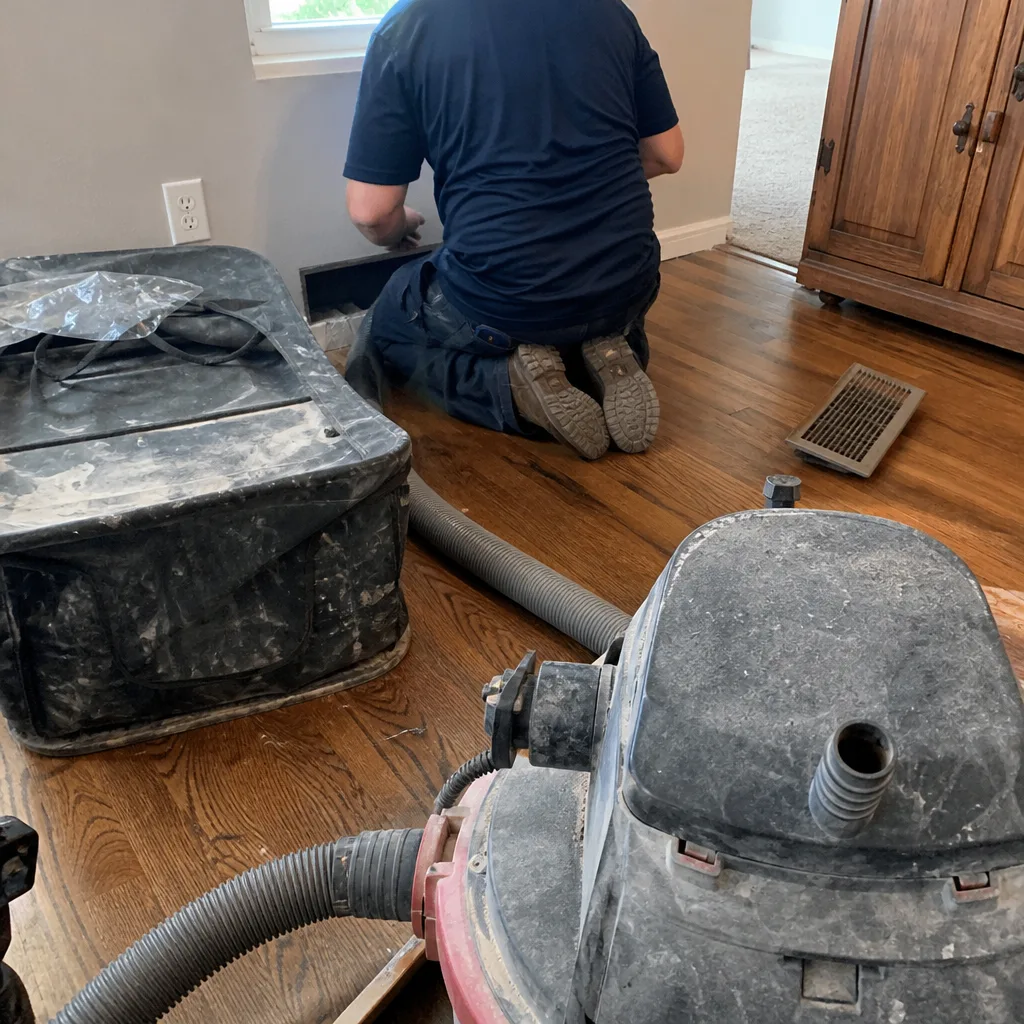 Before
 After
 Before
 After
 Before
 After
When to Call a Professional
Some findings are homeowner items; others are professional ones. Call a professional if you find moisture or water staining inside a duct system, a visible mold-like growth on duct surfaces, a disconnected flex run you can’t safely reach, or a persistent musty smell that returns after the filter is changed. Call if the system has never been professionally assessed, if it’s been more than five years since the last full cleaning, or if a smoke event or construction period has loaded the system heavily. Call if you’re seeing allergic symptoms that get worse indoors, airflow that’s weak at some registers and normal at others, or an energy bill that’s climbed without explanation. Air Duct Cleaning Southlands offers free estimates in Southlands – call (855) 624-1395. The local pro is licensed and insured as their state requires, and the price is set per job by the written estimate so you know the scope before work starts.
Frequently Asked Questions
Every three to five years for most Southlands homes, with the interval tightened after heavy smoke events, wind-driven dust periods, or nearby construction. The cleaning interval is one tier of a broader rhythm; the semi-annual inspection between cleanings is what catches seal failures and moisture intrusion early. Call (855) 624-1395 for an exact quote – estimates are free.
No. A filter with a higher MERV rating captures smaller particles but creates more airflow resistance, and a filter that exceeds your blower’s static pressure tolerance can reduce airflow enough to cause coil freezing and uneven temperatures. Choose the highest MERV that stays within your system’s tolerance with a properly seated filter. Call (855) 624-1395 for an exact quote – estimates are free.
Pricing is set per job by a written estimate, because whole-system scope varies with home size, duct layout, and what the assessment finds. We don’t quote per vent and we don’t use teaser prices that grow once the technician is on site – one flat price per system, agreed before work starts, with before-and-after photos of your own ducts. Call (855) 624-1395 for an exact quote – estimates are free.
Cheaper quotes often cover less: a vacuum pass without mechanical agitation, no seal inspection, no repair of disconnected runs. The low figure becomes a larger invoice once the technician is on site and finds the work the quote didn’t include. Ask what’s in the scope – agitation, HEPA extraction, integrity assessment, sealing – before comparing numbers. Call (855) 624-1395 for an exact quote – estimates are free.
Ask for before-and-after photos of your own ducts and a written record of what was found and what was sealed or cleaned. A provider that documents the work at the register and inside the system gives you something you can keep in your maintenance log. Call (855) 624-1395 for an exact quote – estimates are free.
Wildfire smoke periods, high-wind dust events, and active construction nearby are the three biggest triggers. Each loads the filter and return side faster than a calendar interval anticipates, so shorten your filter checks during and after the event and move the professional assessment forward if the system has been under load for an extended period. Call (855) 624-1395 for an exact quote – estimates are free.
The Bottom Line
A duct maintenance checklist for a Southlands home isn’t a cleaning schedule. It’s an inspection rhythm in three tiers: monthly filter and register checks, semi-annual seal, moisture, and filter fit inspections, and a professional assessment every three to five years. The rhythm catches seal failures, moisture intrusion, and filter bypass before they turn a maintenance task into a remediation job. Flex the calendar around smoke events, wind-driven dust, and nearby construction. Log what you find, because the record serves you at resale and in a claim. Cleaning matters – but it’s one output of the rhythm, not a substitute for it.
Air Duct Cleaning Southlands runs all five services – air duct cleaning, dryer vent cleaning, HVAC cleaning, duct repair and sealing, and air quality and sanitizing – in one visit, using professional-grade equipment including Rotobrush rotary-brush systems and Nikro HEPA extraction, with Guardsman sanitizing applied post-clean. Our technicians have up to 14 years of experience. Call (855) 624-1395 for a free estimate. We answer 24/7. Fast dispatch from 7am to 7pm, Sunday through Friday.
Written by the team at Air Duct Cleaning Southlands.