
Last updated November 25, 2026
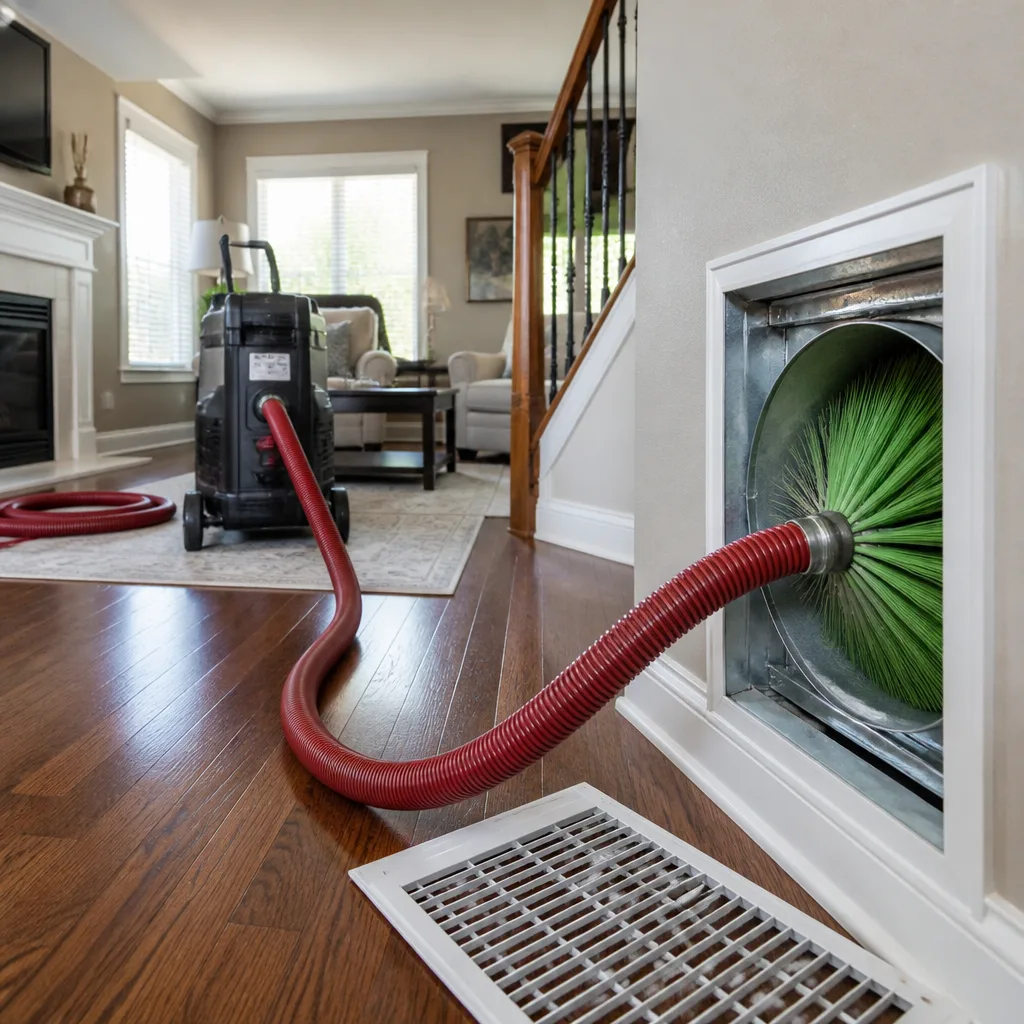 Whole-home duct cleaning
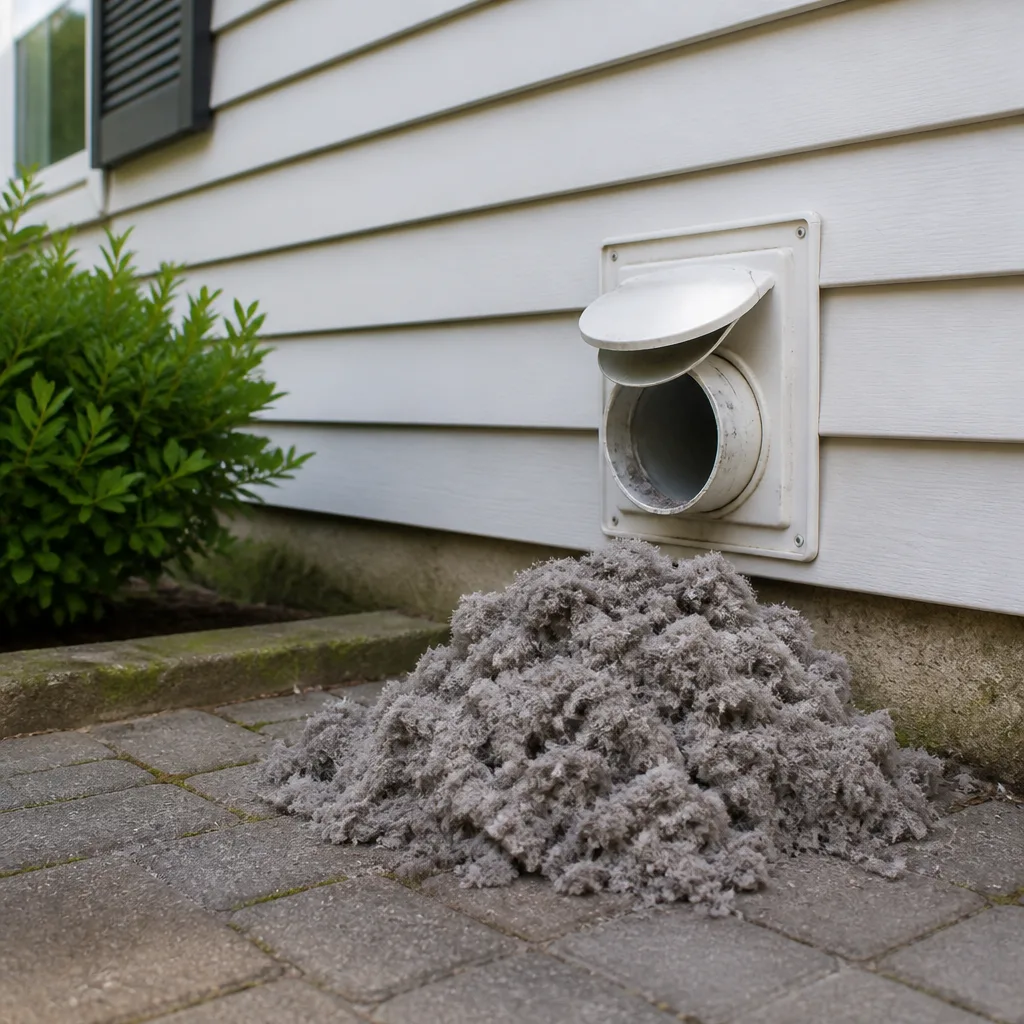 Dryer vent cleaning
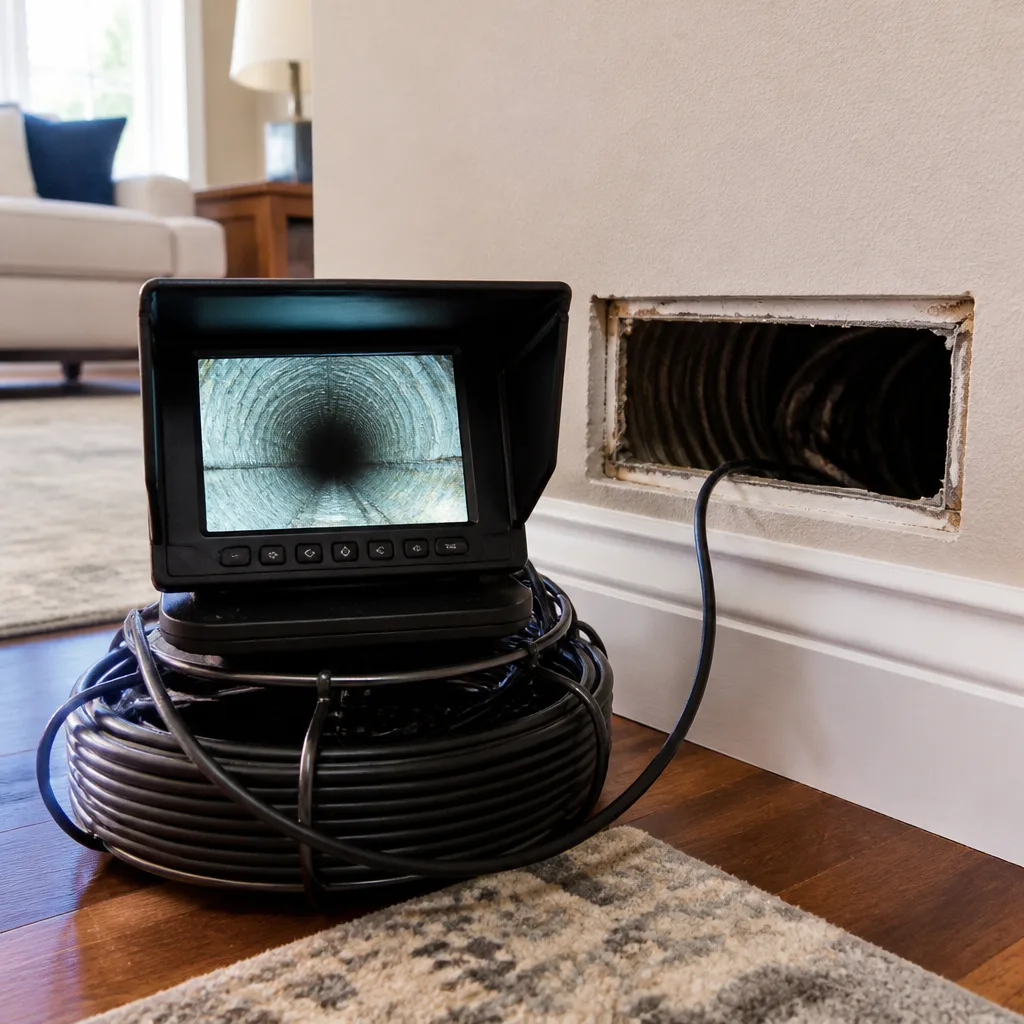 Camera inspection
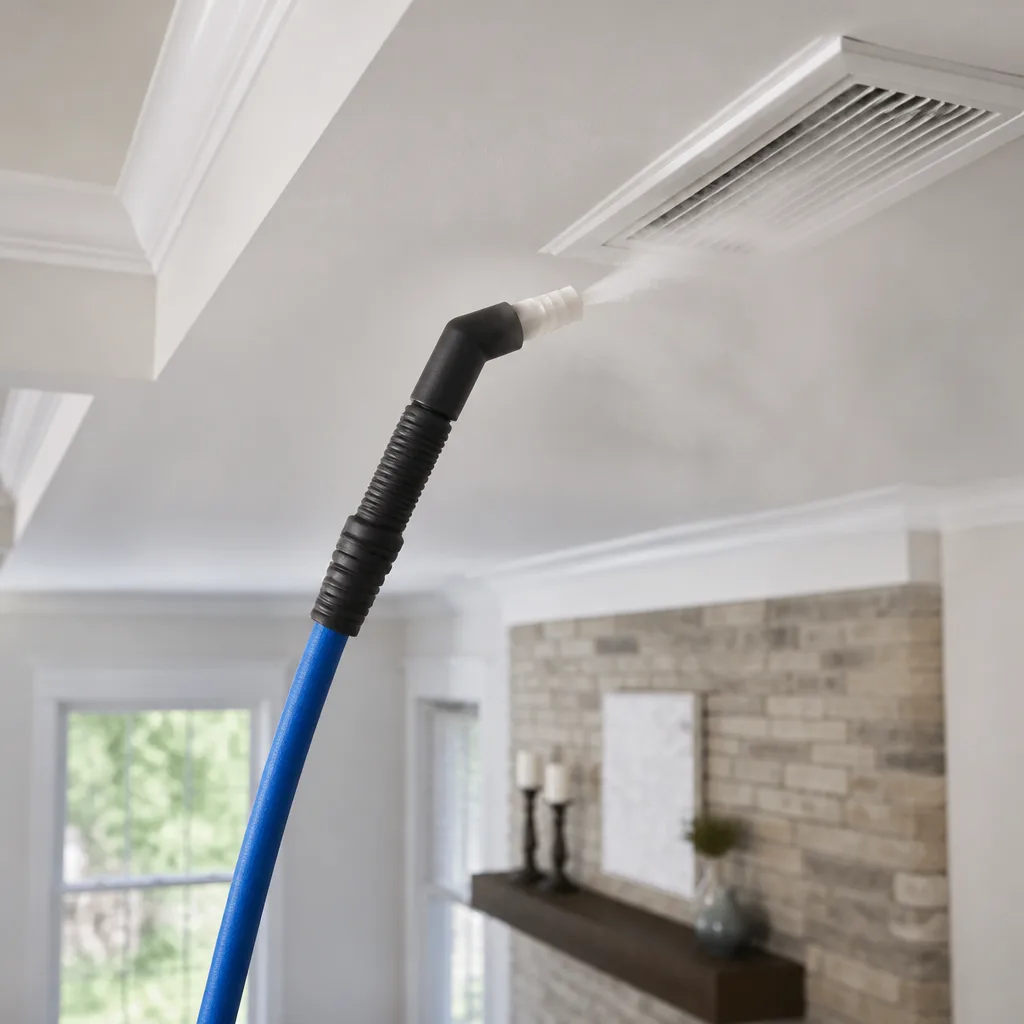 Sanitizing & deodorizing
Whole-system duct and dryer vent check with before-and-after photos - you see exactly what came out of your vents
That "$99 whole-house special" is a bait ad - the real number appears once they are in your hallway, or the "clean" is a shop-vac at the register. We photograph the inside of your ducts before and after instead.
Air Duct Cleaning Troubleshooting in Southlands: Common Problems and How to Fix Them
Here’s the counterintuitive part: a surprising number of “dirty duct” complaints in Southlands turn out to be mechanical failures, not contamination. A room that stays 8-10°F cooler than the thermostat setting after a cleaning usually points at a disconnected boot, a collapsed flex run, or a failed air handler seal, not leftover dust. Cleaning a system that’s leaking or choked won’t fix the symptom. This guide teaches you how to read your own system’s signals before you call anyone: airflow feel, dust reappearance speed, register temperature gaps, and a few checks you can do in the attic or crawlspace. You’ll learn what a real contamination problem looks like versus a mechanical one, and what to ask a technician to test on-site.
Quick Answer
Most air duct problems in Southlands are either contamination (loose debris, microbial growth, dust that keeps returning) or mechanical (disconnected joints, collapsed flex duct, failed seals, blocked runs). Contamination needs cleaning and sanitizing. Mechanical faults need repair and sealing before cleaning is worth anything. The way to tell them apart is airflow feel at the registers, how fast dust returns after you wipe surfaces, and the temperature differential between rooms. Get the diagnosis right and the fix holds. Get it wrong and you’ll pay for a cleaning that solves nothing.
Styles & brands we work with
- Whole-home duct cleaning
- Dryer vent cleaning
- Camera inspection
- Sanitizing & deodorizing
Table of Contents
- Contamination vs. Mechanical: How to Tell Which Problem You Have
- Why Southlands Climate Accelerates Duct Seal Failure
- Inspecting Duct Connections in Crawlspaces and Attics
- When a Negative-Pressure Test Is the Only Way to Confirm It
- How to Document Symptoms Before You Call
- Dust That Comes Back Fast: What It Means
- Uneven Room Temperatures and What They Reveal
- Musty Odors, Mold, and When Sanitizing Is the Answer
Contamination vs. Mechanical: How to Tell Which Problem You Have
Every duct complaint falls into one of two buckets, and they need different work. Contamination means the ducts themselves are holding dirt, allergens, or microbial growth. Mechanical means the duct system has lost integrity somewhere – a joint slipped, a run collapsed, a boot pulled away from the floor. The two often coexist, but the mechanical fault usually wins the priority fight. Clean a leaking system and the air you paid to filter goes straight into the attic or crawlspace.
Three tests separate the buckets, and you can run all of them yourself.
- Airflow feel at the register. Hold your hand about six inches from the supply register with the system running. Strong, steady flow on every register points toward contamination only. Weak flow on one or two registers, or a register that barely moves air while others blast, points toward a mechanical restriction or a disconnected run.
- Dust reappearance speed. Wipe a dark surface – a shelf near the return, the top of the return grille itself – and watch it. A thin film returning over several weeks is normal for any home. A visible layer inside a few days suggests the return is pulling from an unfiltered cavity or a leaking return chase.
- Register temperature differential. Put a thermometer in the supply airstream of each room with the system running steady. Within a single system, supplies should land within a few degrees of each other. A room running 8-10°F cooler than the rest almost always has an airflow problem, not a dust problem. That gap is your cue to start looking at duct integrity.
If your registers feel strong, dust returns at a normal pace, and room temperatures track close together, you’re looking at contamination. If any of the three misfires, diagnose the mechanical side before scheduling cleaning.
Why Southlands Climate Accelerates Duct Seal Failure
Duct systems here live through more expansion and contraction than they do at lower elevations. High-altitude dry air, wide day-to-night temperature swings, and low ambient humidity through much of the year work on duct materials in ways that accumulate. Flex duct is the most vulnerable, and it’s also the most common material in attic runs.
The mechanism is straightforward. Flex duct is a plastic inner liner supported by a wire helix and wrapped in insulation. The liner gets brittle as it dries out. Every furnace cycle pushes warm air through it, heating the liner and softening it slightly; between cycles it cools and stiffens. Thousands of cycles later, the liner at a bend or a support strap can split. Foil tape and mastic joints fail the same way. The dry air pulls moisture out of the mastic until it cracks and releases its grip.
Southlands homes also tend to have long attic runs, because the climate allows it – ductwork crosses unconditioned space to reach far bedrooms. Long runs mean more joints, more bends, and more chances for a failure point. That’s why we look at duct repair and sealing as a core part of any assessment, not something to tack on after cleaning. The Air Duct Cleaning Southlands approach is to examine integrity first, because a sealed system is the only one worth cleaning.
Flex runs that sag between supports are the other common failure in this climate. Sag concentrates the internal airflow pattern into a low spot, the liner pleats there, and the pleat becomes the first place to tear. If you see an attic run sagging an inch or more between straps, that’s a candidate for collapse.
Inspecting Duct Connections in Crawlspaces and Attics
You don’t have to remove ductwork to find the common failures. A flashlight, a phone camera, and 15 minutes in the attic or crawlspace will surface most of them. Walk the visible runs and look for these specific signs.
What a disconnected boot looks like
A boot is the metal fitting at the floor or ceiling that turns a round duct into a rectangular register opening. When it disconnects, the flex duct pulls away from the boot collar and dumps conditioned air into the cavity behind the wall or under the floor. Look for:
- A visible gap between the flex duct end and the boot collar, often with the flex sagging away.
- A small pile of insulation or debris on the attic floor directly below a run, which means air has been blowing through a breach.
- Mastic or foil tape that has lifted or cracked at the seam, with a visible dark line at the edge.
- Duct insulation shaken loose or missing at the boot, exposing the inner liner.
What a dirty register looks like – and what it doesn’t
A dirty register is a cosmetic and contamination clue, not a mechanical one. Dust on the supply louvers means the room is getting dust in the airstream; it doesn’t tell you whether the ducts are sealed. A register grille with dust only on one side, or dust concentrated at the edge of the frame, can mean air is bypassing the register from the cavity around it – a sign of a gap at the boot. Check whether the register fits flush against the drywall or sits proud of it with a visible opening behind.
What else to look for on the walk-through
- Sumps, returns, or filter cabinets where the flex terminates – a loose connection at the return side pulls unfiltered air into the system, which speeds up contamination.
- Anywhere a flex run crosses over a sharp edge – nails, truss hangers, conduit – without a protective sleeve.
- Runs that are held up with zip ties or banding that has cut into the outer insulation, exposing the inner layer.
- The air handler cabinet seal where the supply plenum connects; a failed gasket there loses air directly, and the symptom looks like low flow everywhere.
Photograph anything you find. Photos speed up the technician’s assessment and reduce the chance you’re quoted for work you don’t need. If airflow or room temperatures are also off, note those in the same walk-through. The air duct cleaning visit starts with this same inspection, and the two processes complement each other.
When a Negative-Pressure Test Is the Only Way to Confirm It
Some problems hide from walk-through inspection. A duct system hidden behind finished walls, a run buried under floor decking, a chase you can’t access – in those cases the only way to know whether the system is leaking is to measure it. A negative-pressure test, often called a duct blaster test, pressurizes the entire duct system and measures how much air escapes. It is the standard way to quantify duct leakage.
Ask for a duct blaster test when:
- Room temperatures are off by 8-10°F and no visible breach explains it.
- You’ve paid for cleaning and the symptoms came back within weeks.
- Your energy bills feel high for the size of the home, without an obvious reason.
- You’re planning a large cleaning or sealing job and want a baseline measurement.
Ask the technician to run the test on-site and give you the reading in plain terms – cubic feet per minute of leakage, plus where on the system the leakage concentrates. A technician who can run the test but can’t explain the result in your terms hasn’t given you a usable diagnosis. We ask this of every pro we connect homeowners to, because it’s the difference between a quoted fix and a guess. The HVAC cleaning assessment is a good moment to pair with a pressure test if you’re having the whole system examined at once.
One caution: a duct blaster test on its own tells you leakage exists, not where. Pair it with a visible walk-through or a smoke test to pinpoint the breach. Otherwise you’ll know the percentage but not the repair.
How to Document Symptoms Before You Call
A technician who arrives with a written concern list diagnoses faster and quotes more accurately. It also puts you in control of the conversation – it’s harder to be sold an unnecessary service when you already know what you’re experiencing. Document these five things before you book:
- Room-by-room temperature. Write down the thermometer reading at each supply register, plus the thermostat setpoint and the outside temperature when you took the reading. Repeat at a different time of day. Two data points are worth more than one.
- Airflow notes. For each register, note whether the flow is strong, medium, or weak, and whether it changes when the system runs. “Bedroom 3 supply is weak and fluttery” is a useful note; “some rooms feel off” is not.
- Dust rate. Date a wipe of one surface near a return and check it every few days. Note how many days until visible dust returns.
- Odor log. Note when you smell something musty – first thing in the morning, when the system starts, after rain, only in one room – and where. Odor timing is diagnostic: a smell that appears on system start points at contamination in the return or supply; a smell that’s constant in one room points at that room’s run.
- Photos and timestamps. Photograph any visible breach in the attic or crawlspace with your phone, which timestamps automatically. Include one photo at a distance for context and one close-up of the fault.
Turn your heating cycle count into a note too, if your thermostat reports it. A system running longer than it used to, with the same setpoint and weather, is telling you something has changed in airflow or leakage. If you can, add the outdoor temperature to your log so the cycle pattern can be compared against the weather rather than blamed on it.
A written list also lets the estimator quote per job by a written estimate without guesswork, and it keeps the conversation on your actual problem rather than on add-on services.
Dust That Comes Back Fast: What It Means
Dust reappearing across a room within days of a cleaning is one of the clearest signals that the underlying problem was never contamination in the first place. When dust returns fast, air is entering the living space through a path that bypasses the filter, or the filter itself isn’t seating. The cleaning removed dust; it didn’t remove the source.
The most common causes, in order of frequency we see in Southlands homes:
- A return duct connection that has pulled loose, pulling dusty attic or crawlspace air into the system.
- A filter that doesn’t seat – undersized, warped, or in a cabinet with a gap around the frame. Air bypasses the filter entirely and carries unfiltered dust to the rooms.
- A leaking return chase, where the cavity between walls or floor joists acts as an unfiltered return plenum.
- An air handler in a closet or utility space that draws return air from an unfiltered cavity.
The test is straightforward. Remove the filter and look for a large gap around its edges once it’s seated. If the filter doesn’t seal against its frame, dust will report to your rooms regardless of how clean the ducts are. Temporarily seal the gap with tape and see whether the dust rate slows; if it does, you’ve found the source and a proper fix is on the list.
For homeowners in Southlands who have had a cleaning in the past 12 months and still see fast dust return, a diagnostic visit should start at the return side and the filter cabinet. Fixing the bypass is often less expensive than another cleaning. The dryer vent cleaning service deals with a related but distinct problem, since a clogged dryer vent releases moisture and lint into the same rooms.
Uneven Room Temperatures and What They Reveal
A room 8-10°F cooler or warmer than the thermostat setting is the single most reliable symptom of a mechanical duct fault. If cleaning didn’t fix it, the reason is that the ducts weren’t the problem – the air never arrived. Three mechanical causes account for most of these complaints.
Collapsed flex duct. The inner liner of a flex run pinches closed at a bend or under a sagging support. Airflow to that room drops to a trickle, or stops. Visible in the attic as a flattened section of run; often invisible in a finished ceiling.
Disconnected boot or joint. The run has separated at the boot or at an elbow, and air dumps into the attic or wall cavity before it ever reaches the register. The room stays cool while the cavity behind it heats up.
Failing air handler seal. The gasket where the supply plenum meets the air handler collapses, and a fraction of the supply air never enters the ducts. The symptom is subtle – most rooms stay close to setpoint but one or two lose airflow – and it’s one of the most commonly missed faults because the air handler isn’t on the walk-through route.
The diagnostic sequence is short. First, measure the room’s supply register temperature and compare it to a working room’s supply; a large gap points at supply-side delivery, not at the room’s own duct. Then check the room’s run in the attic or crawlspace for a visible collapse or disconnect. If you can’t reach the run, ask for a pressure test. If the entire system has dropped in delivery, start at the air handler seal before suspecting the individual runs.
Root out the diagnosis before quoting a fix. That’s the standard we hold the pros we connect homeowners to, and it keeps the estimate honest.
Musty Odors, Mold, and When Sanitizing Is the Answer
A musty smell that appears on system startup and fades after the fan runs a while usually means microbial growth on the interior of the return or supply ductwork. The fan stirs it up. Odor that’s constant in one room points at that room’s run; odor that fills the house on startup points at the return or the air handler cabinet, where moisture can collect.
Where does moisture come from in a dry Southlands climate? The two sources we see most often are a return run pulling humid attic air into the system in summer, and the cooling coil and plenum area where condensate can sit if the drain pan drains slowly or the coil stays wet after the system stops. Combine either with a warm, dark, insulated cavity and you have the conditions for microbial growth on duct surfaces.
This is a case where cleaning alone isn’t enough. The contamination is at the surface level, and the fix is a proper clean and sanitize: agitate the embedded material off the duct walls, extract it with HEPA-rated vacuum equipment so it doesn’t recirculate into the rooms, then apply a residual treatment to the duct interior. Abatement Technologies air-scrubbing equipment is used during this phase to keep the work area clean, and Guardsman-grade sanitizing treatments go on after the clean, not before. Honeywell and Aprilaire integration can add filtration or air quality upgrades at the same visit.
Ask specifically what sanitizing product will be used and whether it’s rated for occupied homes. A vague answer is a red flag. You also want a technician to check the moisture source – if the smell comes back within weeks, the sanitizing cleaned the surface but the wet condition was never resolved.
Common Mistakes to Avoid
- Paying for cleaning before diagnosing the mechanical fault. Cleaning a system with a disconnected boot or collapsed run leaves the airflow problem in place. Fix the seal first, then clean – otherwise you’re paying twice.
- Buying cleaning based on a coupon price. A low advertised price often means the technician will find “additional services needed” once on site. Ask for one flat price per system agreed before work starts, with before-and-after photos of your own ducts included in the quote.
- Assuming a dirty register means the whole system is dirty. A dust-covered grille is a cosmetic and surface clue. Whole-system contamination requires opening the supply runs, the return plenum, and the air handler cabinet to confirm – not just looking at the register.
- Ignoring the return side. Most homes focus attention on the supplies, but a leaking return chases unfiltered attic or crawlspace air and contaminates the whole system. Have the return inspected alongside the supply.
- Putting off a dryer vent check in a dry climate. Lint and moisture buildup in a dryer vent is a fire risk and a moisture source in the room. A dryer vent cleaning should happen on a regular schedule, not only when you notice a problem.
- Hiring a cleaner without asking about sealing. A pure-cleaning outfit will leave cracked or disconnected ductwork untouched. Ask up front whether the contractor handles duct repair and sealing, or whether that work gets passed off to someone else.
- Relying on a visual inspection alone. A duct blaster test is the only way to confirm leakage in a finished-wall system. If no one offers to run one, keep asking.
See the difference
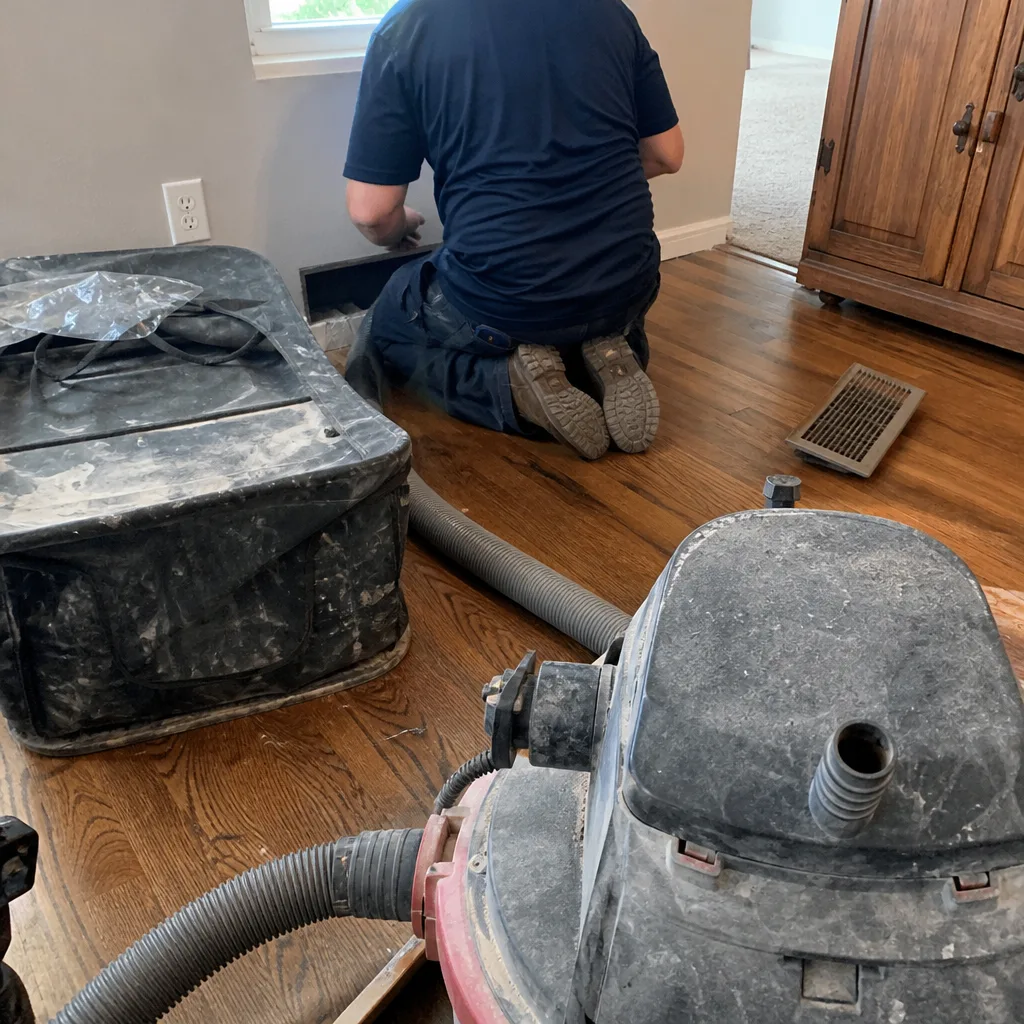 Before
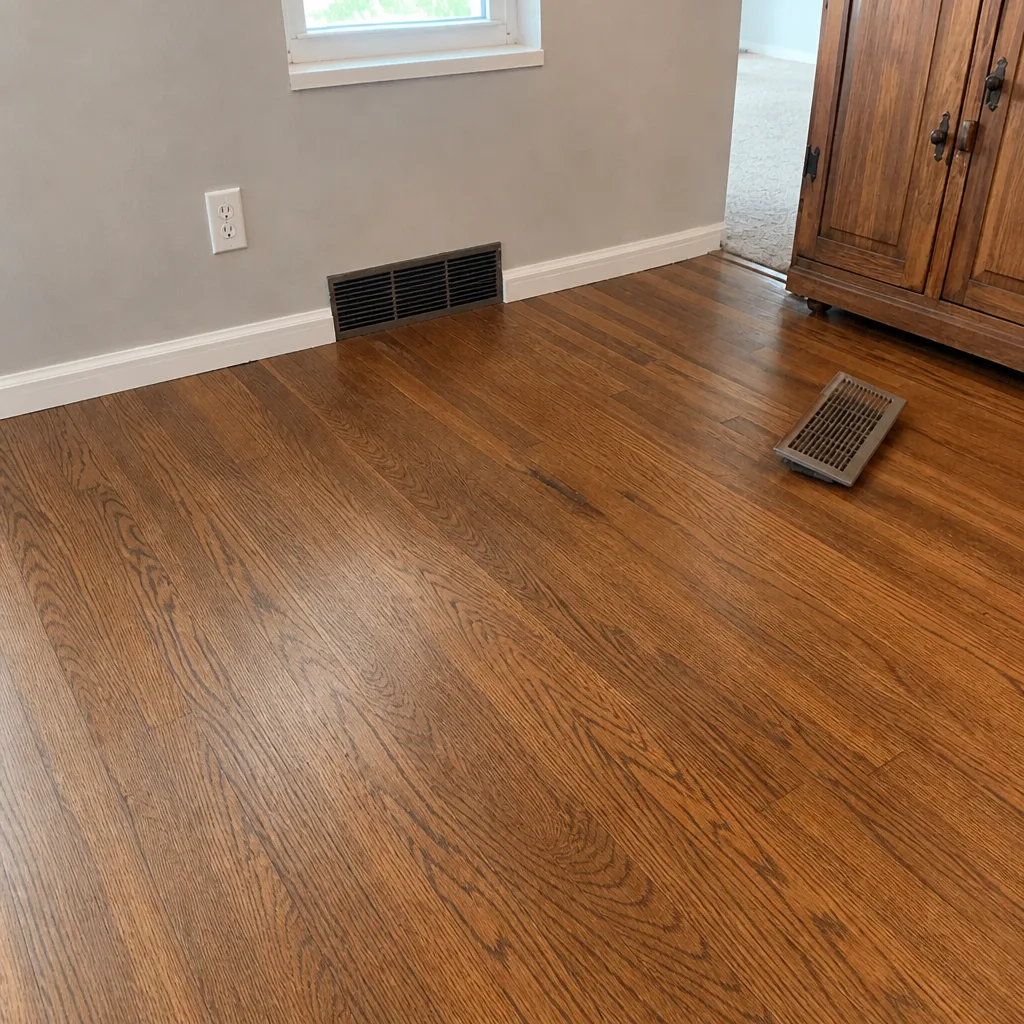 After
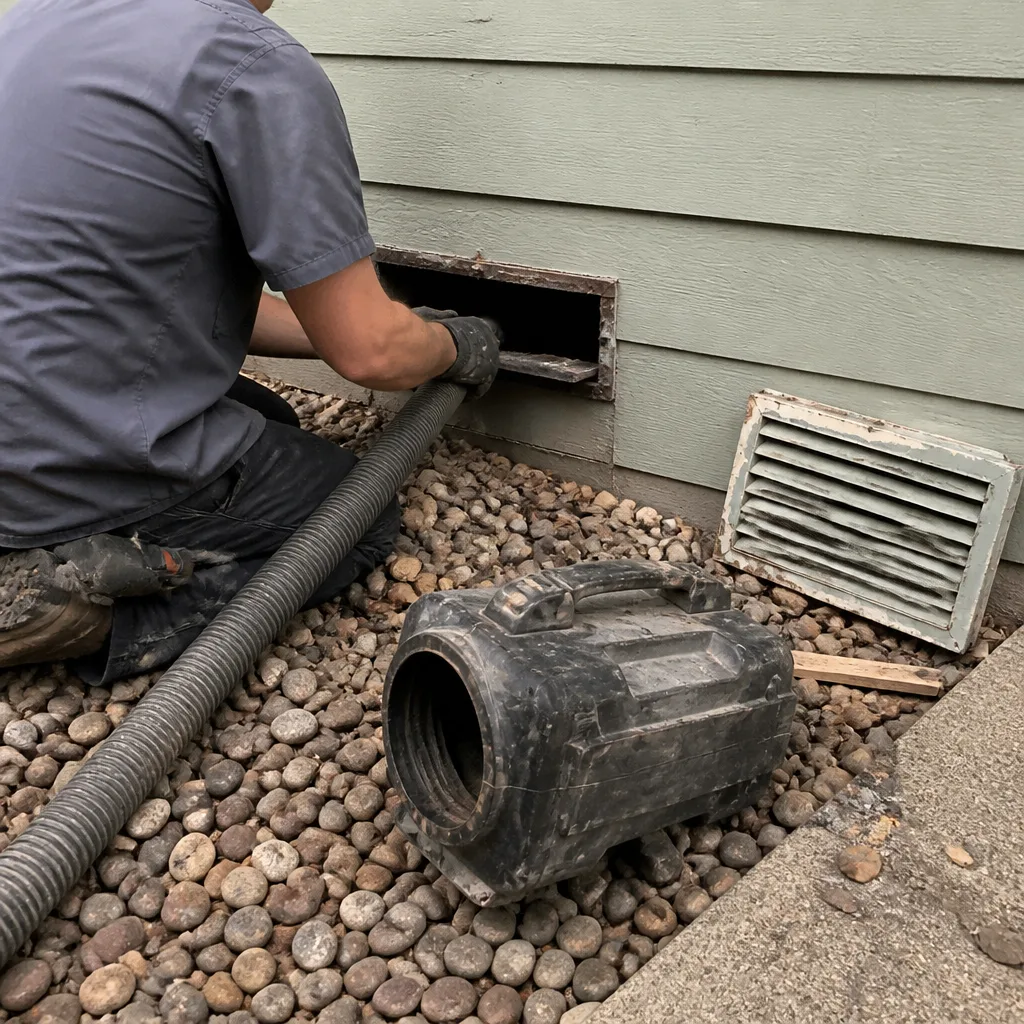 Before
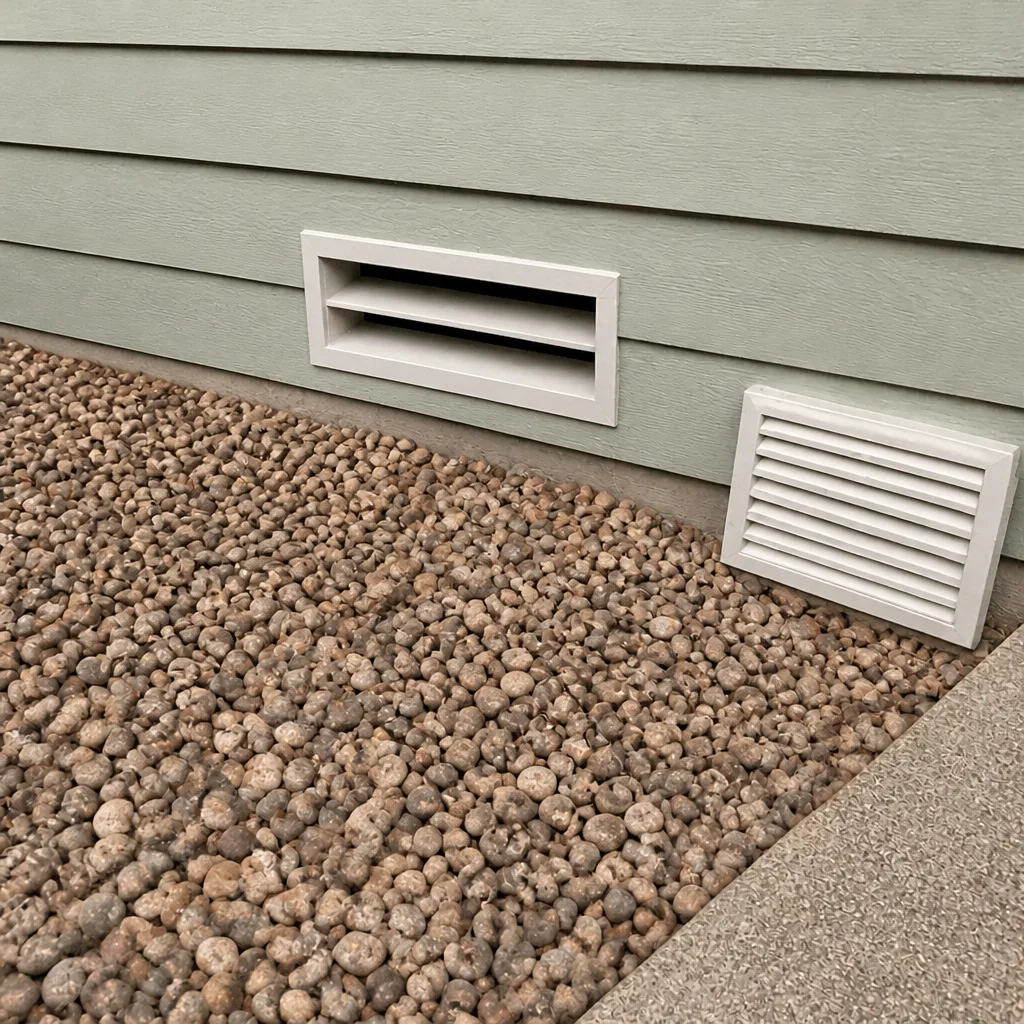 After
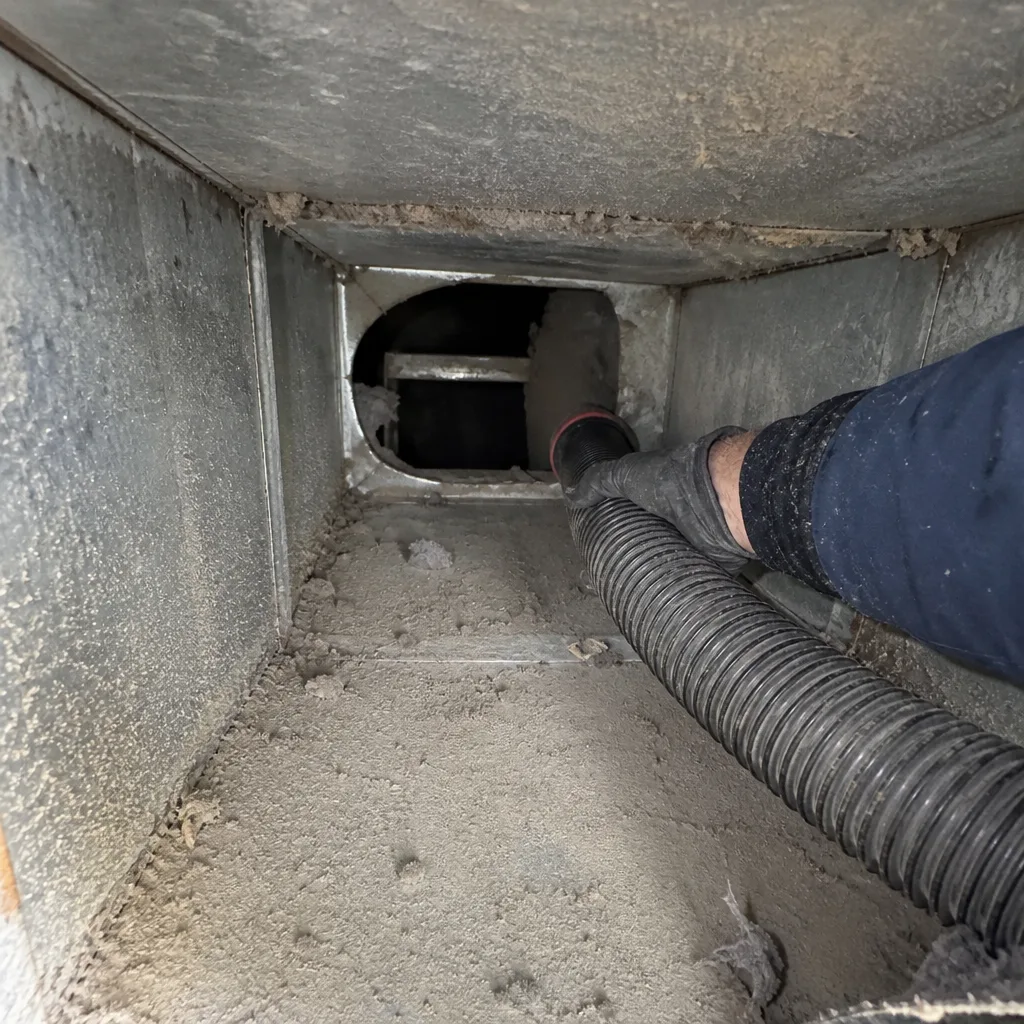 Before
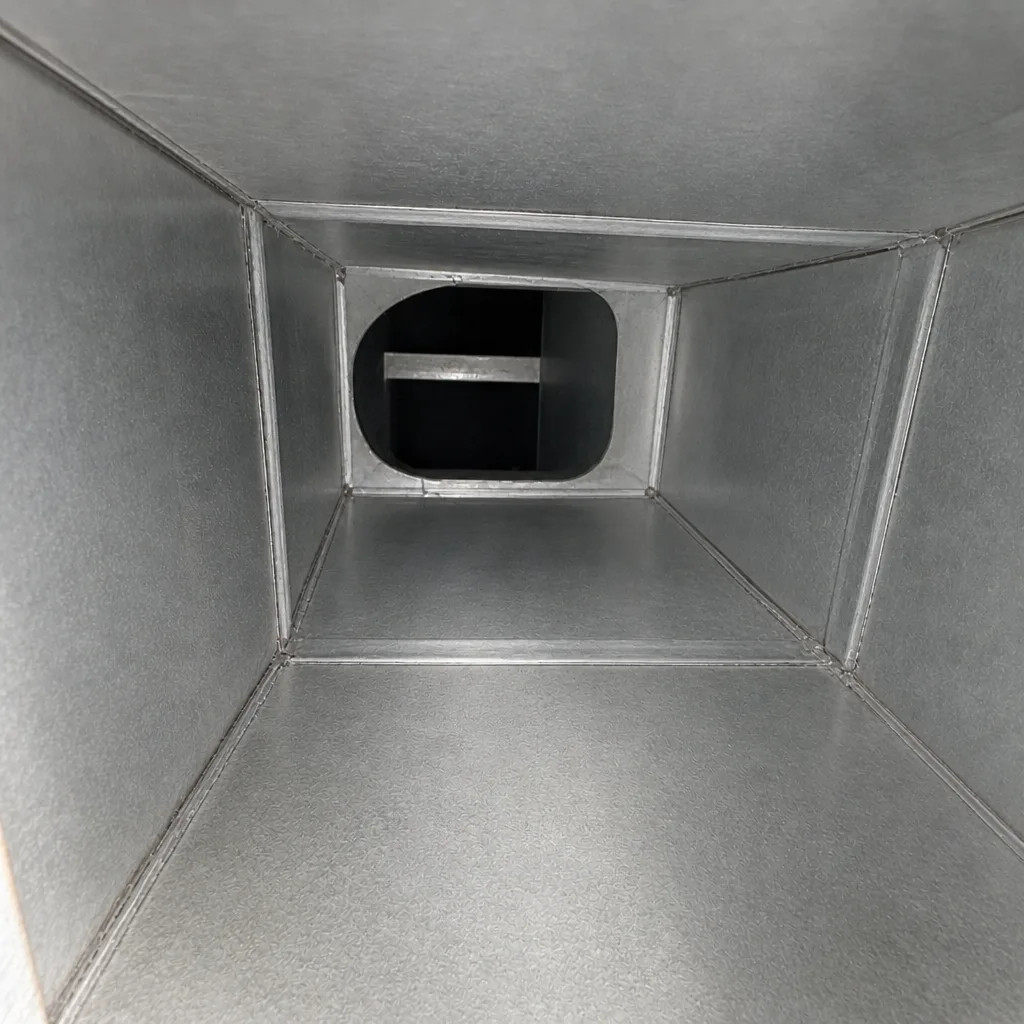 After
When to Call a Professional
Call a professional when your own inspection turns up a visible breach in the attic or crawlspace; when a room stays 8-10°F off the thermostat after a cleaning; when dust returns within days of wiping a surface; when a musty odor appears on system startup; when you notice your dryer taking longer to dry clothes; or when the return air filter cabinet shows a gap that you can’t fix yourself. High-tension components, electrical panels, and gas lines are not homeowner work – leave them to a trained professional. If any of the above fits, a diagnostic visit saves you from paying for a cleaning that solves nothing. Air Duct Cleaning Southlands offers free estimates in Southlands; call (855) 624-1395 and we’ll help you sort the contamination problem from the mechanical one before any work is scheduled.
Frequently Asked Questions
Pricing is per job by a written estimate, and the estimate is free. We don’t quote per-vent prices or teaser figures, because the cost depends on system size, accessibility, the number of runs, and whether sealing or sanitizing is needed alongside cleaning. Ask for one flat price per system agreed before work starts, in writing, with a scope of work. Call (855) 624-1395 for an exact quote; estimates are free.
Cheap quotes usually belong to outfits that quote per vent without inspecting the system, skip the return side, or scan the attic for mechanical faults only when you’ve already paid. The difference shows up later: no sealing, no pressure test, no documentation, and a coupon price that grows once the technician is on site. Ask what’s included before comparing totals, and ask for one flat price per system agreed in writing. Call (855) 624-1395 for an exact quote; estimates are free.
Before-and-after photos of your own ducts, plus a documented scope of work, are the answer. A qualified contractor will show you the supply runs and return plenum before and after cleaning, and will explain any mechanical repairs they made. If a contractor won’t provide photos, that’s a signal. Call (855) 624-1395 for an exact quote; estimates are free.
Every home is different, but a common sense rule is: when dust returns to surfaces faster than it used to, when any of the airflow or temperature symptoms in this guide appear, or after a renovation that generated dust. For most Southlands homes, a diagnostic check every few years – with cleaning when the check finds contamination – is more useful than a fixed schedule. Call (855) 624-1395 for an exact quote; estimates are free.
Only if the root cause is contamination. A room 8-10°F off the thermostat after cleaning usually has a mechanical fault – a disconnected boot, a collapsed flex run, or a failed air handler seal – and cleaning won’t fix any of those. Get a proper diagnosis and ask for duct repair and sealing if the fault is mechanical. Call (855) 624-1395 for an exact quote; estimates are free.
Rotary-brush systems like Rotobrush agitate and extract embedded debris from the duct walls, and HEPA-rated vacuum equipment like Nikro captures the dislodged material instead of recirculating it into your rooms. For sanitizing work, Abatement Technologies air-scrubbing equipment and Guardsman-grade treatments handle the surface contamination. Ask what tools the contractor will bring, and compare that to a shop-vac rig. Call (855) 624-1395 for an exact quote; estimates are free.
The Bottom Line
Most “dirty duct” complaints in Southlands start with a mechanical fault, not contamination. The three tests – airflow feel at the registers, dust reappearance speed, and register temperature differential – tell you which bucket you’re in. If the system is leaking or choked, fix the seal before you clean. Document your symptoms with photos and timestamps, inspect the visible duct runs in the attic or crawlspace, and ask for a duct blaster reading when the fault isn’t visible. That diagnostic sequence keeps you from paying for a cleaning that doesn’t solve the problem, and it lets a technician quote honestly, per job by a written estimate, without guessing. Read the symptoms first. Call a professional when they point at a mechanical fix or a surface-level contamination problem that needs proper cleaning and sanitizing. Our technicians have up to 14 years of experience, and we’re happy to walk you through what to check before you book.
If your own troubleshooting points at a problem you can’t safely reach, or you’d rather have a trained eye look before you schedule anything, Air Duct Cleaning Southlands offers free estimates across Southlands and the surrounding neighborhoods. Call (855) 624-1395 and we’ll help you sort a contamination problem from a mechanical one. Written by the team at Air Duct Cleaning Southlands.