
Last updated November 25, 2026
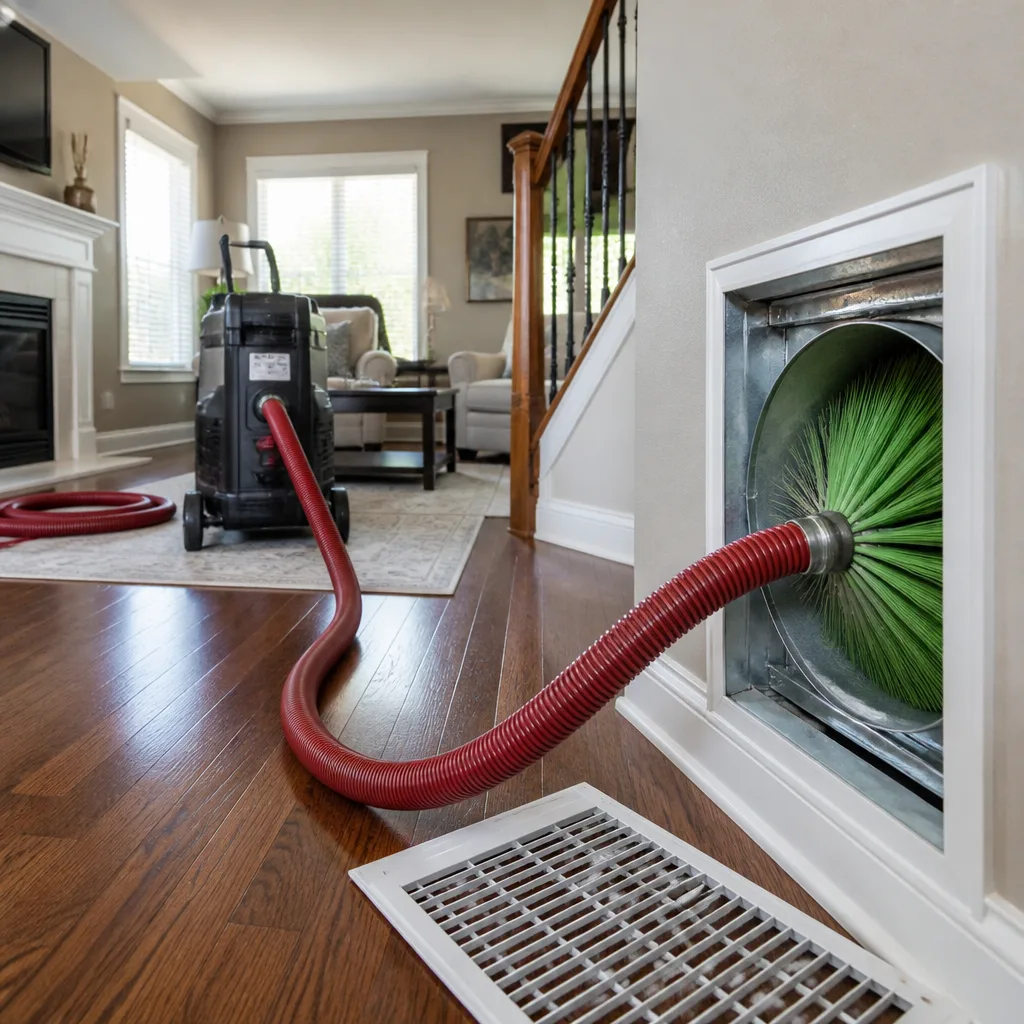 Whole-home duct cleaning
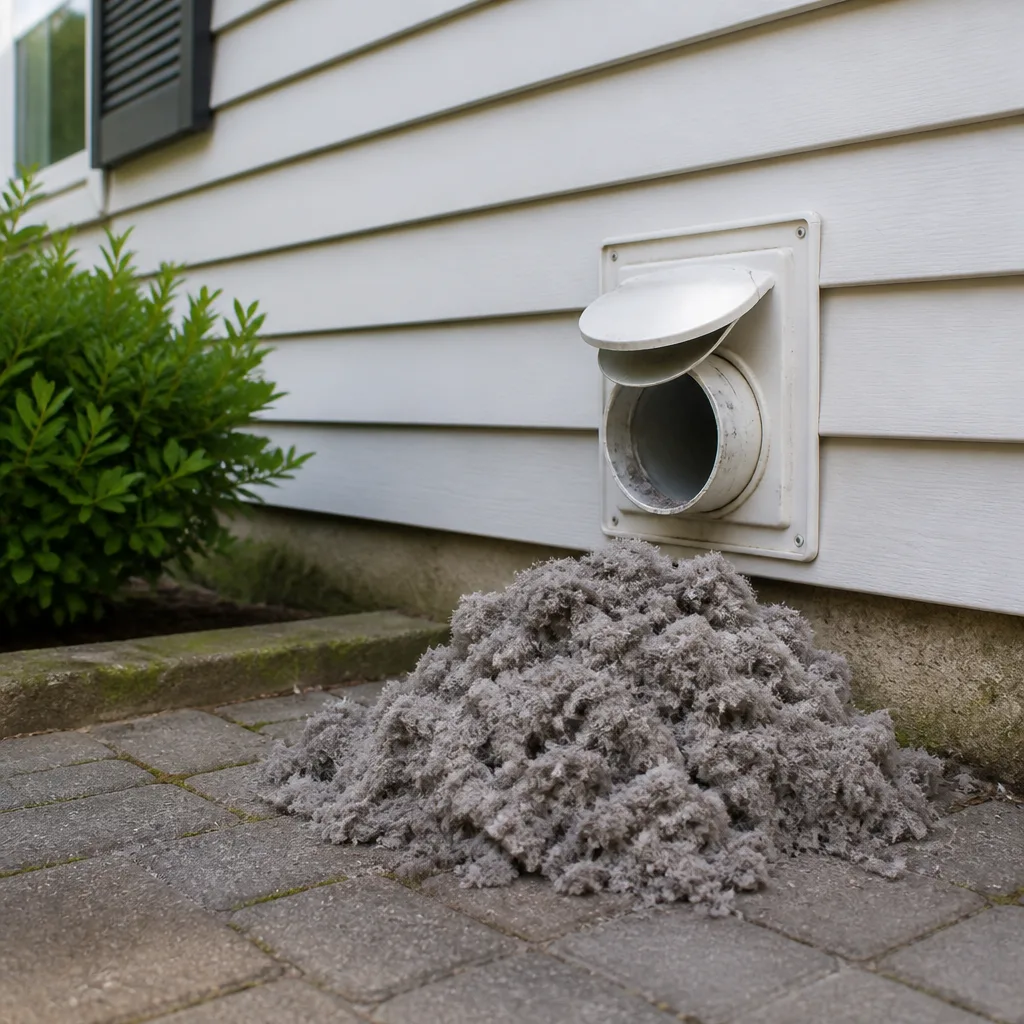 Dryer vent cleaning
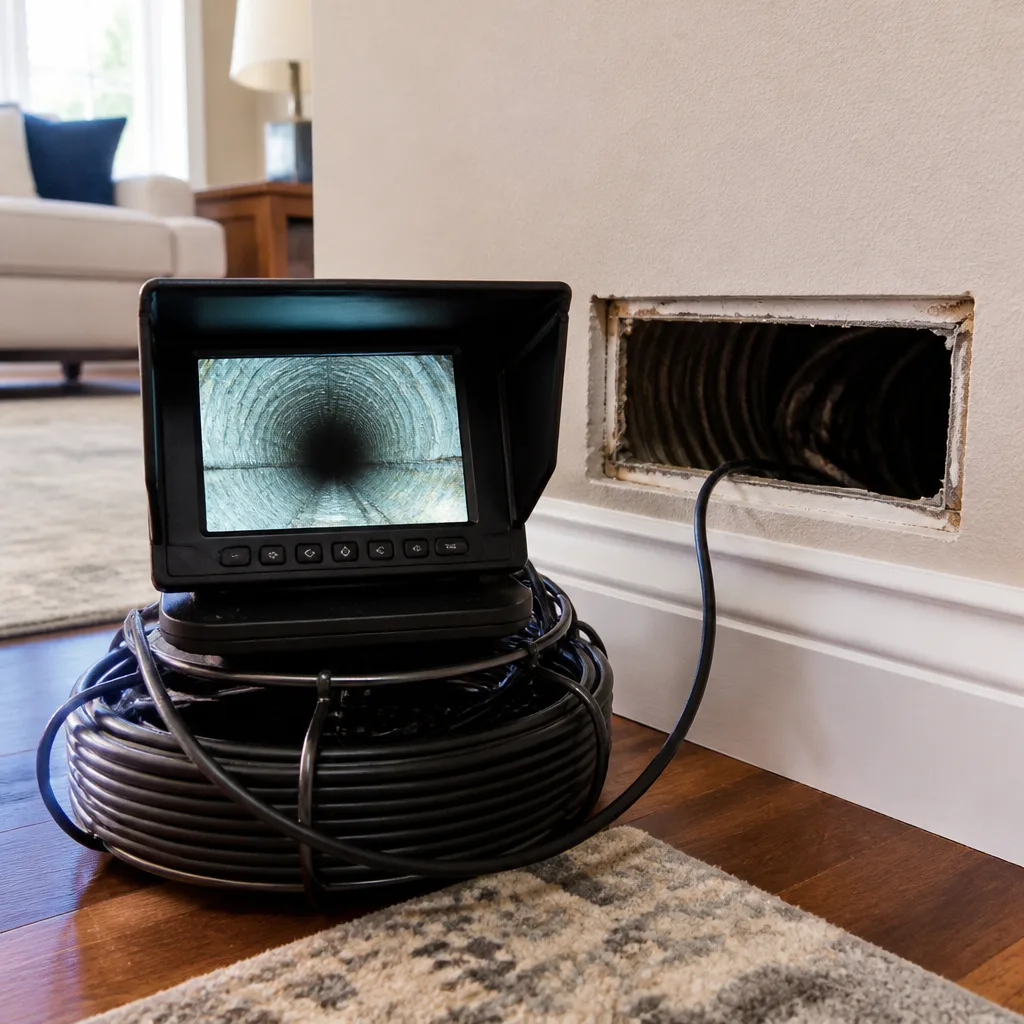 Camera inspection
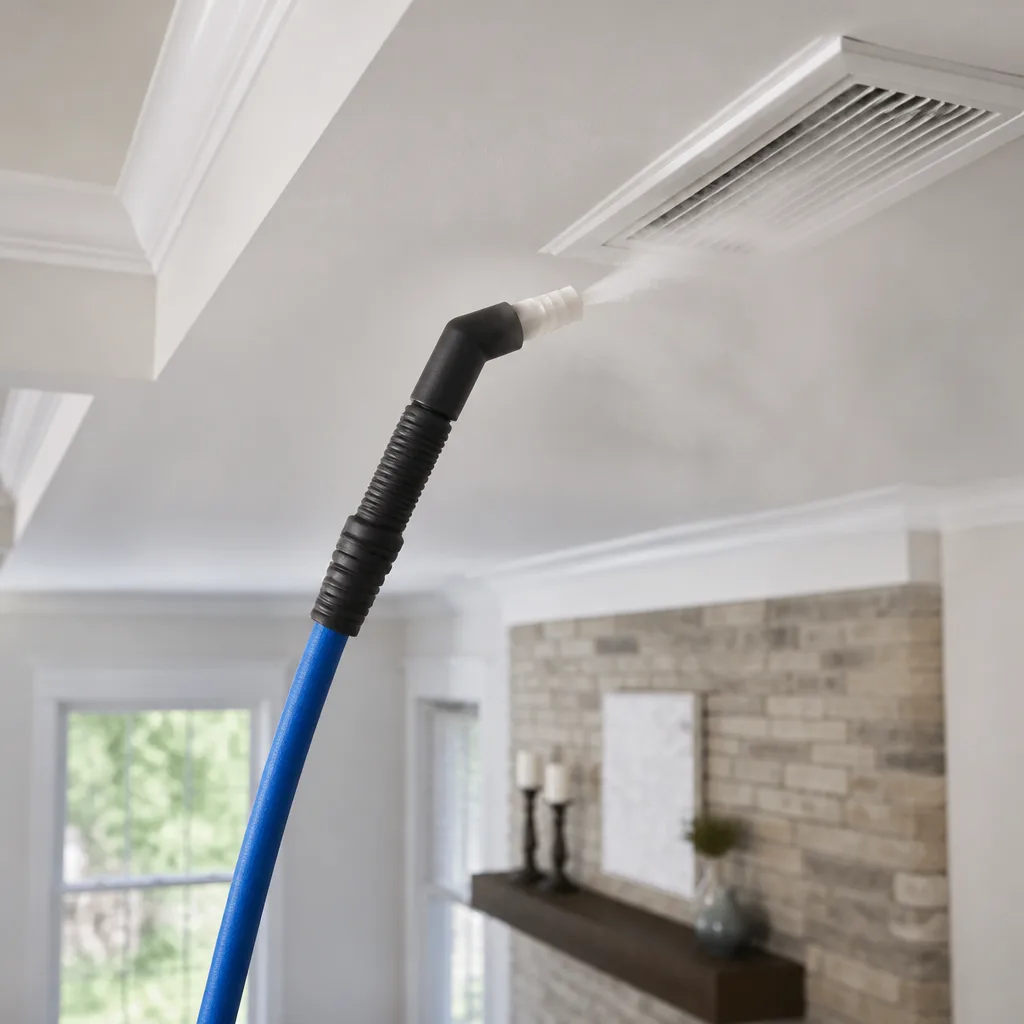 Sanitizing & deodorizing
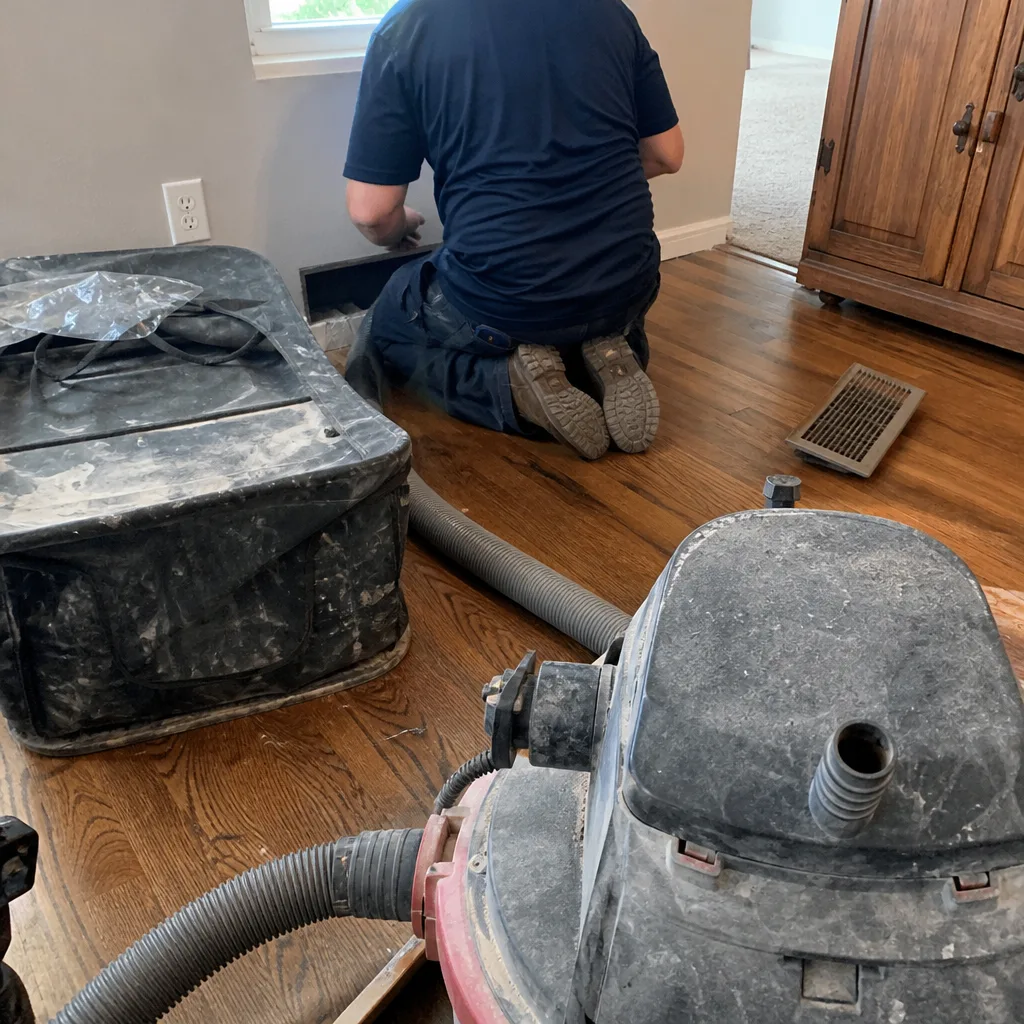
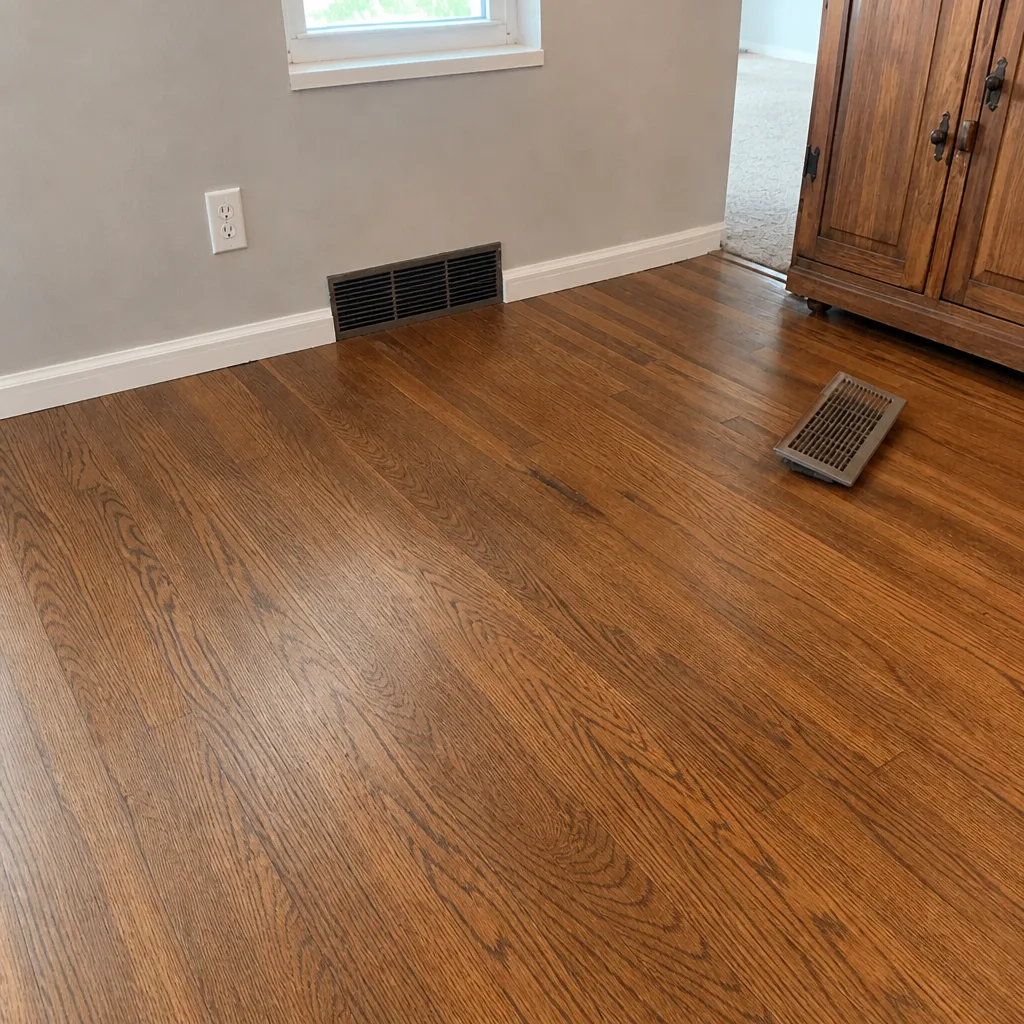
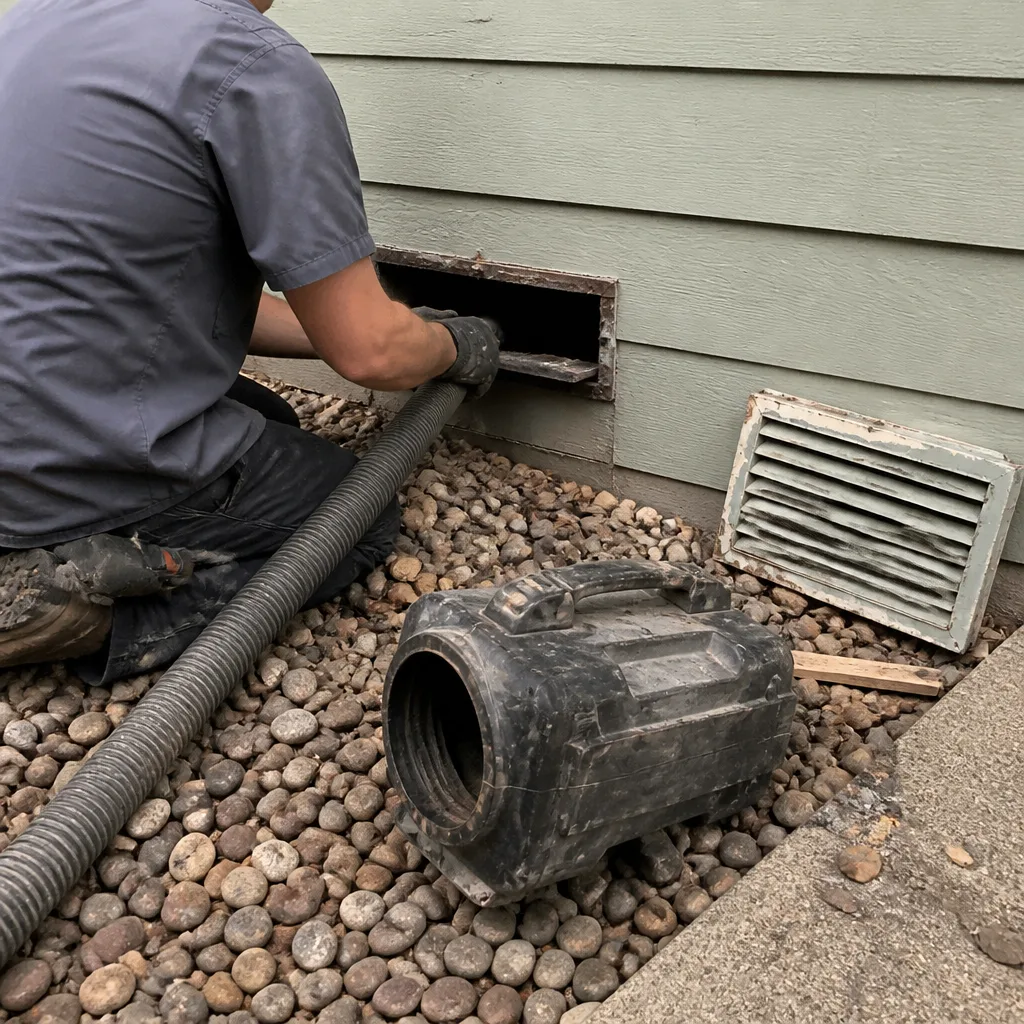
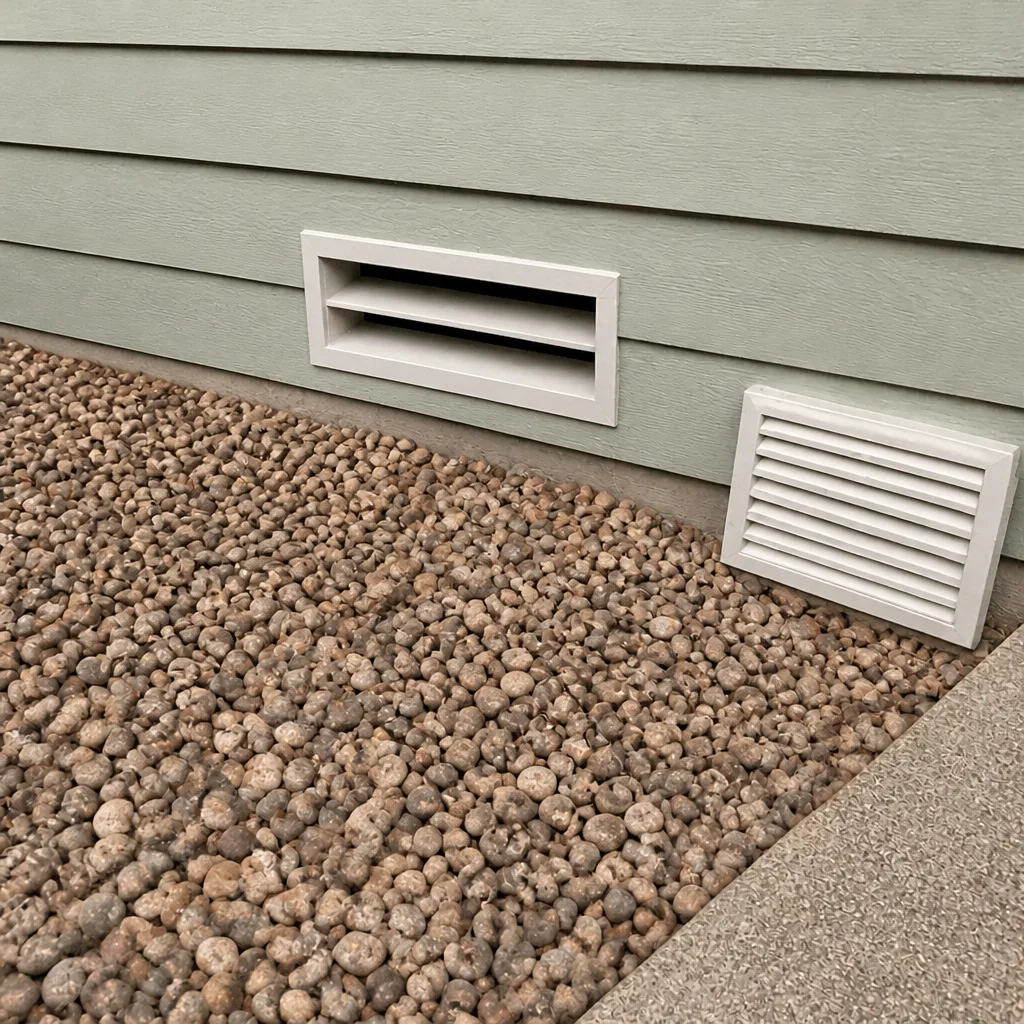
Whole-system duct and dryer vent check with before-and-after photos - you see exactly what came out of your vents
That "$99 whole-house special" is a bait ad - the real number appears once they are in your hallway, or the "clean" is a shop-vac at the register. We photograph the inside of your ducts before and after instead.
Choosing the Right Air Duct Cleaning Brand: A Buyer’s Guide for Southlands
A nationally recognized franchise name doesn’t guarantee commercial-grade vacuum equipment. Many franchise territories operate consumer-class truck mounts that underperform what an independent specialist brings to the same job, and the sign on the van tells you nothing about what’s inside it. In Southlands, where homes were built across several different decades and sit at an elevation that puts real seasonal stress on HVAC systems, the brand that matters is the equipment class and the service scope, not the logo. This guide shows you how to read a company’s actual capabilities, filter reviews for technical signals, and match a provider to your home’s specific system configuration.
Quick Answer
The right air duct cleaning company in Southlands is the one that discloses its equipment class (HEPA-filtered, high-CFM vacuum plus a rotary-brush agitation tool), covers the full system including air handler and plenum, and treats duct sealing as part of the job. Franchise recognition is not a proxy for any of that. Ask three questions – what vacuum, what brush tool, what does “full system” mean on your invoice – and the comparison sorts itself out quickly.
Styles & brands we work with
- Whole-home duct cleaning
- Dryer vent cleaning
- Camera inspection
- Sanitizing & deodorizing
Table of Contents
- How Do You Evaluate a Company’s Equipment Class?
- Franchise vs. Independent Operator: What’s the Real Tradeoff?
- What Does “Full-System” Scope Actually Mean?
- How Do You Read Reviews Like an Informed Buyer?
- Why Southlands Conditions Change the Calculation
- Sanitizing and Duct Sealing: The Services That Get Skipped
- The Questions to Ask Before You Book
- When to Call a Professional
How Do You Evaluate a Company’s Equipment Class?
Equipment class is the single most useful filter when you’re comparing air duct cleaning companies in Southlands, and almost nobody asks about it directly. The classification is simple: there’s consumer-grade equipment (shop-vacs and light portable vacuums), mid-grade truck mounts built for quick light-duty work, and professional-grade systems designed for commercial and industrial loads. The third category is what actually extracts embedded debris from residential duct walls, and it’s what you should be asking about.
Here’s what to ask, and what a good answer sounds like:
- What vacuum system do you run? A professional answer names the machine. Rotobrush and Nikro are the two names you’ll hear most in residential work – Rotobrush for the rotary agitation side, Nikro for HEPA-filtered high-volume collection. If a company can’t name its equipment, that’s your answer.
- Is the vacuum HEPA-filtered? HEPA filtration captures dislodged particulates at the filter rather than recirculating them into your living space. Without it, a cleaning can actually degrade indoor air quality during the job itself.
- What brush or agitation tool do you use? Vacuum alone pulls loose material. Rotary-brush systems physically contact and loosen debris bonded to the duct wall, which is the actual source of what you’re trying to remove.
- What CFM, or airflow capacity, does the system deliver? A company that knows its equipment can tell you the range. CFM is the measure of how much air the vacuum moves, and it’s the difference between a cleaning that touches the duct interior and one that merely is near it.
The pattern is that specialists volunteer this information. It’s their operating standard, not a sales tactic. When we describe our equipment, it’s because the comparison matters – see what arotary-brush and HEPA system actually changes versus a basic vacuum and you’ll understand why the question is worth asking. Generic answers (“we use professional equipment”) tell you the company either doesn’t know or doesn’t want to say.
Franchise vs. Independent Operator: What’s the Real Tradeoff?
Both models have legitimate strengths, and neither is automatically the better choice. The tradeoff comes down to consistency versus equipment flexibility, and knowing which one a Southlands company represents tells you what to expect from the service.
Franchise territories are standardized. The service protocol, the training and the equipment are set at a corporate level, so what you get in Southlands should match what a customer across the country gets. That consistency is real, and for some buyers it’s the whole point. The weakness is that franchise territories often buy a specific truck mount spec that’s designed to serve a very broad market, which means it occasionally undershoots the load in a specific home.
Independent specialists, meanwhile, choose their own equipment. Some run the same machines across every job; others build out the tool inventory to cover the range of homes in their area. That flexibility means a motivated independent can bring the right combination of rotary brush, HEPA collection and sanitizing equipment to a job that a standardized setup would struggle with. It also means you have to actually verify the equipment – a company that hasn’t invested in professional gear can call itself independent just as easily as one that has.
The practical takeaway: don’t pick a model, pick the equipment and scope. A franchise with a professional-grade truck mount and a clear full-system description beats an independent running consumer vacuums. And an independent with the right hardware and a five-service scope covers more ground than a franchise limited to basic supply-and-return vacuuming. That’s the comparison that actually affects your air.
What Does “Full-System” Scope Actually Mean?
“Full-system” is the most loosely used phrase in air duct cleaning, and it’s worth pinning down before you hire anyone. A minimal job touches the supply and return runs – the visible registers, the main trunk lines, and maybe a light pass with a vacuum. A true full-system cleaning extends to components where debris actually accumulates and where a partial job leaves the problem in place.
Here’s what a full-system scope should cover:
- Supply runs and registers. The outbound ductwork that delivers conditioned air to each room. This is the baseline any legitimate service covers.
- Return runs and main trunk. The intake side. Return ducts often carry the heaviest dust load because they pull from floor level.
- Air handler cabinet. The housing that contains the blower and where the duct system connects to the furnace or air conditioning. Debris here gets recirculated into every room.
- Evaporator coil area. The cooling coil sits in the airstream and collects dust film that affects both airflow and air quality. A full service addresses the coil area, not just the ducts leading to it.
- Plenum connections. The transition boxes where the main trunk meets the equipment. Loose joints here are common sources of system imbalance and should be part of the inspection.
When you call to book, ask directly: “Does your price include the air handler, the coil area, and the plenums?” A company that limits itself to supply and return runs will give you a vague answer or a lower figure. A company built around full-system scope will quote the whole job because it’s the only way they work. You can read more about what ourair duct cleaning service covers line by line.
How Do You Read Reviews Like an Informed Buyer?
Online reviews are useful for air duct cleaning – but only if you filter them for technical signals rather than star counts. Any company can earn five stars by being pleasant and punctual. What you want to know is whether the reviewer actually observed the work, understood the scope, and came away with something to show for it.
Filter for these signals:
- Specific equipment mentions. A review that names the equipment (“they showed me the truck mount,” “the technician explained the HEPA filter”) tells you the customer saw the operation and understood it. That’s a much stronger signal than “professional and friendly.”
- Before-and-after documentation. Reviews referencing photos, a camera view, or a look inside the ducts after the job indicate the company showed its work. That’s the opposite of a black-box visit.
- Scope descriptions. Does the reviewer describe what was cleaned – “they did the air handler too,” “they sealed a loose joint in the return”? Scope language tells you the company did the full job rather than a surface pass.
- Comments on the equipment versus what they expected. Reviewers who note that the vacuum was bigger or louder or more serious than a previous company’s are describing a real difference in equipment class.
What to discount: reviews that only discuss price, how quickly the crew moved through the house, or how nicely the technician dressed. Those are hospitality signals, not technical ones. Similarly, a five-star review from a customer who never saw the work tells you little about whether the ducts were actually cleaned.
The most useful pattern in our area is repetition – multiple reviews from Southlands customers mentioning the same equipment names and the same scope. That consistency is a more reliable indicator than any single glowing testimonial.
Why Southlands Conditions Change the Calculation
Southlands sits at elevation on the eastern edge of the Denver metro, and the climate here puts specific demands on an HVAC system that a national footprint can’t anticipate. A company whose service model is tuned to sea-level, mild-humidity homes is bringing less to the job than one that works this ground every week.
Three conditions matter most:
- Altitude. The thinner air at Southlands elevation changes how a system moves air and how much load a blower carries. A technician working here regularly understands how that affects airflow readings, how to interpret system performance, and what a “normal” register pressure looks like in a Southlands home. A visiting crew from a standardized franchise protocol may not.
- Construction era mix. Southlands neighborhoods span decades of building – older homes with galvanized or rigid metal duct systems, several waves of subdivision builds with flex duct, and newer construction with tighter envelopes. Each era’s duct system has different cleaning considerations. Old flex duct kinks and tears; rigid metal ducts collect and hold debris differently; newer tight homes recirculate the same air more aggressively. A local company has worked every configuration.
- Seasonal air quality. The spring pollen load, dry summer dust, and wildfire smoke events that drift into the Front Range all push particulate into return air. A system that’s pulling smoky air in for a season benefits more from fresh filtration and a clean duct run than one in a climate without those seasonal spikes. This is also where Honeywell and Aprilaire filtration upgrades help, because they address what’s coming in, not just what’s already settled.
None of this means a company has to be headquartered in Southlands – it means the technician who shows up needs to know the conditions. Ask about altitude and duct material on the phone. If you get blank silence, the local knowledge isn’t there. The full range of what aHVAC cleaning visit typically covers in these homes is a good place to check.
Sanitizing and Duct Sealing: The Services That Get Skipped
Two services distinguish a full-system provider from a cleaning crew, and both get skipped in the standard air duct cleaning package. Cleaning removes debris; sealing and sanitizing address the conditions that let debris and contaminants return. A company that only cleans leaves you cleaning again.
Duct repair and sealing. Cracked, disconnected or poorly joined ductwork is common in older Southlands homes, and it’s a bigger problem than dirty ducts because it dumps conditioned air into a crawlspace or attic and pulls unfiltered air back into the system. A specialty provider will inspect joints and connections during the assessment and address what they find. A pure-cleaning company will vacuum the ducts and leave a disconnected return line untouched – the ducts look clean, but the system is still leaking air and pressure.
Sanitizing. After the debris is removed, a sanitizing treatment addresses what’s left at the surface level – the mold, bacteria and allergens that colonize duct walls. Equipment matters here too. Abatement Technologies air-scrubbing equipment is the class of tool used in remediation work, and Guardsman-grade sanitizing treatments are the standard for post-clean application. Household sprays from a hardware store don’t do what a professional-grade treatment does in a duct system, and the difference shows up in whether the musty smell returns in a month or not.
A company that treats both of these as core services – not add-on upsells after the vacuuming is done – is telling you it understands the full air quality picture. Read more about ourair duct cleaning Southlands approach to see how sealing and sanitizing integrate with the cleaning visit.
The Questions to Ask Before You Book
These are the questions that separate a company’s actual capability from its marketing. Ask them on the phone before you schedule. Most reputable companies will answer every one.
- What vacuum system do you use? You’re listening for a named brand (Rotobrush, Nikro) and confirmation that it’s HEPA-filtered. “Professional-grade equipment” is not an answer.
- Does your quoted price include the air handler and coil area? The answer determines whether the job is full-system or supply-and-return only.
- Do you inspect duct seals and connections? A yes means the company handles duct repair and sealing; a no means you’ll need a separate contractor for leaks.
- Is sanitizing part of the service? Ask what treatment and what equipment. An answer referencing Guardsman treatments or Abatement Technologies equipment is specific; “we spray something” is not.
- Will I see before-and-after documentation? Photos or a camera view of the ducts before and after the job. If the company doesn’t show its work, you have no way to verify the cleaning happened.
- Is the estimate free? A written estimate before work starts is the standard. It also tells you whether the price is flat per job or per vent – per-vent pricing creates incentives you don’t want on a full-system cleaning.
- What’s the price set by? The written estimate should set the final price. Any company unwilling to commit to that before booking is telling you something.
None of these questions require technical expertise to ask, and none of the answers require you to trust anyone’s advertising – they’re verifiable facts about the job.
See the difference
 Before
 After
 Before
 After
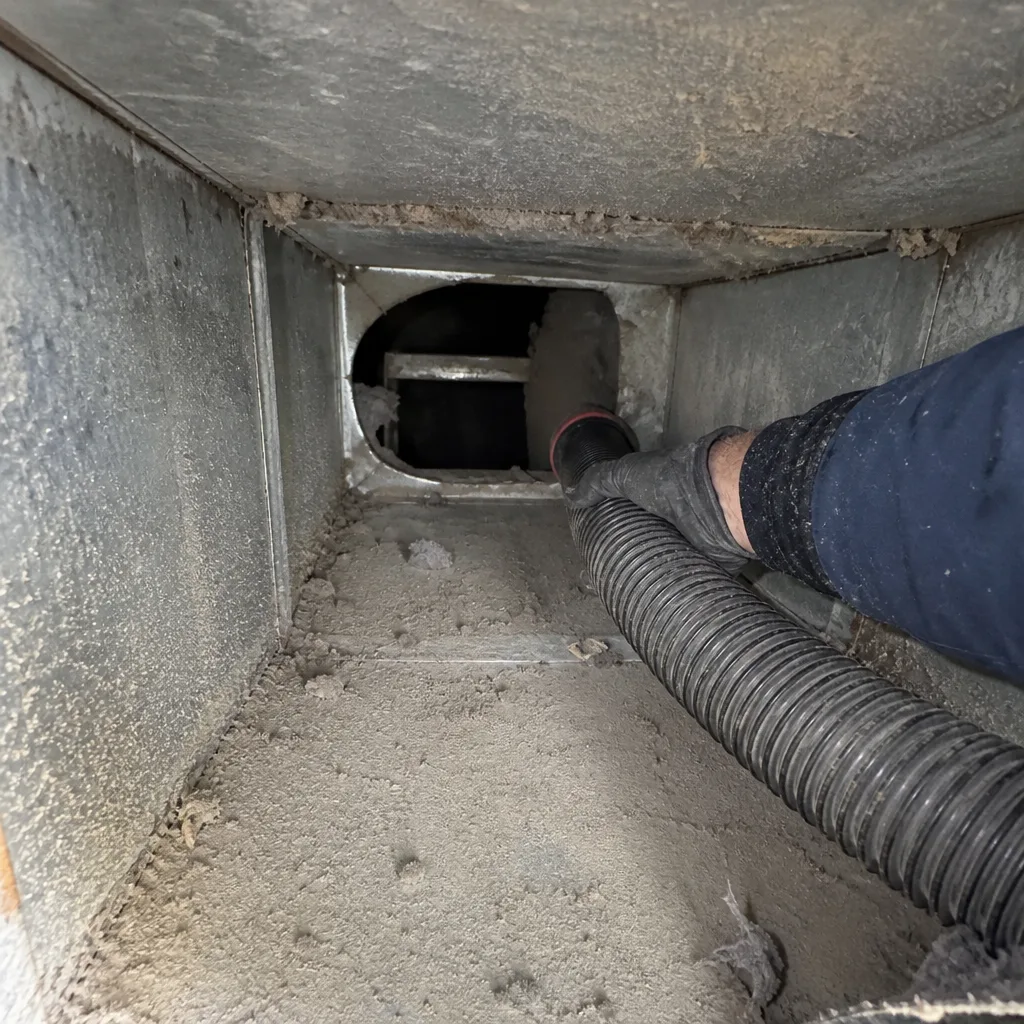 Before
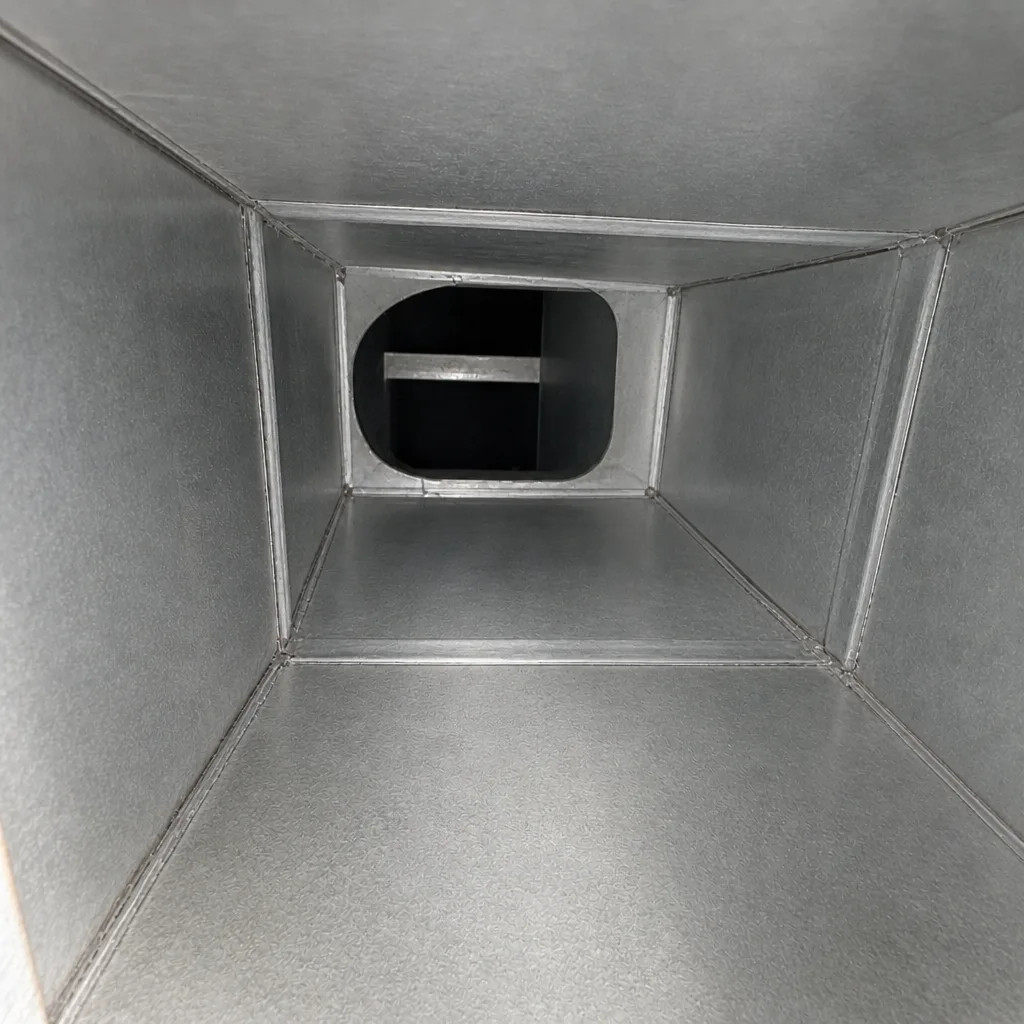 After
Common Mistakes to Avoid
- Choosing by franchise name alone. Franchise recognition tells you about corporate marketing, not the truck mount in the driveway. Ask about equipment and scope regardless of the logo on the van.
- Accepting per-vent pricing as the quote. Per-vent pricing is designed to scale with whatever the technician counts on site, and that’s exactly the structure that turns a low headline into a much larger invoice. A flat price per system agreed before work starts gives you a real number.
- Skipping the air handler and coil. A cleaning that stops at the supply and return runs leaves the components where debris accumulates and recirculates not touched. Ask specifically what the quote covers.
- Not asking about duct sealing. In older Southlands homes with rigid metal duct systems, disconnected joints and cracked seams are common and a pure-cleaning visit won’t find them. Duct integrity should be part of the assessment.
- Reading reviews for hospitality only. “They were polite and on time” tells you nothing about whether the ducts got cleaned. Filter for reviews that mention equipment, before-and-after photos, or specific scope.
- Assuming a seasonal smoke event calls for the same response as a routine cleaning. Wildfire smoke pulls fine particulates into the return air, and a system that’s been running smoke-laden air needs filtration attention, not just a vacuum pass. Ask about filtration upgrades alongside cleaning.
- Booking from a phone call with no written estimate. The written estimate protects you – it fixes the scope, the price, and the definition of “done.” Insist on having it before work starts.
When to Call a Professional
Some signs are worth acting on rather than waiting through another season. If the air coming out of registers carries a musty or dusty smell, that’s a sign of microbial growth or accumulated debris in the ducts, and it doesn’t clear on its own. If allergy symptoms for anyone in the home get worse indoors than outdoors, or if you’ve noticed uneven heating and cooling room to room, the duct system is worth having assessed – especially in a home with mixed supply and return runs where the pressure balance is off. High energy bills without an obvious cause, visible dust settling on surfaces soon after cleaning, or a dryer that takes longer and longer to dry a load all point toward the same system family. And any time you move into a Southlands home whose duct cleaning history is unknown, the first step is an assessment. Air Duct Cleaning Southlands offers free estimates in Southlands – call (855) 624-1395.
Frequently Asked Questions
Franchises follow a standardized equipment and service protocol, while independents choose their own equipment, so the real difference is equipment flexibility. A franchise territory may run consumer-class truck mounts, and an independent specialist may run full professional-grade rotary-brush and HEPA systems. Judge each by its actual equipment, not its model.
Ask them to name the vacuum and the agitation tool. A company using professional-grade equipment will name the machine – Rotobrush and Nikro are the two most common in residential air duct cleaning – and confirm HEPA filtration and CFM capacity. Vague answers point to consumer-grade equipment, and that’s the answer.
It should, and this is the test that separates the phrase from the reality. A full-system cleaning covers supply runs, return runs, the main trunk, the air handler cabinet, the evaporator coil area and the plenum connections. If a company’s definition stops at supply and return, the job is not full-system.
Yes, when the inspection finds a problem. Sealing addresses cracked or disconnected ductwork that cleaning alone can’t fix, and leaks undermine the whole system – clean ducts connected to a leaking plenum still pull unfiltered air back in. Having both services in one visit means the job is finished in a single pass.
Mostly because the scope varies, not the honesty. A quote that covers the supply and return runs only is a smaller job than one covering the air handler, the coil area, sanitizing and duct sealing. The comparison only means something when the scope is defined the same way, and the written estimate should tell you exactly what’s covered.
There’s no single schedule that fits every home. It depends on the home’s construction era, the duct material, whether pets or smokers are in the house, and how much the system is running through the seasonal smoke and pollen seasons. An assessment of the actual system is what tells you the right interval, not a blanket recommendation.
The Bottom Line
The right air duct cleaning brand in Southlands is defined by the equipment class on the truck, the scope on the written estimate, and whether the company treats duct integrity and sanitizing as part of the job or as upsells. Ask the three questions – what vacuum, what brush tool, what does full-system include – and let the answers do the comparing. Reviews help when you filter them for equipment names and before-and-after documentation rather than hospitality. And local knowledge of altitude, duct material and seasonal air quality matters more than a company’s national footprint. Our technicians have up to 14 years of experience, and every estimate is free. Written by the team at Air Duct Cleaning Southlands.
If you’ve read this far, you already know the questions to ask. Getting the answers is the easy part – call (855) 624-1395 for a free estimate. We answer 24/7. Fast dispatch from 7am to 7pm, Sunday through Friday. One flat price per system agreed before work starts, before-and-after documentation of your own ducts, and a written estimate that sets the final price. Rotary-brush agitation, HEPA-filtered collection, and duct sealing in the same visit – that’s what a full-system assessment looks like when you book with Air Duct Cleaning Southlands.